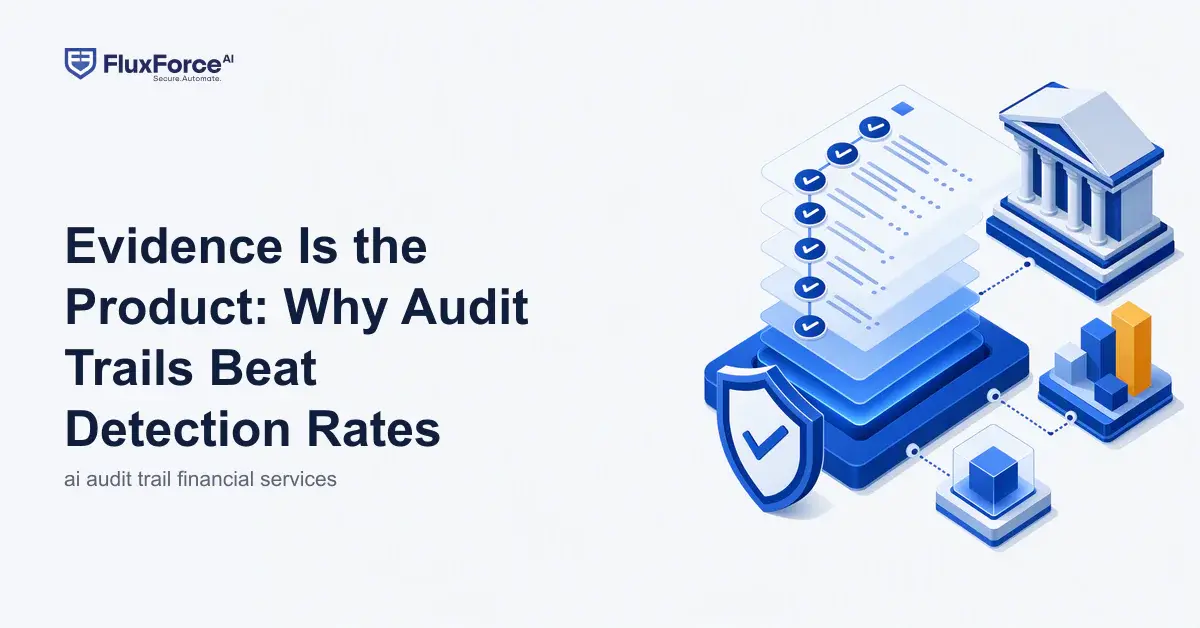
Silent changes
Tuning that nobody signed
Engineering raises a threshold to fix a queue backlog. The change works, the backlog drops, and nobody in compliance approved a lower level of coverage.



 28 specialized agentsAll systems operational
Ready to transform your security infrastructure?
Explore our complete agent library and request a custom demoView All SolutionsAiden FluxSenior AI Fraud Risk AnalystRhea LedgerSenior AI KYC/AML Compliance DirectorNova SentinelLead AI Zero Trust Security ArchitectIris VermaAI Verification Specialist
28 specialized agentsAll systems operational
Ready to transform your security infrastructure?
Explore our complete agent library and request a custom demoView All SolutionsAiden FluxSenior AI Fraud Risk AnalystRhea LedgerSenior AI KYC/AML Compliance DirectorNova SentinelLead AI Zero Trust Security ArchitectIris VermaAI Verification Specialist Oscar GraySenior AI OSINT Intelligence Director
 Bella NovaAI BNPL Risk Analyst28 specialized agentsAll systems operational
Ready to transform your security infrastructure?
Explore our complete agent library and request a custom demoView All Solutions28 specialized agentsAll systems operational
Ready to transform your security infrastructure?
Explore our complete agent library and request a custom demoView All Solutions
Bella NovaAI BNPL Risk Analyst28 specialized agentsAll systems operational
Ready to transform your security infrastructure?
Explore our complete agent library and request a custom demoView All Solutions28 specialized agentsAll systems operational
Ready to transform your security infrastructure?
Explore our complete agent library and request a custom demoView All Solutions Dasha Relia — Lead AI Compliance-Reliability Engineer
Dasha Relia is an AI agent that adds compliance gates to your change process. New rules, models and configuration changes are checked against your controls and signed off by a named person before go-live. After release she watches for compliance drift and flags it to the owner with the change that likely caused it.
Dasha Relia is a Lead AI Compliance-Reliability Engineer. She sits in your change process for compliance systems and checks that every rule, model and configuration change carries an owner, test evidence and a sign-off before it goes live.
| CRITERIA | Manual change board | Pipeline checks only | Dasha Relia |
|---|---|---|---|
| Compliance review of changes | If someone raises it | Code quality, not compliance impact | Every change you mark as compliance-relevant |
| Who signs off | The change board | Engineering | A named compliance approver |
| Evidence kept | Minutes and tickets | Build logs | Owner, tests, impact, approver, in one record |
| After release | Nothing until the next review | Uptime and errors | Watches for compliance drift |
| Pace of release | Waits for the next meeting | Fast | Adds a gate step, routine changes move quickly where you allow it |
| Where it's weaker | Slow, and misses changes nobody brings | Blind to compliance impact | Only sees changes that go through connected tools. Hotfixes made outside them stay invisible to her |
Dasha guards the gate. These agents supply the checks and controls she gates against.

Adds security scan results to each change before Dasha's compliance gate.
Meet Devon
Supplies the approved controls each change is checked against.
Meet Zara
Provides model validation and version records for model changes at the gate.
Meet RiyaWhat we're learning about AML, fraud and the evidence examiners ask for.


-1.svg)
Talk to the people who build the agents. We'll answer per capability, yes or no.
An AI compliance engineer checks changes to compliance systems before and after release. Dasha Relia looks at each rule, model or configuration change for an owner, test evidence, expected impact and a named approver, then watches the change in production for compliance drift.
No. A named person signs off every change that touches thresholds, models or coverage. Dasha can mark a routine change's checks complete only where you allow it, and can hold a change at the gate for review if you set her to. A kill switch turns her off without touching your release process.
It's when a rule, model or setting starts catching something different from what it was approved to catch. Customer behaviour shifts, data feeds change or a later change interacts with an earlier one. Dasha compares live results with the expected impact recorded at release and flags the gap.
Dasha reads your recent change history and live results, and reports what she would have flagged or held. Nothing in your release process changes. You compare her findings with your last change audit and decide what to switch on.
Access to change tickets, rule and model repositories, screening and monitoring configuration, and alert volumes over time. Past audit findings on change control help her focus on what your examiners have already raised.
No. Your tickets and pipeline stay as they are. Dasha adds a compliance gate and a change record on top.
FluxForce runs as SaaS, on-premise or hybrid, built on Microsoft Azure. We agree data residency and which components run inside your environment during deployment design, before any data moves.