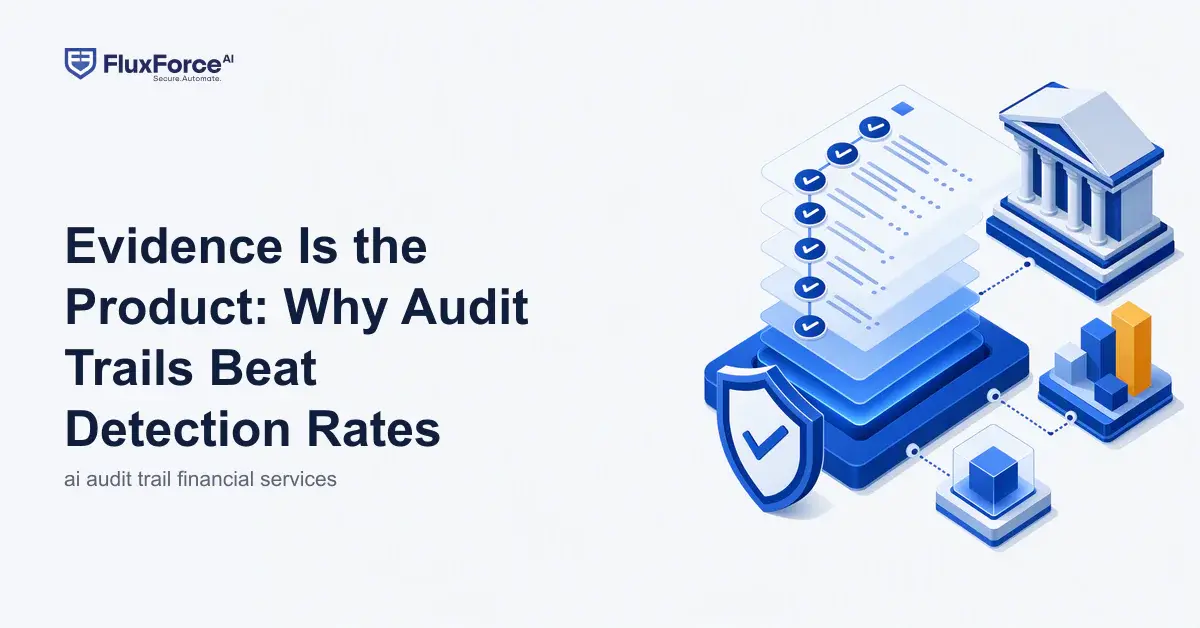
Inventory gaps
Models nobody listed
Vendor scoring, a screening match engine, a retrained fraud model and three new AI agents. Each one makes decisions. Not all of them are in the inventory with an owner and a risk tier.



 28 specialized agentsAll systems operational
Ready to transform your security infrastructure?
Explore our complete agent library and request a custom demoView All SolutionsAiden FluxSenior AI Fraud Risk AnalystRhea LedgerSenior AI KYC/AML Compliance DirectorNova SentinelLead AI Zero Trust Security ArchitectIris VermaAI Verification Specialist
28 specialized agentsAll systems operational
Ready to transform your security infrastructure?
Explore our complete agent library and request a custom demoView All SolutionsAiden FluxSenior AI Fraud Risk AnalystRhea LedgerSenior AI KYC/AML Compliance DirectorNova SentinelLead AI Zero Trust Security ArchitectIris VermaAI Verification Specialist Oscar GraySenior AI OSINT Intelligence Director
 Bella NovaAI BNPL Risk Analyst28 specialized agentsAll systems operational
Ready to transform your security infrastructure?
Explore our complete agent library and request a custom demoView All Solutions28 specialized agentsAll systems operational
Ready to transform your security infrastructure?
Explore our complete agent library and request a custom demoView All Solutions
Bella NovaAI BNPL Risk Analyst28 specialized agentsAll systems operational
Ready to transform your security infrastructure?
Explore our complete agent library and request a custom demoView All Solutions28 specialized agentsAll systems operational
Ready to transform your security infrastructure?
Explore our complete agent library and request a custom demoView All Solutions Riya Intel — Director AI Governance & Model Risk
Riya Intel is an AI agent that keeps your model inventory current, watches every production model for drift and bias, and records each version comparison and rollback. She prepares model risk reports for SR 11-7, PRA SS1/23 and EU AI Act reviews, and your model risk team signs them off.
Riya Intel is a Director AI Governance & Model Risk. She keeps the inventory, watches the models in production and prepares the documentation your validators and model risk committee review.
| CRITERIA | Spreadsheet inventory | MLOps monitoring tool | Riya Intel |
|---|---|---|---|
| Inventory upkeep | Manual, before each committee | Models it deploys only | Models, vendor models and AI agents, as they change |
| Who signs off | Model risk committee | Engineering | Validators and committee, from Riya's drafts |
| Drift and bias watch | At periodic review | Technical drift metrics | Drift and bias tied to owners and risk tier |
| Regulatory reporting | Written by hand | Not included | Drafts mapped to SR 11-7, PRA SS1/23 and EU AI Act |
| Version and rollback history | Scattered | Deployment logs | Comparison results, approver and rollback record |
| Where it's weaker | Out of date between meetings | Built for engineers, light on examiner evidence | She monitors and documents. Independent validation still needs your validators |
Riya governs the models. These agents test them, run them and set the rules around them.

Generates synthetic scenarios so Riya can compare model versions without production data.
Meet StellaRuns a fraud scoring model that sits in Riya's inventory and monitoring.
Meet Aiden
Maps the model risk obligations Riya reports against.
Meet ZaraWhat we're learning about AML, fraud and the evidence examiners ask for.


-1.svg)
Talk to the people who build the agents. We'll answer per capability, yes or no.
An AI model risk analyst keeps the model inventory, monitors models in production and prepares the documentation model risk teams review. Riya Intel tracks every model and AI agent with its owner, version and risk tier, flags drift and bias, and drafts reports for your validators and committee.
Riya monitors and documents. Independent validation stays with your validators, and SR 11-7 expects that independence. She gives them inventory, monitoring results and version comparisons to work from. A kill switch turns her off without touching your models.
Yes. Every FluxForce agent you run sits in the same inventory as your other models, with its owner, version history, monitoring results and full decision explanations. Retrained agent models are approved by a person before release.
SR 11-7 in the US, PRA SS1/23 in the UK and the EU AI Act's high-risk categories for credit scoring and life and health insurance pricing. Your model risk team decides how each one applies to your institution.
Riya inventories and monitors a set of your production models and drafts a report, but nothing changes in your models or releases. You compare her findings with your last validation cycle and decide what to switch on.
Access to your model registry, scoring outputs, input data and outcomes, plus past validation reports. Customer segment fields let her run bias checks on the groups you choose.
FluxForce runs as SaaS, on-premise or hybrid, built on Microsoft Azure. We agree data residency and which components run inside your environment during deployment design, before any data moves.