




70%
Alert Fatigue
Analysts waste 70% of their time chasing false positives. According to the Association of Certified Fraud Examiners (ACFE), organizations lose 5% of revenue to fraud annually.



 28 specialized agents
See an agent work your alert queue
AI agents investigate and prepare the case. Your analysts decide, with evidence an examiner can replay.View All Solutions
28 specialized agents
See an agent work your alert queue
AI agents investigate and prepare the case. Your analysts decide, with evidence an examiner can replay.View All Solutions Zara TrustwellDirector AI Regulatory Compliance
 Arin NarrateSenior AI Audit Trail Specialist
 Riya IntelDirector AI Governance & Model Risk
 Nolan BriefwellSenior AI Incident Response Narrator28 specialized agents
See an agent work your alert queue
AI agents investigate and prepare the case. Your analysts decide, with evidence an examiner can replay.View All AI Agents28 specialized agents
See an agent work your alert queue
AI agents investigate and prepare the case. Your analysts decide, with evidence an examiner can replay.View All IndustriesAiden Flux — Senior AI Fraud Risk Analyst
Nolan BriefwellSenior AI Incident Response Narrator28 specialized agents
See an agent work your alert queue
AI agents investigate and prepare the case. Your analysts decide, with evidence an examiner can replay.View All AI Agents28 specialized agents
See an agent work your alert queue
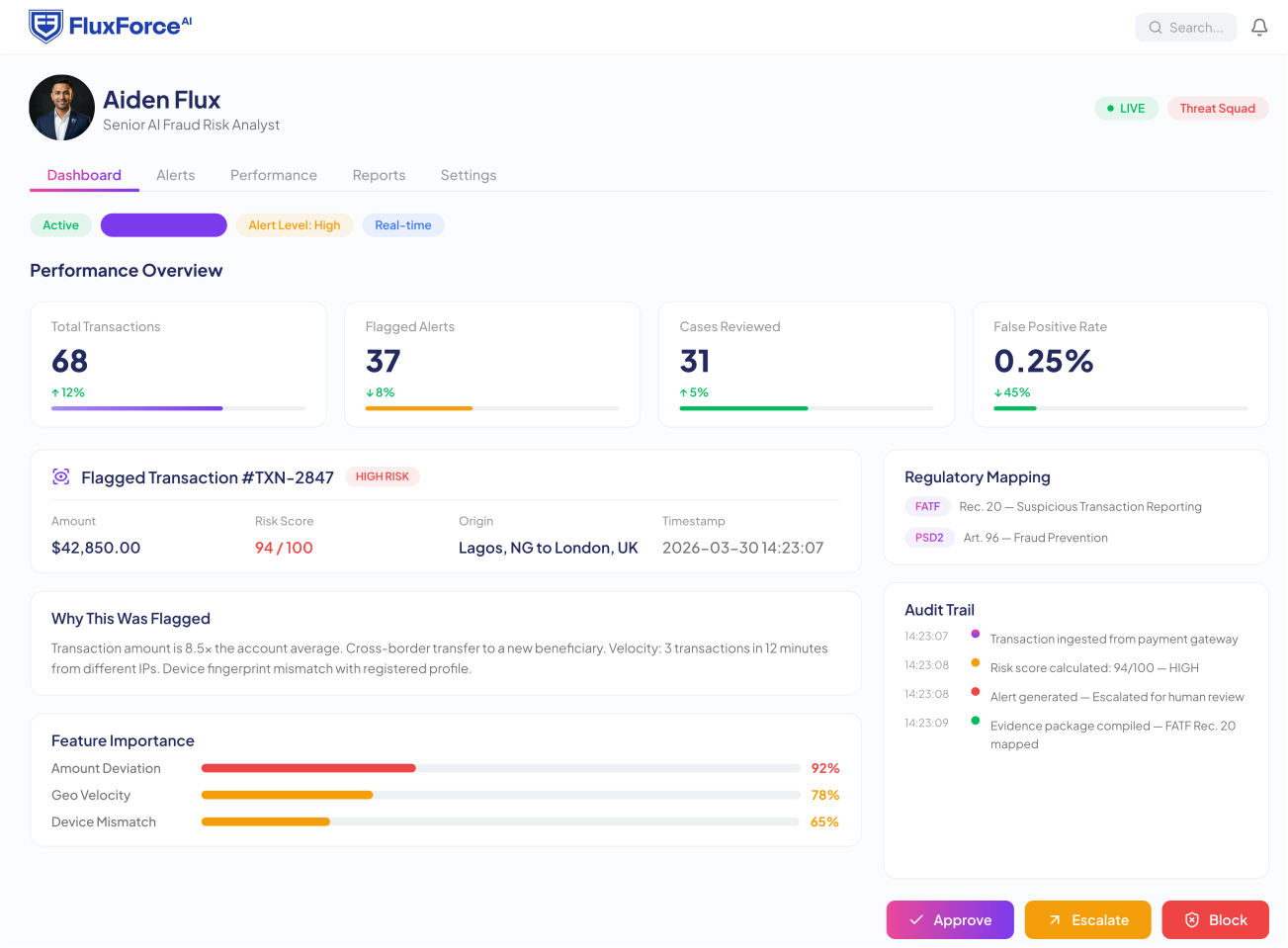
AI agents investigate and prepare the case. Your analysts decide, with evidence an examiner can replay.View All IndustriesAiden Flux — Senior AI Fraud Risk AnalystYour fraud team reviews thousands of alerts daily. Most are false. Aiden Flux scores every transaction in real time - under 2 seconds - with 99.8% accuracy. Every flag comes with a plain-English audit trail your regulator can read. Deploy in 30 days. No migration.
Trusted by Teams across Banking, Fintech, Insurance, and Global Trade






Aiden Flux is a Senior AI Fraud Risk Analyst that operates inside your transaction pipeline as a dedicated fraud detection specialist.
Fewer alerts. Better ones. Every decision explained.
| CRITERIA | Hire 3 Analysts | Legacy Rule Engine | Aiden Flux |
|---|---|---|---|
| Annual cost | $540K-$1.05M | $100K-$300K | $24K-$96K/yr |
| Deploy time | 3-6 months | 6-12 months | 30 days |
| False positive | 5-15% | 5-15% | 0.25% |
| Txns/day | 500-1,000/analyst | Varies | 100K+ real-time |
| Explainability | Verbal, inconsistent | Limited rule logs | SHAP + plain English |
| Available 24/7 | No (shifts needed) | Yes | Yes |
Aiden Flux delivers maximum impact when paired with these FluxForce SuperHumans.
Automates sanctions/PEP screening and SAR filing for the transactions Aiden flags.
Learn nowVerifies the identity behind every transaction before Aiden scores it.
Learn now
Enriches fraud signals with breach databases and dark web intelligence.
Learn nowKeep up with the latest AI trends, insights, and conversations.
-1.svg)
Our dedicated support team guides you through every step of implementation.
AI fraud detection in banking works by scoring every transaction in real time using a combination of machine learning models and deterministic rules. Systems like Aiden Flux analyze transaction amount, velocity, device fingerprint, geolocation, and user behavioral baselines to assign a risk score in under 2 seconds. Flagged transactions include a plain-English explanation mapped to the institution's regulatory framework.
According to industry benchmarks, traditional rule-based fraud detection systems produce false positive rates between 5% and 15%. A good false positive rate for modern AI fraud detection is below 1%. Aiden Flux achieves a 0.25% false positive rate - a 60-70% reduction compared to legacy systems. This means analysts spend time on real threats, not noise.
Yes. Advanced AI fraud detection systems produce audit-ready decision trails that map every decision to the underlying evidence, rules triggered, and applicable regulatory framework. Aiden Flux generates plain-English explanations for every flagged transaction, linking each decision to BSA/AML, OFAC, PCI DSS, or DORA requirements.
FluxForce's Aiden Flux deploys in 30 days using a sidecar integration model that connects to existing transaction feeds without requiring data migration or core system changes. The first 30 days typically run in shadow mode — monitoring without blocking — to validate accuracy on live data before going active.
Modern AI fraud detection uses configurable autonomy. Low-risk decisions (clear approvals, obvious false positives) are handled autonomously. Medium-risk decisions default to human-in-the-loop review but can be configured for autonomous action. High-risk decisions always require human review — this is non-negotiable in regulated environments. The institution configures exactly where the threshold sits per agent.
Explainable AI in fraud detection refers to the ability of an AI system to provide clear, human-readable reasoning for every decision. This is critical for regulatory compliance under frameworks like the EU AI Act, BSA/AML, and DORA. Aiden Flux uses feature importance analysis combined with LLM-generated plain-English summaries to explain why each transaction was flagged, approved, or escalated.
FluxForce pricing is customized based on transaction volume, regulatory requirements, and deployment model. Contact our team for a tailored quote.