


















Listen To Our Podcast 🎧

Introduction
Can enterprises secure their systems when agentic AI agents act autonomously across critical workflows?
Traditional zero trust architecture and zero trust security primarily rely on predefined roles and permissions. But AI agents operate across emails, documents, calendars, and internal databases, making decisions without human intervention. This exposes gaps in zero trust network access (ZTNA) and creates new risks for AI-driven cybersecurity.
The challenge is balancing operational speed and security assurance. How can businesses build zero trust architecture using AI agents while ensuring compliance and minimal disruption? AI automation for Zero Trust security frameworks offers a solution by continuously monitoring agent actions, correlating intent and behavior, and dynamically adjusting access.
By implementing secure AI agents with real-time risk scoring, just-in-time privileges, and automated isolation mechanisms, organizations can begin zero trust construction that adapts to autonomous agents. How agentic AI agents enhance zero trust construction is increasingly evident: they help enforce policies, monitor actions, and can reduce human error while scaling security controls.
The key question remains: how can we implement Zero Trust with autonomous AI agents without slowing operations or increasing risk? AI-powered zero trust provides a pathway.

Advanced Monitoring and Observability for Agentic AI Agents in Zero Trust Construction
In Zero Trust construction, visibility is critical. Autonomous agents make decisions that evolve over time, and AI-driven cybersecurity depends on continuous, deterministic monitoring to ensure their actions align with intended objectives.
Secure AI agents are supported by multi-dimensional observability across systems and workflows. Tracking intent-action correlation, data access patterns, and communication endpoints allows organizations to detect deviations from baseline operations in real time. For example, an AI agent accessing sensitive HR data outside business hours can trigger immediate alerts and policy adjustments.
This approach supports AI automation for Zero Trust security frameworks by feeding actionable insights into AI-powered zero trust systems.
By combining detailed telemetry with zero trust security principles, enterprises can transform zero trust network access (ZTNA) from a largely static model into a more adaptive and proactive system. This helps organizations build zero trust architecture using AI agents while minimizing exposure to risk and supporting compliance across operational layers.
Dynamic Policy Enforcement and Risk-Aware Agent Control in Zero Trust Construction

Once visibility is established, the next critical step in zero trust construction is enforcing adaptive policies on agentic AI agents. Traditional static rules often cannot keep pace with autonomous decision-making. AI-powered zero trust requires dynamic policy enforcement that adjusts access and privileges based on contextual risk signals.
At the core of this process is risk scoring. Each agent action is evaluated against baseline behavior, intent alignment, and resource sensitivity. Secure AI agents operating within acceptable thresholds maintain standard privileges, while deviations trigger graduated responses—from restricted access to full quarantine.
Just-in-time privileges and automated revocation are key components of this model. If an AI agent attempts an unexpected action, its permissions can be adjusted to help prevent unintended impact. This strategy underpins AI automation for Zero Trust security frameworks by ensuring that even high-privilege agents cannot exceed their operational scope.
Integrating these mechanisms into zero trust architecture using AI agents ensures that access is never assumed. Every action is authenticated, authorized, and continuously validated, embodying the principle of never trust, always verify. Agentic AI in security scenarios, from internal document access to cloud resource manipulation, benefit from this adaptive, risk-aware enforcement, reducing both insider and external threats while preserving operational agility.
Self-Healing, Isolation, and Forensic Readiness

In a zero trust security environment, containment is as crucial as prevention. Secure AI agents must not only follow policies but also respond autonomously when anomalies occur. Agentic AI in security allows for self-healing mechanisms that isolate potentially risky agents while minimizing operational disruption.
The key pillars here include immediate quarantining of suspicious activity, network isolation for compromised AI agents, and dynamic revocation of privileges. This ensures that even if an agent exhibits unexpected behavior, the blast radius remains contained, safeguarding critical systems and sensitive data.
Equally important is forensic readiness. AI-driven cybersecurity frameworks must capture detailed logs of agent actions, memory states, and access patterns. These logs, when treated with the same privilege level as the data accessed, can support post-incident analysis while reducing exposure to sensitive information.
Implementing Zero Trust with autonomous AI agents also relies on maintaining state snapshots and secure storage for future audits. This combination of isolation, automated containment, and forensic preparedness ensures that enterprises can operate confidently, leveraging agentic AI agents for productivity while adhering to rigorous zero trust network access (ZTNA) principles.
Operationalizing Zero Trust with Agentic AI Agents in Production

Enterprises can design policies and controls, but the real challenge lies in applying Zero Trust construction to autonomous workflows at scale. As agentic AI agents interact with emails, documents, databases, and other systems without human oversight, organizations need operational strategies that combine AI-driven cybersecurity, real-time observability, and automated containment.
Dynamic Credential Management and Risk-Aware Access
Deploying agentic AI agents in enterprise systems requires adaptive credential handling. Each agent’s privileges must be scoped dynamically, with just-in-time access and ephemeral credentials tied to real-time risk scoring. High-privilege agents are continuously monitored for deviations from baseline behaviors. If an anomaly occurs—like accessing sensitive payroll data outside business hours—automatic revocation and isolation are triggered. This ensures secure AI agents operate safely without slowing business processes.
Intent Verification and Forensic Auditability
Unlike traditional zero trust models, autonomous agents can inadvertently escalate privileges or fall victim to prompt injection. Embedding deterministic hooks into agent workflows allows organizations to correlate intent, action, and outcome, creating a reliable foundation for building Zero Trust architecture using AI agents. Detailed logs, memory snapshots, and state preservation enable forensic analysis while keeping sensitive information protected.
Sandboxing and Isolation Strategies
Enterprise deployment benefits from sandboxing agents per user or workflow. Using VM-level isolation rather than containers strengthens separation and prevents lateral movement. Policy engines evaluate agent actions before and after execution, enabling proactive containment. Coupled with self-healing mechanisms, this ensures even high-risk agents do not compromise critical systems.
Integrating AI Automation into Security Pipelines
Embedding AI automation for Zero Trust security frameworks into DevOps pipelines allows seamless enforcement of policies across multiple environments. Agents can execute tasks autonomously while remaining under strict monitoring. This approach aligns with AI-powered zero trust, minimizing risk, optimizing operational efficiency, and ensuring regulatory compliance.
Scaling Zero Trust Network Access (ZTNA) with AI
By operationalizing zero trust network access (ZTNA) in production, organizations gain confidence to expand autonomous workflows while maintaining agentic AI in security oversight. This enables businesses to leverage the speed and intelligence of AI without compromising compliance or control, making implementing Zero Trust with autonomous AI agents a strategic advantage.
Zero Trust for AI Agents in Banking Workflows
Banks are where these controls get tested hardest, because an AI agent there may touch payment records, customer files and alert queues in a single shift. The standard most bank programs start from, NIST Special Publication 800-207, Zero Trust Architecture, already names the problem. Its section on non-person entities says AI and other software agents are being deployed to manage security on enterprise networks, and that how they should authenticate is still an open issue. The four practices below turn that gap into something a bank team can check. For the wider program, see our guide to zero trust architecture for banking operations heads.
Give every agent its own identity
NIST flags two risks that apply directly to agents. A software agent may face a lower bar for authentication than a person, such as an API key instead of multifactor authentication, and an attacker who steals its credentials can impersonate it. So each agent should run under its own service identity, never a shared account, with credentials that expire and get rotated. When something goes wrong, the bank can then say which agent did what, and switch off one agent without stopping the rest.
Scope access to the task, read before write
SP 800-207 says access is granted per session with the least privilege needed for the task, and that access to one resource doesn't grant access to another. The OWASP entry on Excessive Agency (LLM06:2025) traces most damaging agent actions to excessive functionality, excessive permissions or excessive autonomy, and its own example is an extension that needs to read data but connects with an identity that can also update and delete it. In a bank, an agent that reviews transaction alerts needs to read transaction history. It doesn't need rights to change account ownership or beneficiary details, and it shouldn't hold them.
Keep a person on high-impact actions
OWASP recommends human approval before high-impact actions are taken, and authorization enforced in the downstream system rather than left to the model to judge. For banking that means moving funds, changing customer records and closing or escalating a case go through a named person, while the agent gathers the evidence and prepares the recommendation. The same NIST section warns that an attacker who can interact with an agent might trick it into granting more access or acting on the attacker's behalf, which is one more reason the final call stays with the analyst.
Re-check during the session and log what an examiner will ask
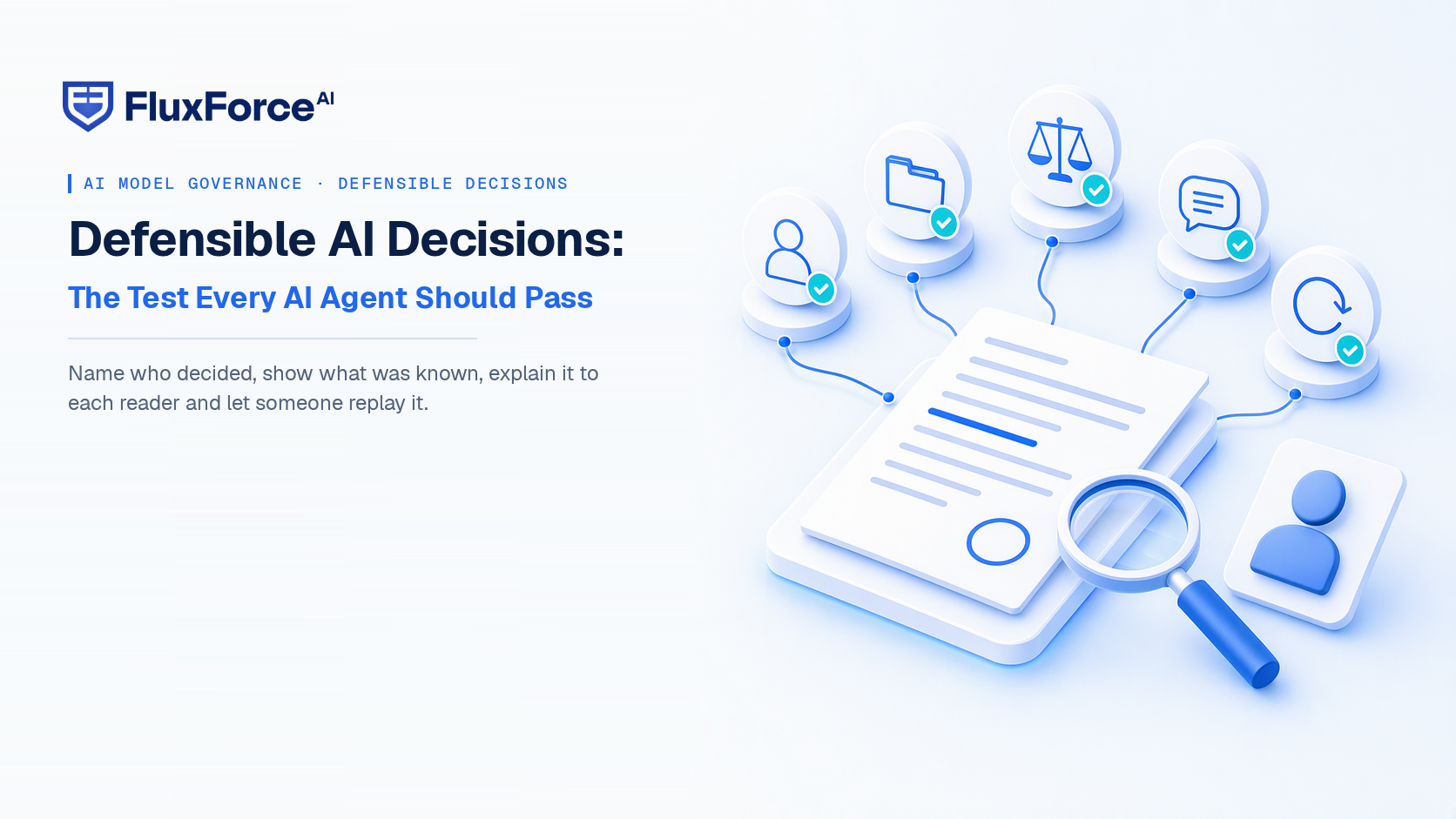
Zero trust doesn't stop at login. SP 800-207 describes continual monitoring with possible reauthentication and reauthorization, triggered by policy events such as elapsed time, a request for a new resource, a change to a resource or anomalous activity. Each agent action should leave a record of the agent's identity, the permission it used, the data it read, the time, and the person who approved anything with impact. Store those records in tamper-evident form, so an auditor can replay why an action happened without relying on someone's memory.
Turn Your Data into Real-Time Decisions
Transform your third-party risk management with Agentic AI Agents.
Conclusion
Using agentic AI agents to implement Zero Trust construction is no longer a concept for the future—it is a practical need for businesses that want to protect critical operations without slowing down work. With AI automation for Zero Trust security frameworks, organizations can continuously monitor AI actions, enforce dynamic policy controls, and isolate risks automatically, keeping operations safe and compliant.
Secure AI agents bring a new level of protection to zero trust security: every action is checked, verified continuously, and follows company policies. Using AI-powered zero trust principles, businesses can turn zero trust network access (ZTNA) from a fixed, static model into a flexible, intelligent system that reduces risks from both insider and outside threats.
Implementing agentic AI in security requires careful planning, strong monitoring, and smart risk management. Companies that successfully build Zero Trust architecture using AI agents can strengthen security while giving teams the freedom to innovate and work efficiently. The combination of autonomous AI agents and zero trust principles creates a resilient security system ready for the demands of modern digital business.
Share this article