.webp)








Listen to our podcast 🎧
Introduction
In high-risk global supply chains, sanctions screening must keep pace with procurement, vendor onboarding, and cross-border trade. Manual review often creates delays, false positives, and missed matches, especially when sanctions lists change frequently across OFAC, UN, and EU sources.
Automated sanctions screening helps CISOs enforce consistent checks across suppliers, partners, and transactions while reducing manual workload. AI-driven compliance systems can connect screening directly into onboarding and transaction workflows, improving both accuracy and speed.
This post covers what sanctions screening is, why CISOs need automation, which tools and strategies work best, and how AI can support audit-ready compliance at scale.
Why CISOs Need Automation in Sanctions Screening?
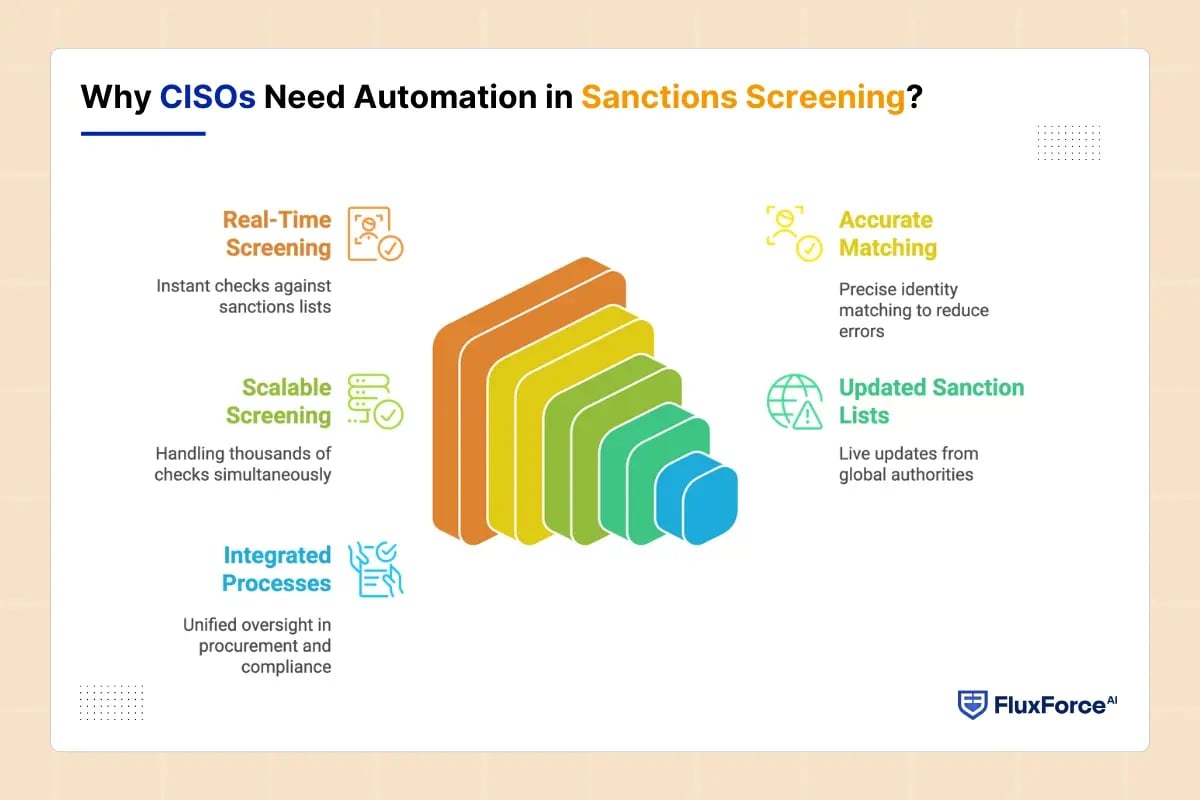
Modern supply chains move fast, and organizations must verify every supplier against potential risks at the same speed. Traditional paper-based screening often delays the process and introduces errors. Automation optimizes the compliance workflows with a self-driven tech approach.
Here’s how automation delivers the speed and accuracy CISOs need:
- Performing Real-Time Screening Instead of Paper Delays- Manual paper checks take time and slow down decisions. Automation screens suppliers instantly against sanctions lists and gives immediate clarity on potential high-risk connections.
- Delivering Accurate Matching Over Manual Errors- Traditional processes often miss variations in names or identities. Automated systems deliver precise identity matching to reduce errors and ensure correct flagging.
- Handling Scalable Screening without Issues- Paper-based methods fail under growing supplier lists. Automation manages thousands of checks at once, keeping compliance optimal even during expansion.
- Staying Updated to Sanctioned Lists- Manual methods often depend on outdated checklists. Automated systems pull live updates from global authorities like the United Nations (UN), the Office of Foreign Assets Control (OFAC), or the European Union (EU), ensuring screenings always match the latest requirements.
- Integrated Processes Instead of Isolated Checks- Paper-based checks are often performed separately from daily operations. Automation integrates sanctions screening into procurement and compliance workflows, giving CISOs unified oversight.
Automation Strategies for High-Risk Supply Chain Sanctions Screening
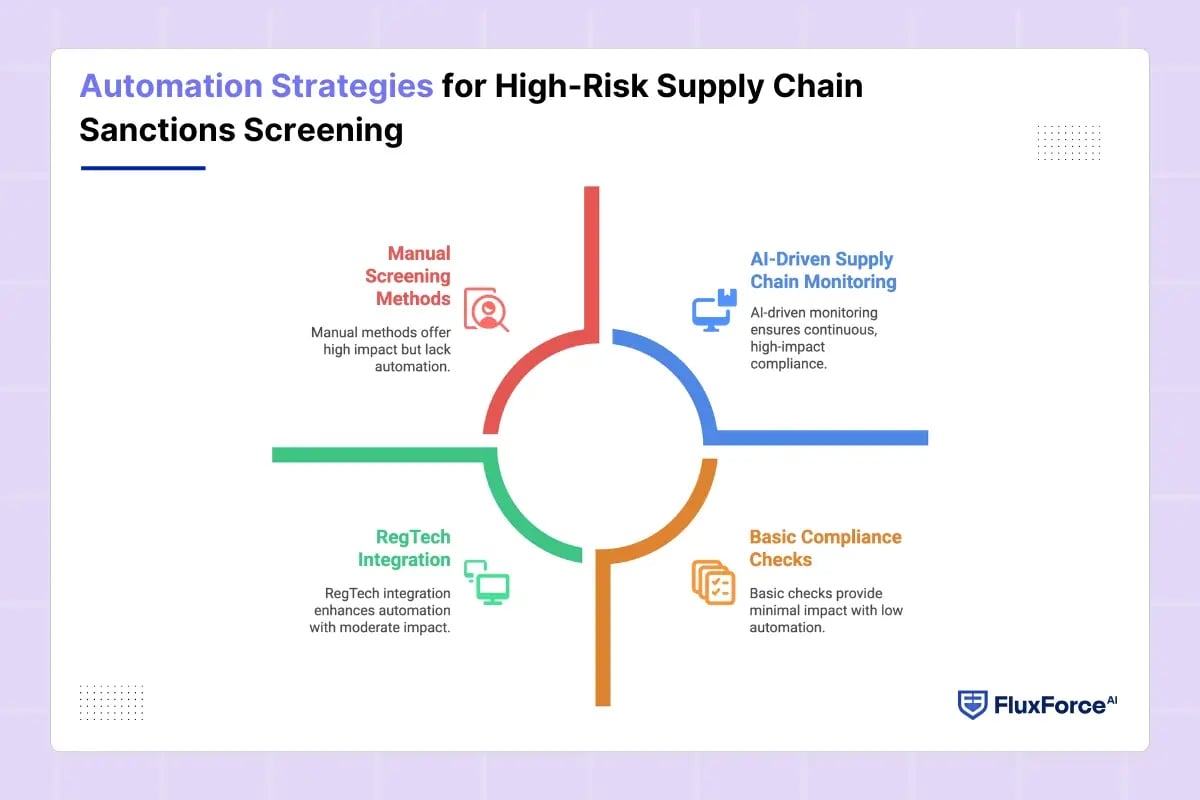
High-risk supply chains demand strict monitoring. Manual methods fail at scale, while AI in compliance enables faster, more reliable sanctions screening. CISOs should apply targeted automation strategies to strengthen oversight and prevent supply chain fraud.
- Adopt Artificial Intelligence Compliance Tools for Screening
Rather than relying on ineffective, traditional checks, organizations should prioritize machine learning or artificial intelligence compliance systems that can understand complex patterns with network and behavioural analysis. This enhances name-matching accuracy, reduces false positives, and improves decision-making.
- Implement AI-Driven Supply Chain Monitoring
Automating supply chain monitoring provides continuous visibility. CISOs must integrate AI-driven automated systems during onboarding, at rest, and even during transactions and shipments. This ensures consistent screening against evolving global sanctions or restrictions on Politically Exposed Persons (PEPs).
- Leverage RegTech for Real-Time Regulatory Updates
In 2024, regulatory penalties for non-compliance in high-risk supply chains reached $168.2 million alone in Europe. By integrating RegTech platforms, organizations can connect directly with global sanctions databases like UN, OFAC, and EU to receive real-time updates and maintain accuracy in supplier and partner screenings.
- Deploy AI in Regulatory Compliance Audits
AI in regulatory compliance automates the creation of audit trails, flags exceptions, and generates accurate compliance reports. This reduces audit preparation time and strengthens transparency in meeting regulatory obligations.
Challenges in Automation Adoption under Global Supply Chains
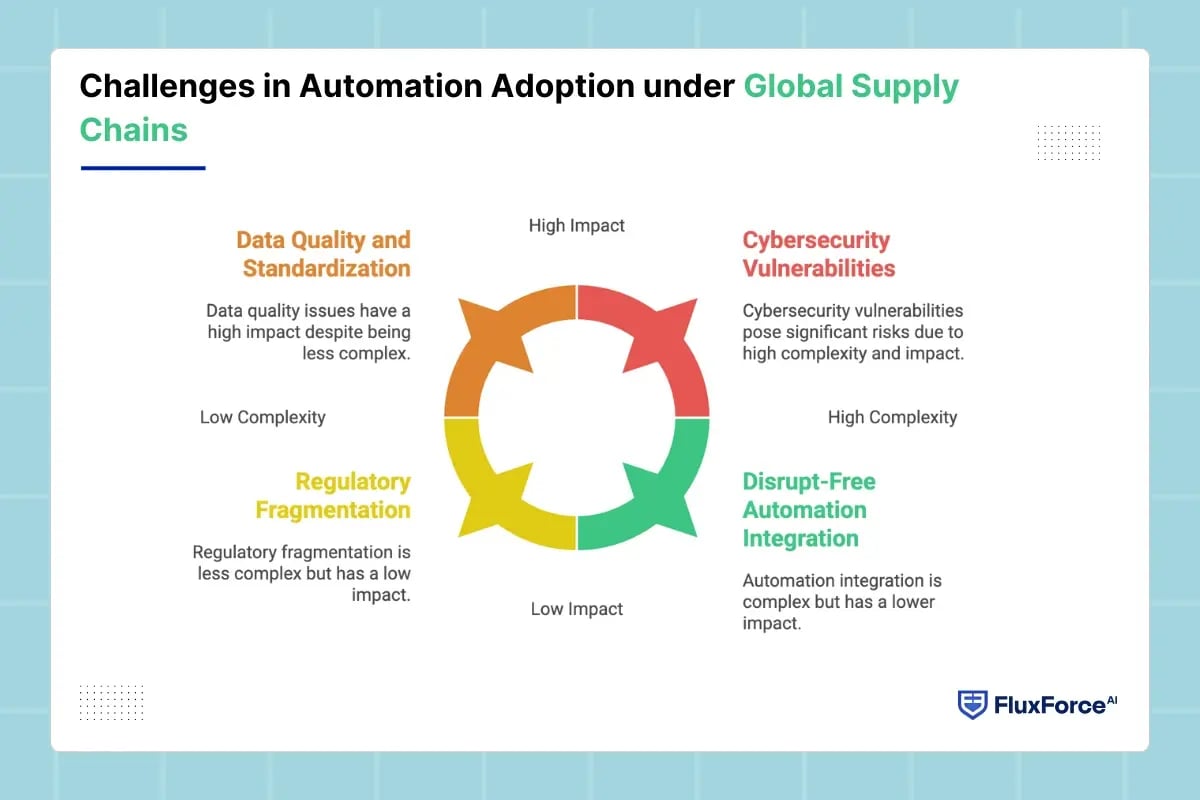
Automating sanctions screening creates clear benefits, but CISOs still need to manage several implementation risks. Poor supplier data can weaken match quality, while legacy system integration may slow deployment.
Regulatory fragmentation also makes it harder to maintain one consistent screening rule across all jurisdictions.
In addition, expanding automation increases the number of systems that need secure access, monitoring, and log protection.
The strongest programs address these risks early with data standardization, API-based integration, and strong governance controls.
Key AI-Driven Screening Solutions to Strengthen Regulatory Compliance
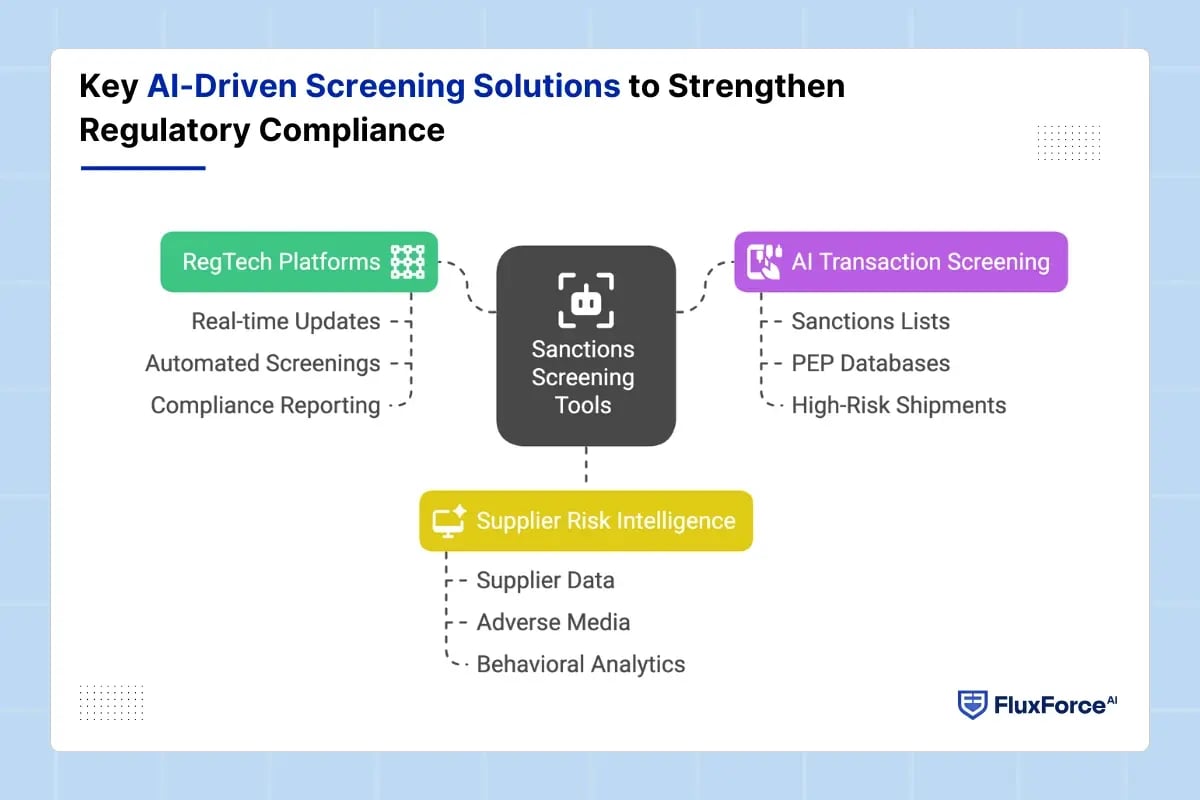
For CISOs, sanctions screening is not just a supplier-checking function. It is a broader compliance control that must cover vendors, shipments, transactions, and counterparties across the full operating network.
RegTech platforms centralize sanctions list updates from OFAC, UN, and EU sources and make it easier to manage screening outcomes in one dashboard.
AI transaction and shipment screening tools help teams flag restricted entities before clearance, while supplier risk intelligence platforms combine adverse media, behavioral signals, and ownership data to uncover hidden exposure.
These solutions are most effective when they connect directly into onboarding, procurement, and payment workflows.
-1.png?width=1200&height=628&name=hubspot%20blog%20(6)-1.png)
Real-World Applications of Compliance AI Solutions for Screening
Using AI-based compliance software for sanctions screening drives greater positive outcomes for an organization’s supply chain. Below are real-world examples:
- Maersk: AI-Powered Sanctions Compliance in Global Shipping
Maersk, a global leader in logistics, integrated AI-driven supply chain monitoring to screen thousands of suppliers and partners. Their compliance program emphasized:
- Continuous sanctions list integration from OFAC, EU, and UN databases.
- Automated monitoring of high-risk shipping routes and flagged jurisdictions.
- AI-powered anomaly detection in transaction and cargo records.
Result: This smart approach reduced compliance screening time by 40% and significantly improved the detection of high-risk entities in trade flows.
- Siemens: AI-powered Compliance for Supplier Risk Management
Siemens deployed artificial intelligence regulatory compliance systems in procurement and vendor management. Their program highlighted:
- AI-enhanced name matching across multilingual supplier records.
- Integration with global RegTech platforms for real-time updates.
- Automated audit trail generation for regulators.
Result: Siemens reported stronger compliance efficiency and saw an overall 30% reduction in false positives.
Conclusion
Sanctions screening is a core control for CISOs managing high-risk supply chains. Automated sanctions screening improves speed, reduces false positives, and helps organizations maintain consistent compliance across vendors, shipments, and transactions.
AI-driven workflows also improve audit readiness by generating clear decision records and keeping screening aligned with current regulatory updates.
FluxForce can support this operating model with agentic workflows that automate sanctions screening, compliance monitoring, and documentation without adding manual overhead.
For organizations looking to strengthen screening at scale, the priority is not more manual review but better automation, better governance, and better integration.
Share this article