


















Choosing compliance monitoring tools 2026 has become one of the hardest decisions a compliance officer or CISO makes, because the wrong platform locks your team into years of manual review queues and missed deadlines. Financial enterprises now face overlapping rules from BSA/AML regulators, the EU AI Act, and sanctions bodies, and the volume of alerts keeps climbing. The honest answer is that no single tool fixes everything, but the right one cuts review time and gives auditors a clean trail. This guide walks through what to look for, how to score vendors, and the specific capabilities that separate adequate aml compliance software from tools that actually scale with a small team.
Why Compliance Monitoring Tools Matter More in 2026
Regulators have shifted from checkbox audits to outcome-based reviews. They want evidence that your monitoring catches real risk, not just that you bought a platform. That change raises the stakes for every buying decision.
The cost of getting it wrong is concrete. AML-related penalties across global banks topped several billion dollars in recent years, and most of those fines traced back to weak transaction monitoring or late filings. According to the Financial Crimes Enforcement Network (FinCEN), institutions are expected to maintain risk-based programs that adapt as threats evolve, which manual spreadsheets simply cannot do at scale.
The shift toward anti money laundering technology 2026
Modern anti money laundering technology 2026 leans on machine learning to score risk rather than firing rules at fixed thresholds. The difference shows up in false positive rates. Rule-only systems often flag more than 90% of alerts as noise, while AI-assisted scoring can push genuine hit rates much higher. We cover this tradeoff in our breakdown of rule-based systems versus AI-driven solutions for false positives.
Who needs these tools most
Banks, fintechs, insurers, and supply chain operators all sit under aml compliance obligations, but their needs differ. A community bank wants a defensible bsa aml compliance checklist baked into the workflow. A fintech with a fintech bsa aml small team wants automation that replaces three analysts it cannot afford to hire.
What to Look for in AML Compliance Software
Before comparing vendors, fix your requirements. The best aml compliance software covers detection, investigation, and reporting in one auditable chain. Here are the core capabilities that matter.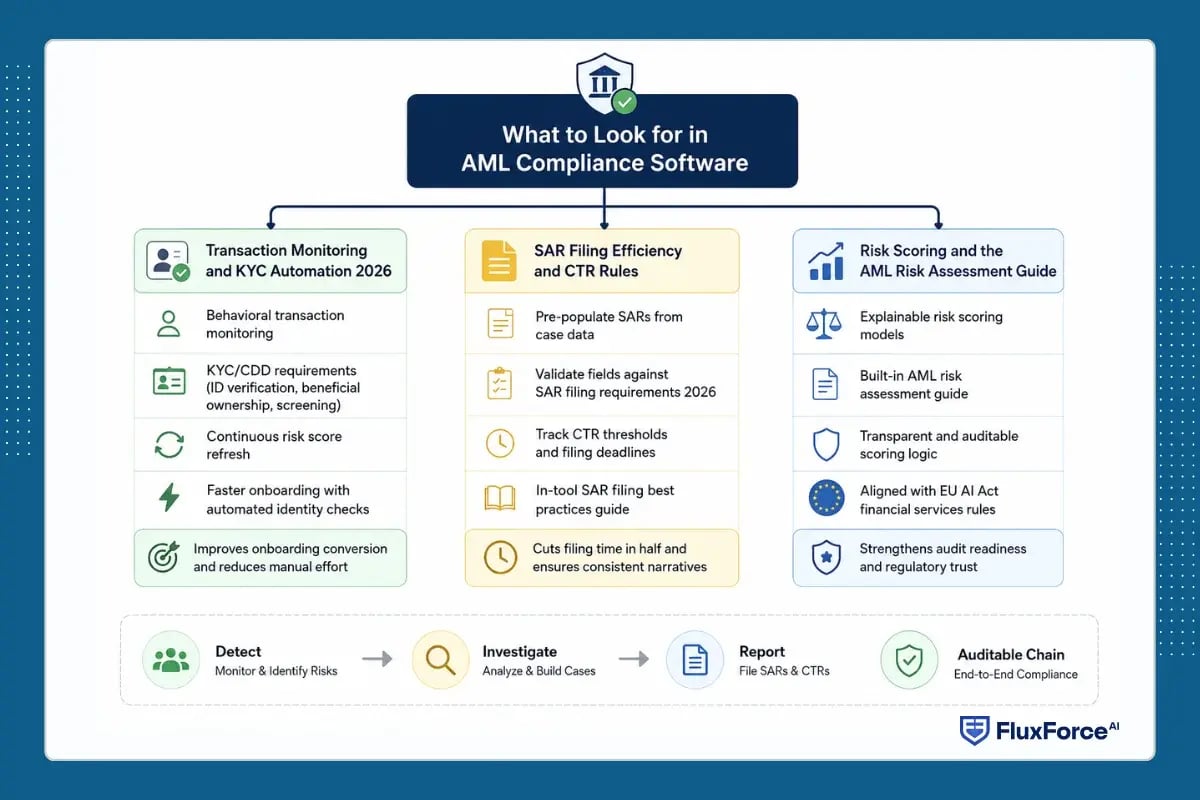
Transaction monitoring and kyc automation 2026
Strong platforms combine behavioral transaction monitoring with kyc automation 2026 so onboarding risk and ongoing activity feed the same risk profile. Look for kyc cdd requirements banks support out of the box: identity verification, beneficial ownership checks, and ongoing screening. The platform should refresh customer risk scores automatically rather than waiting for an annual review.
Kyc automation also matters for speed. When identity checks run in seconds instead of days, onboarding conversion improves and analysts stop rekeying data. Our piece on scaling digital lending with AI underwriting agents shows how automated checks remove the manual bottleneck.
SAR filing efficiency and CTR rules
Filing is where many programs lose time. A tool should pre-populate suspicious activity reports from case data, validate fields against sar filing requirements 2026, and track ctr filing rules thresholds so nothing slips past the deadline. Good sar filing efficiency means an analyst confirms a narrative instead of building it from scratch. That single feature can cut filing time by half.
Follow sar filing best practices by keeping a clear suspicious activity report guide inside the tool itself, so new analysts produce consistent narratives. A built-in suspicious activity report guide also helps during exams, because reviewers can see your standard process.
Risk scoring and the aml risk assessment guide
Every vendor claims risk scoring, but the useful question is whether the model is explainable. Auditors want to know why an alert fired. A platform that ships with an aml risk assessment guide and documents its scoring logic protects you during a regulatory review. This is also where the EU AI Act financial services rules bite, since high-risk AI systems must be transparent and traceable.
Onboard Customers in Seconds

How Do You Evaluate Compliance Monitoring Tools?
Evaluating compliance monitoring tools means scoring each vendor against detection accuracy, audit readiness, integration effort, and total cost over three years, not just the sticker price. Run a structured scorecard so the loudest sales demo does not win by default.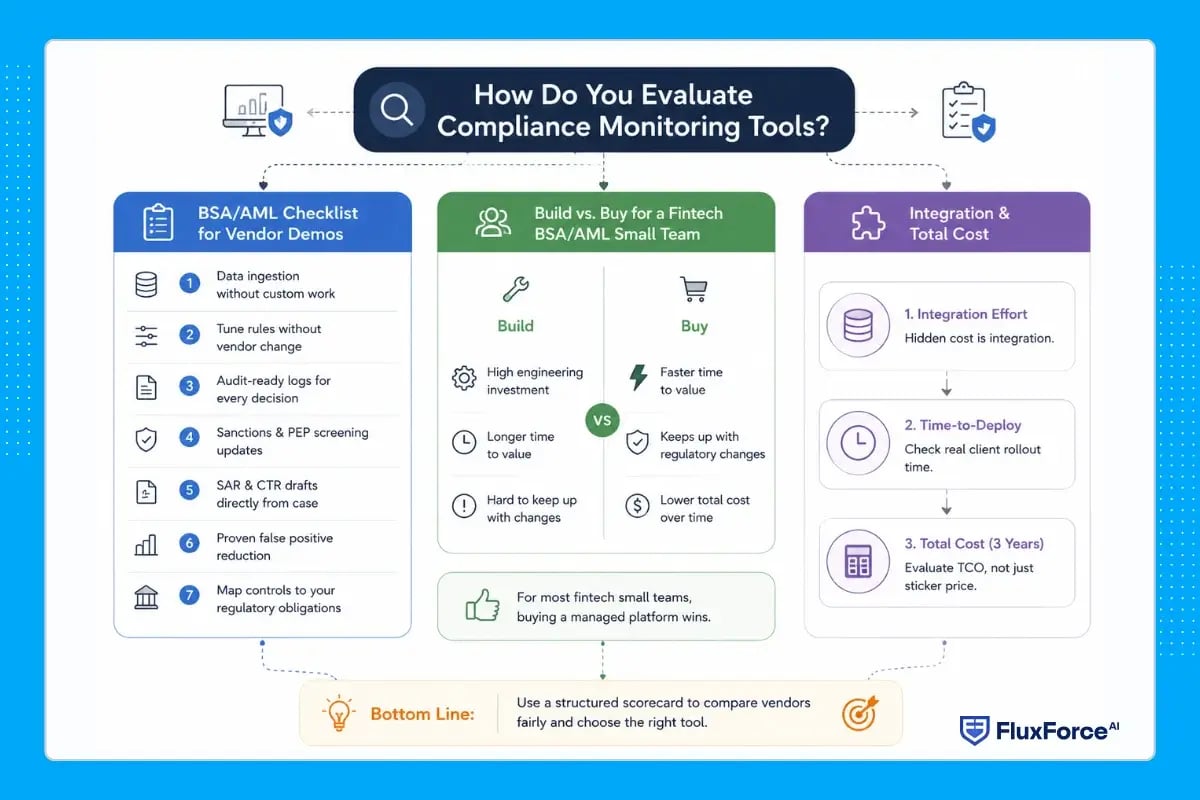
A practical bsa aml compliance checklist for vendor demos
Use this bsa aml compliance checklist when you sit through demos:
- Does it ingest your core banking or payment data without custom engineering?
- Can it tune detection rules without a vendor change request?
- Does it generate audit-ready logs for every alert decision?
- How does it handle sanctions and PEP screening updates?
- Can it produce SAR and CTR drafts directly from a case?
- What is the documented false positive reduction from real clients?
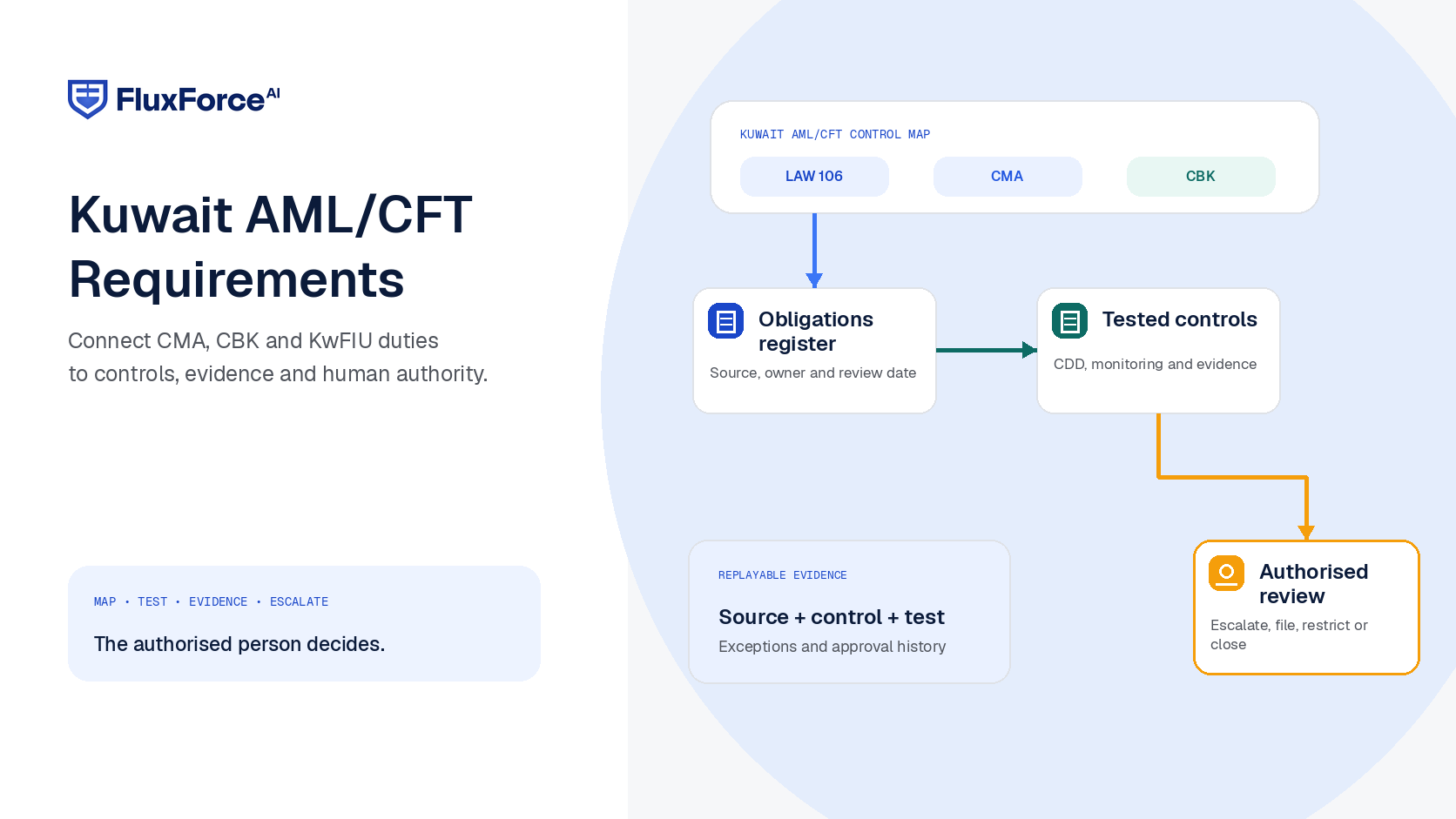
- Does it map controls to your regulatory obligations?
If a vendor cannot answer four of these clearly, move on. For sanctions specifically, our guide to sanctions screening automation strategy goes deeper on screening accuracy.
Build versus buy for a fintech bsa aml small team
A fintech bsa aml small team rarely has the engineering capacity to build monitoring in-house and keep it current with rule changes. Buying a managed platform usually wins on time-to-value. The tradeoff is less control over the model, so insist on configuration access before signing.
Integration and total cost
The hidden cost is integration. A tool that needs six months of data plumbing delays your protection and burns budget. Ask for a reference client of similar size and verify how long their rollout actually took.
What Does an Effective BSA AML Compliance Checklist Cover?
An effective bsa aml compliance checklist covers customer due diligence, ongoing transaction monitoring, sanctions screening, suspicious activity reporting, and independent testing, all documented with timestamps. Treat it as a living control map, not a one-time form.
KYC, CDD, and enhanced due diligence guide essentials
Your program needs tiered diligence. Standard customers get baseline checks, while higher-risk relationships trigger an enhanced due diligence guide workflow: source-of-funds review, senior approval, and more frequent monitoring. The platform should route these automatically based on the customer risk score.
This matters most for bsa aml compliance community banks, where one analyst may handle the whole program. Automation that escalates only the right cases keeps a lean team defensible. Our article on verification strategy for compliance officers in insurance shows how tiered checks apply across regulated sectors.
Audit trails and independent testing
Regulators expect independent testing of your monitoring. Choose a tool that exports clean evidence packages so your auditor is not reconstructing decisions from screenshots. A defensible audit trail is the single most underrated feature in aml compliance software.
How AML Compliance Fintech Teams Cut Manual Review
The biggest win for any aml compliance fintech operation is shrinking the manual review queue without missing real risk. AI-assisted triage handles the obvious noise so analysts spend time on genuine cases.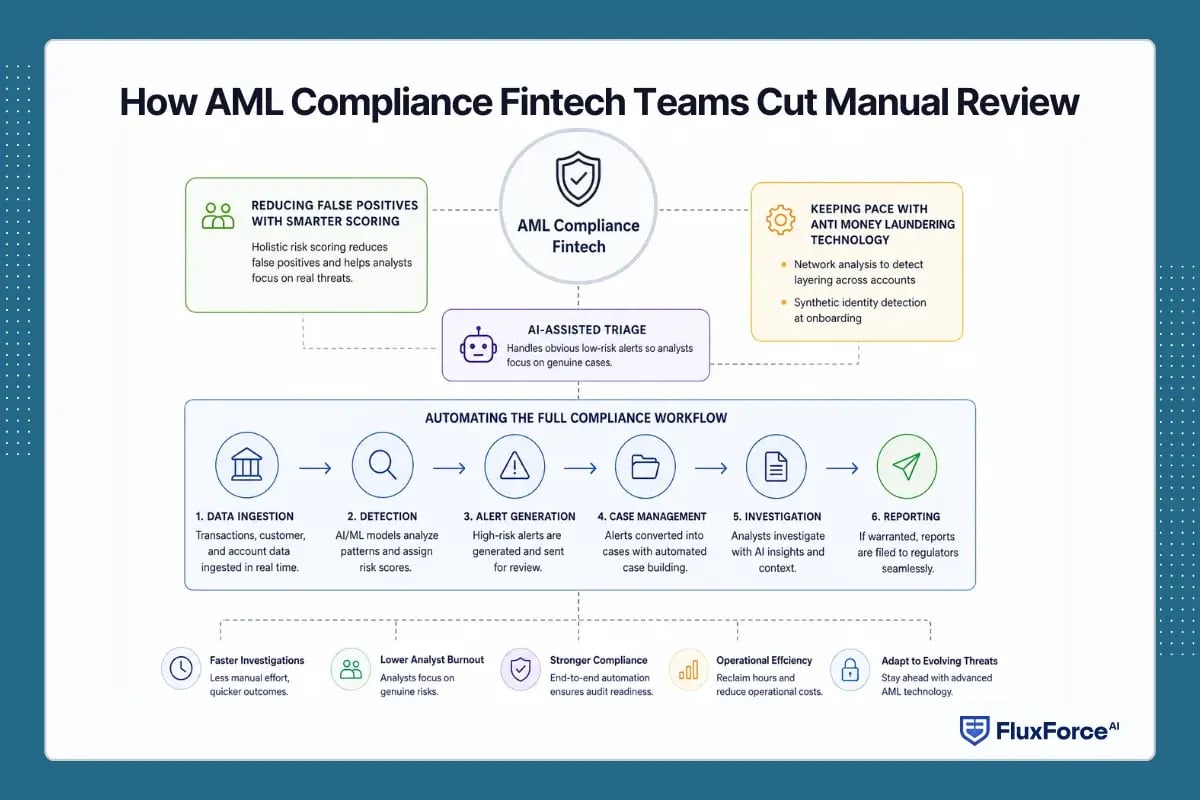
Reducing false positives with smarter scoring
When monitoring scores risk holistically instead of firing single-rule alerts, false positives drop sharply. In our client engagements, agentic AI has meaningfully cut false positives in real deployments. Fewer false alerts means faster genuine investigations and lower burnout on small teams.
Automating the full compliance workflow
The goal is an end-to-end chain where detection, case building, and filing connect. Platforms built for regulatory compliance automation link these stages so a flagged transaction becomes a reviewed case and, if warranted, a filed report without manual handoffs. This is where aml compliance fintech teams reclaim the most hours.
Keeping pace with anti money laundering technology
Threats change, so your tooling must update. Anti money laundering technology now includes network analysis to spot layering across accounts and synthetic identity detection at onboarding, a topic we explore in detecting synthetic identity fraud in real time.
Common Mistakes When Choosing AML Compliance Software
Even experienced buyers slip. Knowing the traps saves money and audit pain.
Over-indexing on price
The cheapest aml compliance software often costs more later through manual workarounds and failed exams. Score on outcomes, not license fees. According to Deloitte's analysis of financial crime compliance, the largest costs are operational, not the technology itself.
Ignoring explainability
A black-box model that cannot justify an alert will fail under EU AI Act financial services scrutiny. If the vendor cannot show you why a decision was made, that is a deal-breaker for regulated use.
Skipping a real pilot
Demos use clean data. Run a pilot on your own messy transactions before committing. A two-week pilot reveals integration pain and true false positive rates that a polished demo hides.
Onboard Customers in Seconds
Conclusion
Choosing compliance monitoring tools 2026 comes down to matching real capabilities to your risk profile: explainable risk scoring, kyc automation, sar filing efficiency, and audit-ready trails that hold up under examination. Score vendors against a clear bsa aml compliance checklist, run a pilot on your own data, and weigh three-year total cost over the license price. For teams ready to replace manual queues with automated, auditable workflows, FluxForce builds regulatory compliance automation that connects detection, investigation, and filing in one chain. Map your requirements first, then book pilots with two vendors and let your own data decide. The right aml compliance software pays for itself in reclaimed analyst hours and exams you pass without scrambling.
Share this article