


















Listen To Our Podcast🎧
Introduction
Banks are using more artificial intelligence than ever. Yet, when it comes to GDPR and PSD2 compliance, many still rely on slow, manual processes, which results in delayed decisions, higher costs, and increased risk.
According to recent findings by McKinsey & Company, 88% of businesses now use AI regularly in at least one area. This means the pressure is on for banks to update how they manage compliance.
On top of this, regulations like General Data Protection Regulation and Payment Services Directive 2 demand stronger proof-trails for clearer data flows and fast responses to policy changes. But most existing compliance systems were never built for this level of speed or complexity. According to a report by Deloitte, banks are held back by traditional data systems and rising policy demands.
How Agentic AI is the game changer in this?
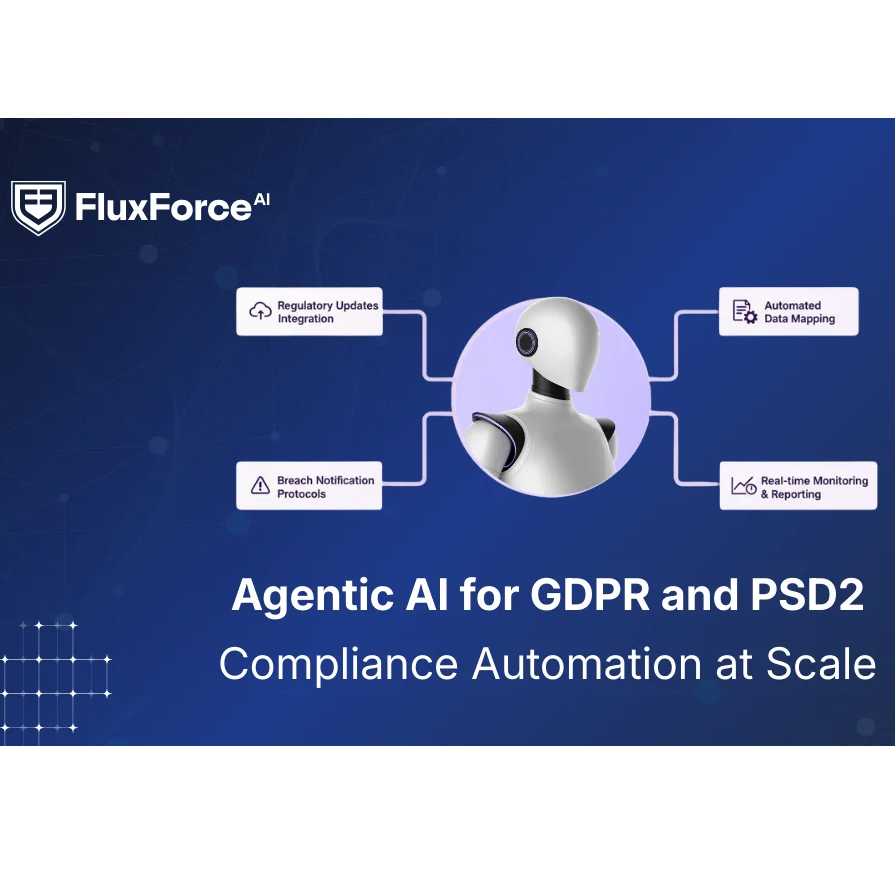
Agentic AI for GDPR and agentic AI for PSD2. These smart systems monitor updates, enforce controls, and create audit-ready logs automatically. They put automated compliance management and real-time compliance monitoring at the heart of banking operations.
A study by Capgemini shows that for AI to earn trust, banks must build transparency into systems from day one.
So, here’s the main concern of financial leaders: Can banks keep using old compliance tools and generic cloud solutions, or is it time to move to deep-built systems that handle AI-driven GDPR compliance and PSD2 compliance automation at scale?
Throughout this blog, we’ll discuss how financial institutions are using agentic AI for GDPR and PSD2 compliance automation to rebuild their compliance workflows. We’ll cover how autonomous systems can detect data risks early, generate audit-ready trails, and maintain policy alignment without manual oversight.
Agentic AI streamlines GDPR and PSD2 compliance automation at scale
Stay ahead of regulations !

The compliance bottleneck: Why traditional systems Can’t keep up?
Why banks still struggle with compliance efficiency ?
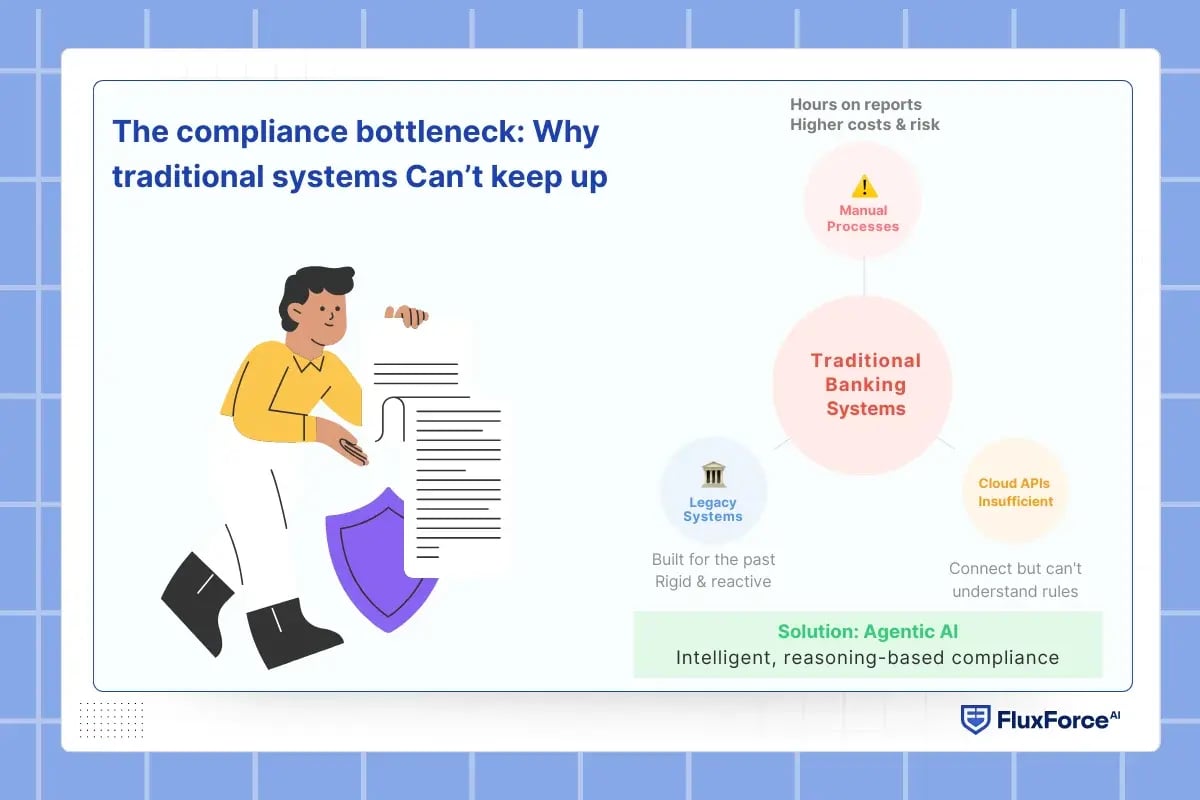
Every bank deals with compliance pressure. Regulations keep changing, but systems stay rigid. Teams spend hours checking reports, updating documents, and verifying data across different platforms. This manual cycle may seem safe, but it slows down adaptation and increases the chance of missing key updates under strict rules like GDPR or PSD2. As compliance tasks pile up, banks face higher costs, longer response times, and greater risk of penalties.
Legacy systems were not built for modern demands
Traditional compliance tools were made for stable environments with predictable rules. Today’s financial world is open, fast, and data-driven. These old frameworks still depend on manual audits and periodic checks. When new regulations arrive, banks rush to adjust their workflows and test data handling again. This constant reaction to change creates stress and leaves too much room for human error.
Why cloud APIs alone don’t fix compliance gaps ?
Cloud APIs are good at connecting systems, but not at understanding regulations. An API can transfer or fetch data, but it cannot determine whether that data meets GDPR consent rules or PSD2 authentication requirements. Compliance is all about understanding what is allowed, who can access it, and when which needs reasoning, not just automation.
This is where agentic AI brings real change by helping compliance systems to work more accurately.
How Agentic AI enables continuous and context-aware compliance
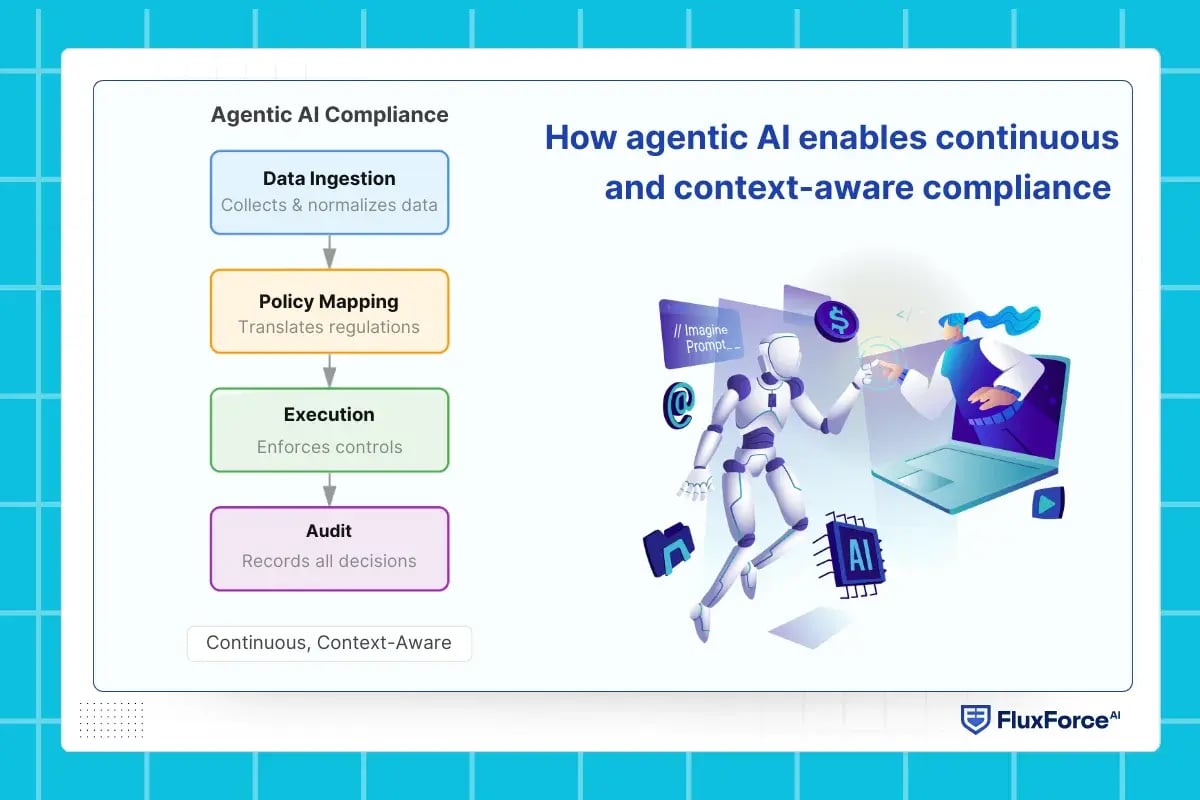
Most banks still depend on legacy systems that handle compliance like a checklist. Agentic AI changes that process by enabling systems that think and act on their own. Instead of waiting for policy updates to be manually added, these AI agents detect updated regulations, adjust parameters, and implement compliance actions automatically across workflows.
Agentic AI introduces autonomous decision systems capable of executing complex compliance tasks with minimal human input.
How this works inside a bank’s compliance architecture ?
Let’s say a bank is handling GDPR consent management. Agentic AI can monitor every consent record, identify when retention periods expire, initiate deletion tasks, and generate audit logs, all without human intervention.
In a PSD2 environment, AI agents can continuously monitor open banking APIs, verify third-party authentication, and block access when non-compliant activity is detected.
This approach replaces batch-based compliance checks with real-time compliance monitoring that fits into daily banking operations. Each AI agent acts as a self-sustaining node within a larger compliance mesh, keeping the system adaptive and context aware.
Core components that power this automation
- Data ingestion agents – collect and normalize data from transactions, API logs, and consent systems.
- Policy mapping agents – translate regulatory text (like GDPR or PSD2) into actionable internal controls.
- Execution agents – enforce compliance by revoking permissions, generating alerts, or triggering secure workflows.
- Audit agents – record every decision for traceability, supporting both internal reviews and regulator audits.
Together, they form a system where compliance workflow automation is embedded.
Automating GDPR and PSD2 with agentic AI
For most banks, compliance still runs on fragmented systems — manual KYC checks, static policy documents, and separate teams for GDPR and PSD2 oversight. Agentic AI simplifies this by connecting these silos into a unified, automated compliance management framework.
How Agentic AI strengthens GDPR compliance ?
GDPR compliance often breaks down around three areas: consent tracking, data minimization, and audit reporting. Here’s how agentic AI helps manage them more effectively:
- Automated consent lifecycle management – AI agents track where consent was given, how it’s used, and when it expires. They can automatically revoke access or anonymize records once the data retention window closes.
- Real-time data mapping and classification – Instead of static data inventories, AI agents constantly map and classify sensitive information, tagging personal data across systems for privacy enforcement.
- Self-auditing reports – The system logs every action, creating real-time GDPR audit trails that compliance officers can access on demand.
This automation not only ensures adherence to GDPR obligations but also reduces the human workload behind data governance and reporting.
How PSD2 compliance automation works ?
PSD2 requires banks to provide secure open access to third-party providers (TPPs) while maintaining strict control over authentication and transaction monitoring. Agentic AI addresses these operational gaps through:
- Continuous API surveillance – AI agents watch open banking APIs for anomalies or policy breaches, ensuring data access aligns with PSD2 mandates.
- Dynamic authentication management – When a TPP’s risk profile changes, AI automatically adjusts access privileges and notifies compliance teams.
- Regulatory event alerts – The system can trigger automated alerts whenever a transaction violates PSD2 parameters, creating faster responses to security and compliance issues.
By running these tasks autonomously, banks can sustain real-time compliance monitoring without slowing digital operations.
Connecting KYC, AML, and regulatory intelligence
Agentic AI also integrates well with automated KYC & AML workflows.
For example, identity verification agents can automatically validate new users against multiple databases, while transaction agents track unusual payment behaviors and trigger AML investigations. When linked to fintech regulatory intelligence systems, these agents can instantly adapt to new EU or FCA guidelines without requiring code updates.
Bridging innovation with trust
The power of AI-driven GDPR compliance and PSD2 compliance automation lies in scalability. Whether a bank serves 50,000 or 5 million users, AI agents maintain consistent controls. More importantly, they create a layer of trust — one that’s verifiable through continuous policy enforcement and auditable at every stage.
Measuring ROI in AI-Driven Compliance
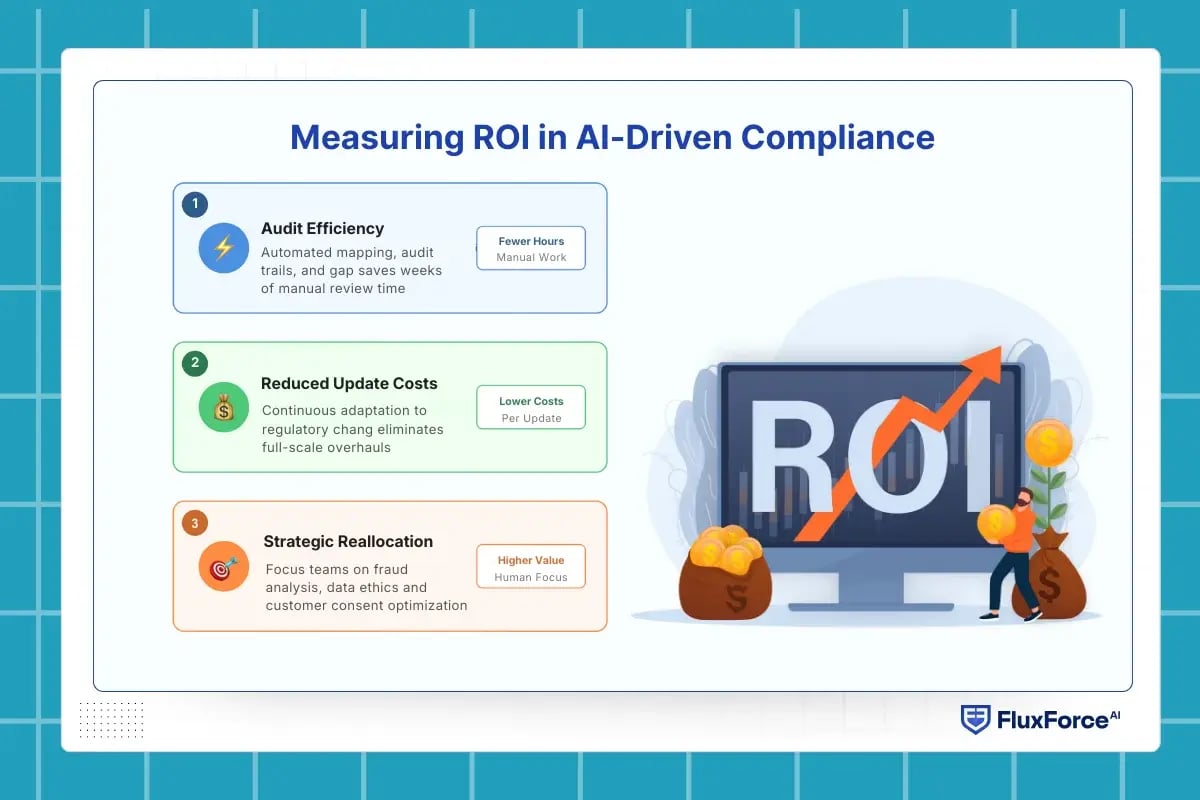
The biggest challenge in compliance is not only meeting regulations but also proving the value of doing so efficiently. For financial institutions, ROI from agentic AI comes from measurable gains in three key areas: speed, accuracy, and adaptability.
1. Audit efficiency with fewer manual hours
Traditional GDPR and PSD2 audits consume thousands of staff hours every year. Agentic AI cuts this down by automatically mapping controls, generating audit trails, and identifying gaps before regulators do. This alone saves weeks of manual review time across compliance and risk teams.
2. Reduced cost of compliance updates
Each time a new directive is introduced, banks typically spend heavily on consulting, manual testing, and documentation. AI agents trained on policy data and PSD2 rule sets continuously adapt to regulatory updates, avoiding the need for full-scale overhauls.
3. Strategic reallocation of compliance budgets
When automation handles repetitive checks, financial institutions can focus human effort on higher-value areas such as fraud pattern analysis, data ethics reviews, or customer consent optimization. That operational shift directly improves compliance ROI while strengthening data governance maturity.
In short, agentic AI transforms compliance from a fixed cost into a scalable investment.
Simplify regulatory tasks and stay ahead
Agentic AI streamlines GDPR and PSD2 compliance automation at scale
Conclusion
The next phase of compliance isn’t about faster audits or better dashboards but about creating self-adaptive ecosystems that learn and evolve with every regulatory change. Agentic AI makes this possible by connecting data, rules, and actions into a continuous feedback loop that keeps compliance always-on, not one-time.
For banks and fintechs, this shift means fewer compliance silos, real-time monitoring across GDPR and PSD2 frameworks, and an infrastructure that updates itself as laws evolve.
Business leaders who invest early in these AI-driven models will see not just lower operational costs, but a stronger reputation for trust, transparency, and digital accountability. The winners in this new compliance era will be those who see regulation as a competitive edge powered by intelligent automation.
Share this article