



















Listen to our podcast 🎧
Introduction
In an attempt to speed up decisions across banking, the deployment of AI systems has accelerated rapidly. However, with a lack of transparency and audit-ready decision logic, these AI models are becoming liabilities instead of assets. Black-box AI models, which come with a promise to deliver high efficiency, have created costly blind spots for banking compliance teams over the past few years. This detailed analysis examines the architectural and operational limitations of black-box AI systems, highlighting why financial institutions that fail to address these issues in 2026 may face significant operational and regulatory losses.Understanding these risks is critical for compliance officers responsible for maintaining audit-ready AI governance while supporting accelerated decision-making in banking.

Key Reasons Black-Box AI Fails Compliance Reviews
The challenges of using non-transparent AI in banking are mainly compliance-related. When a model cannot show how it reached a decision, regulators treat every output as a potential risk.
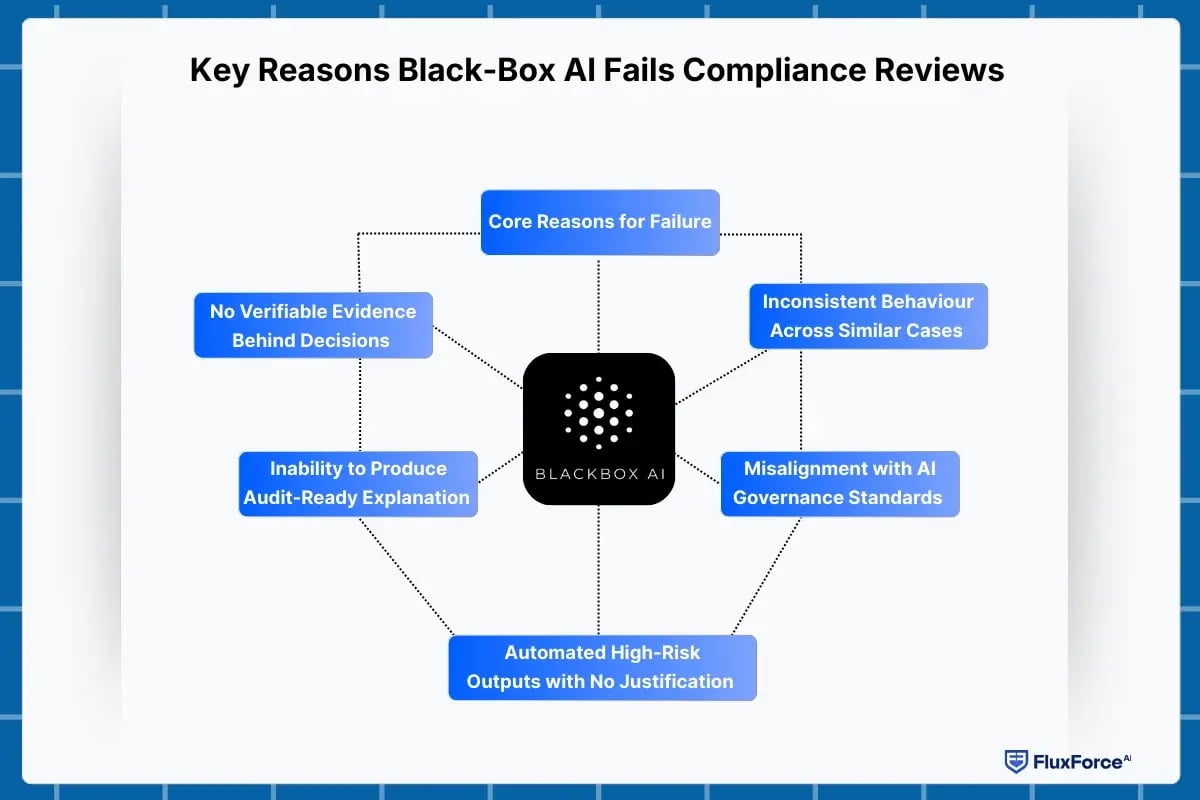
Core Reasons for Failure:
1. No Verifiable Evidence Behind Decisions
In compliance reviews, auditors need proof of how a decision was formed. Black-box models cannot produce verifiable evidence, making every output unverifiable and automatically non-compliant.
2. Inability to Produce Audit-Ready Explanation
Regulators expect clear justification for every automated decision. Black-box AI doesn’t act as explainable AI, leaving compliance teams unable to defend outcomes during audits or regulatory inquiries.
3. Inconsistent Behaviour Across Similar Cases
Auditors check whether similar cases produce similar outcomes. Black-box systems often generate inconsistent decisions with no explanation. Inconsistency without justification is treated as a high-risk compliance violation.
4. Misalignment with AI Governance Standards
Banks must prove that automated decisions follow internal policies and governance frameworks such as PDPC (Personal Data Protection Commission) and GDPR (General Data Protection Regulation). Since black-box AI cannot map decisions to policy rules, reviewers cannot confirm alignment.
5. Automated High-Risk Outputs with No Justification
In processes such as AML, lending, and fraud, auditors strictly examine why alerts were triggered, cleared, or ignored. Black-box systems, with no AI explanation or event-level justification, create unresolved high-risk gaps that regulators classify as audit failures.
How Black-Box AI Creates Audit Failure Scenarios
Black-box algorithms fail long before a compliance review begins. The real risk starts during audit preparation, when banks must prove model logic, governance alignment, and decision traceability. Out of several real-world failure modes, three stand out as the most critical:
.webp?width=1200&height=800&name=Key%20Reasons%20Black-Box%20AI%20Fails%20Compliance%20Reviews%20(2).webp)
Scenario 1: AI Flags Customers as “High Risk” With No Trail of Logic
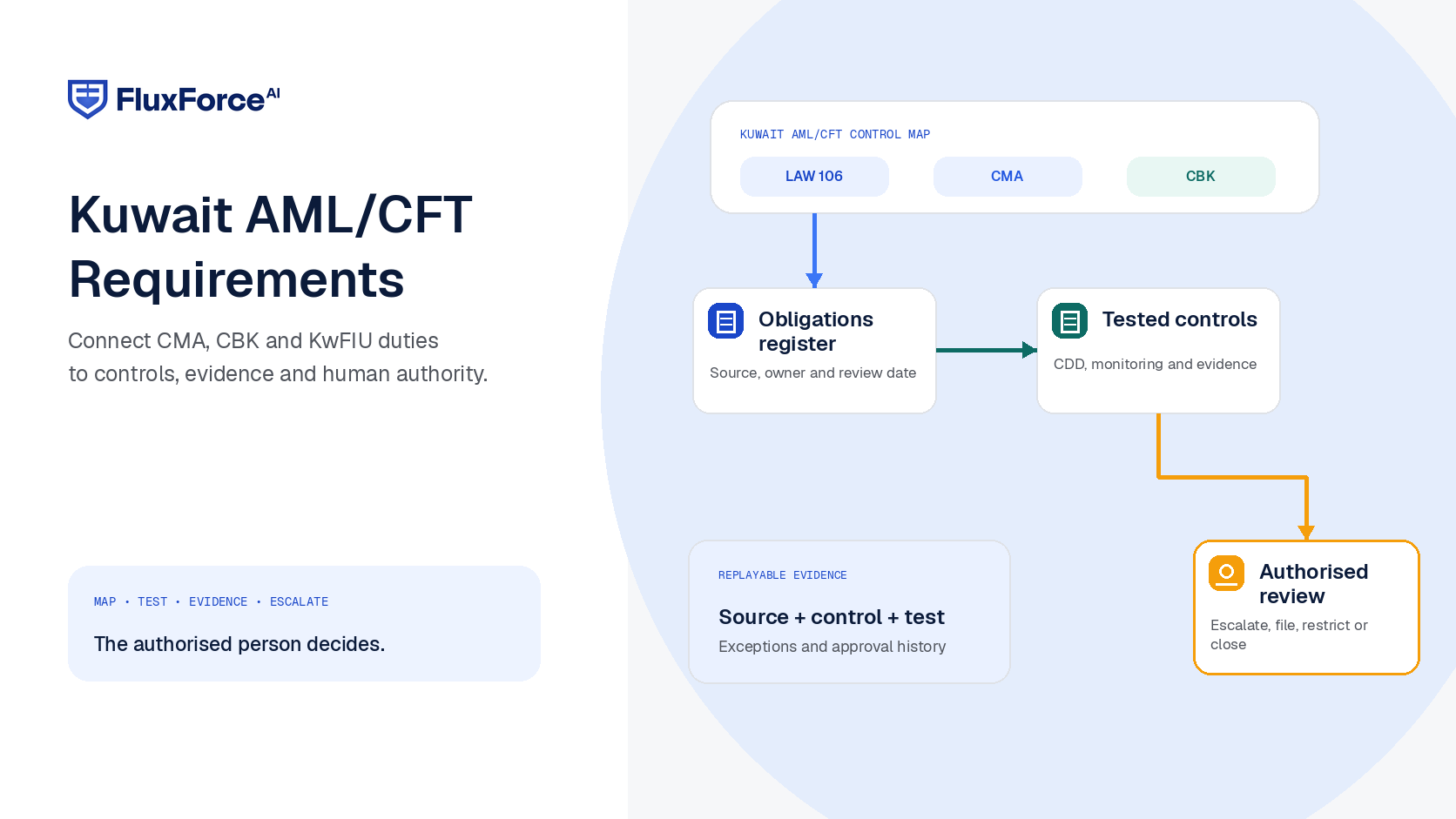
During AML reviews, auditors expect event-level justification for every alert. A black-box model may flag a customer as high risk without showing the transaction pattern, anomaly indicators, or risk factors involved. With no visible reasoning, the bank cannot defend the alert. Auditors classify it as an unverifiable decision, marking it as a direct compliance failure.
Scenario 2: Inconsistent AML or Fraud Alerts Across Similar Cases
Auditors test decision consistency across similar behaviours. When two nearly identical transactions produce different alert severity, the AI must justify the deviation. A black-box system cannot. Regulators treat this as uncontrolled model drift or logic instability, escalating the issue as a significant reliability risk.
Scenario 3: AI Decisions Do Not Map Back to Governance or Policy Rules
Banks must prove that automated decisions follow PDPC AI governance and other regulatory or internal frameworks. During audits, reviewers ask how each model outcome aligns with defined policy logic. Black-box systems cannot provide this mapping. The result is an immediate governance violation—often forcing the bank to suspend model use until traceability controls are implemented.
What Compliance Directors Expect from Modern AI Systems ?
For managing the growing reliance on AI decision-making, compliance directors expect systems that are fully explainable, auditable, and aligned with CISO-level AI governance policies.
Here’s what compliance directors look for:
- The AI should be explainable – An explainable AI clearly shows how each decision is made, with transparent reasoning that auditors and regulators can review in real time.
- Decisions must be auditable – Every model output should generate an audit trail, including inputs, feature importance, and decision rationale, making regulatory inspections straightforward.
- Alignment with governance policies – AI models must comply with CISO-approved frameworks, ensuring risk management, operational controls, and regulatory obligations are fully addressed.
- Traceable risk scoring – Compliance teams need visibility into how AI assigns risk, especially in credit, fraud, or AML workflows, to prevent unexplained or biased outcomes.
- Documentation on-demand – Model documentation, including training data, assumptions, and testing results, must be readily accessible for internal reviews and external audits.
How Explainable AI Fixes Black-Box Failures ?
Explainability in AI brings transparency to automated decisions, exactly what regulators expect. Below is a detailed look at how AI explainability impacts regulatory audits, enabling compliance teams to trace, justify, and defend every model output.
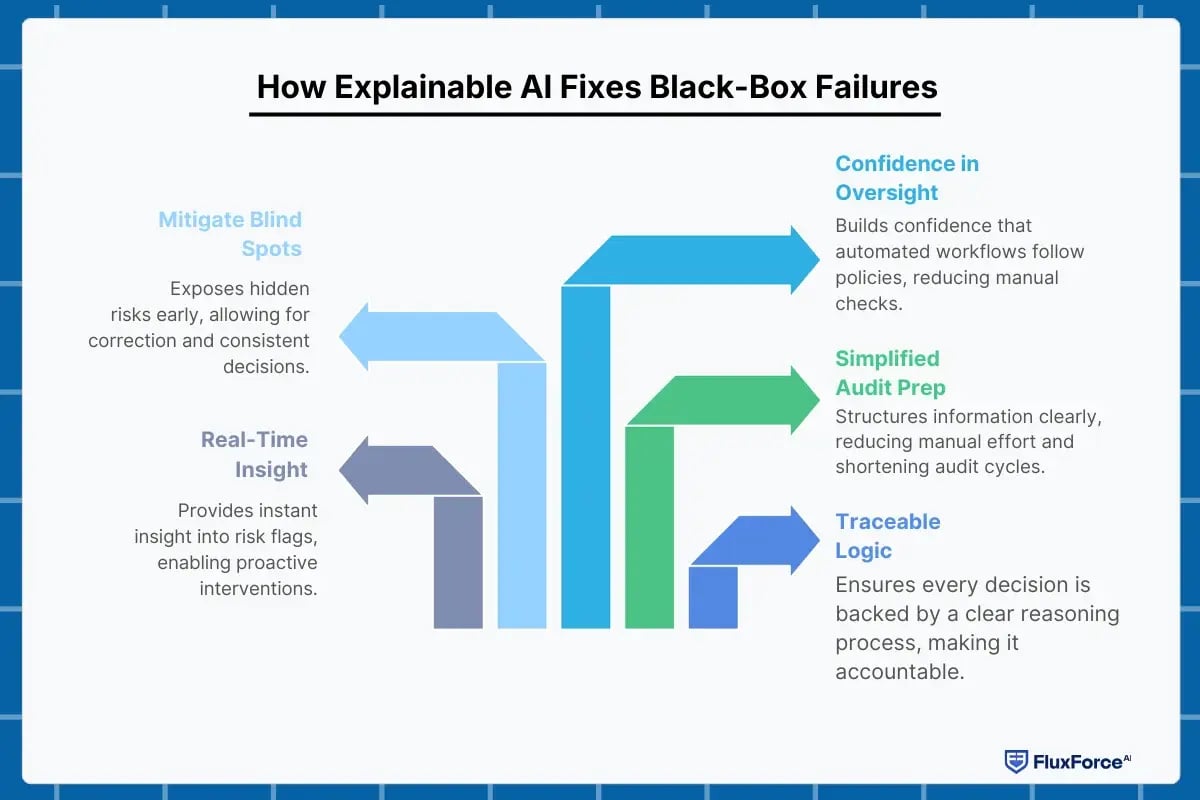
1. Traceable Logic for Every Decision
Explainable AI ensures that every automated decision is backed by a clearly recorded reasoning process. Auditors and compliance teams can review the exact steps, inputs, and model reasoning, making every decision fully traceable and accountable.
2. Real-Time Insight into Risk Flags
XAI provides instant insight into why a model generated alerts or classified a case as high risk. Compliance teams can examine contributing factors, anomalies, and data points in real time, enabling proactive interventions and reducing the likelihood of audit issues.
3. Simplified Audit Preparation
Explainable AI structures this information clearly, offering detailed explanations for each decision, including feature influence and policy alignment. This reduces manual effort, shortens audit cycles, and ensures regulatory reviewers receive complete, understandable documentation.
4. Mitigation of Operational Blind Spots
Black-box AI hides risks that only surface during audits, such as inconsistent decisions or unexplained outcomes. Explainable AI exposes these blind spots early, allowing teams to identify patterns, correct model behaviour, and ensure consistent decisions.
5. Confidence in Automated Oversight
Explainable AI provides compliance officers with confidence that automated workflows follow internal policies and external regulations. Teams can defend decisions with documented evidence, reduce dependency on manual checks, and maintain operational efficiency.
Effective Blueprint to Compliance-Ready AI
Gartner predicts that by 2026, 60% of large enterprises will adopt AI governance tools for explainability and accountability. Building compliance-ready AI requires audit-friendly architecture, robust controls, and comprehensive documentation. Below are the key requirements to ensure compliance-ready AI systems.
1. Build Audit-Friendly AI Architecture
Design AI systems for complete transparency and traceability.
- Ensure decision flows are clear and easy to follow.
- Structure feature processing and model outputs for audits.
- Minimize blind spots and align with regulatory expectations.
2. Implement Robust Governance Controls
Embed automated controls to enforce policy adherence at every step.
- Use rule-based monitoring to detect anomalies in real time.
- Integrate approval workflows to ensure outputs comply with policies.
- Prevent violations and strengthen overall AI governance.
3. Maintain Comprehensive Model Documentation
Document every aspect of AI models to satisfy regulators.
- Include training data, assumptions, and testing results.
- Explain feature importance and model validation clearly.
- Enable compliance teams to defend decisions effectively.
4. Ensure Traceable Risk Scoring
Make every risk score fully explainable and verifiable.
- Map inputs to outputs in credit, AML, and fraud workflows.
- Provide auditors with a clear rationale for every decision.
- Build confidence in AI-driven risk management.
5. Establish Continuous Monitoring and Updates
Maintain ongoing oversight to prevent compliance gaps.
- Monitor model behaviour and detect drift proactively.
- Update models in line with evolving governance frameworks.
- Reduce operational and regulatory risks from black-box failures.
AI enhances model governance in banks,
ensuring transparency, compliance, and trust
Conclusion
Thinking that AI will automatically approve loans, detect fraud, and assign risk without oversight is a dangerous assumption. Most AI models in banking operate as black boxes, creating unverifiable outputs that expose organizations to compliance failures and regulatory penalties.
Explainability in AI and audit-ready AI governance are no longer optional; they are a regulatory necessity. By integrating transparent decision logic, risk scoring, and audit trails, banks can align AI operations with CISO AI governance policies, PDPC AI governance, and other compliance frameworks.
Black-box AI collapses the moment a regulator asks a simple question: “Show me why this decision was made.” With explainable AI, financial institutions can finally turn these questions into verified, traceable answers, making AI both a tool for efficiency and a model for regulatory trust.
Share this article