.webp)







Listen to our podcast 🎧
Introduction
Migrating from monolithic to microservices in banking allows institutions to handle transactions more efficiently and respond to evolving customer needs. From leveraging advanced AI agents to ensuring limitless scalability, a cloud native core banking architecture helps banks manage workloads and maintain performance without disrupting operations.
However, adoption is more complex than it appears, requiring careful planning and execution. CTOs planning banking technology modernization need strategies that focus on both architecture design and operational implementation. This article presents practical steps for modernizing core banking systems while maintaining reliability, efficiency, and scalability.
Modernization Objectives Every CTO Must Prioritize
Clear modernization objectives give direction to complex initiatives. CTOs must focus on operational efficiency, system reliability, and digital service readiness to achieve measurable impact.
1. Real-Time Transaction Systems
Modern banks need real-time transaction systems that process payments and settlements instantly. Cloud-native designs enable high-volume operations while reducing delays. Event-driven frameworks ensure updates propagate automatically across accounts. Implementing cloud core banking helps banks scale efficiently during peak usage and maintain continuous service availability.
2. Reducing Operational Risk
Operational risk affects compliance and customer trust. Cloud-native banking systems automate monitoring, alerting, and failover procedures. Modular design isolates failures, preventing them from affecting the entire system. Automation reduces human errors and simplifies recovery, helping maintain continuous operations while supporting core banking transformation initiatives.
3. Supporting Digital Banking Expansion
Digital banking relies on responsive backend systems. Cloud-based digital banking services integrated with cloud-based core banking modules allow rapid deployment of new products. Features such as instant account opening, cross-border payments, and automated notifications run reliably on cloud-native infrastructure, improving customer experience and reducing deployment friction.
Designing Cloud-Native Core Banking Architecture
Building a robust cloud native core banking architecture requires careful planning of microservices, APIs, event-driven workflows, and orchestration. A proper design supports scalability, flexibility, and operational resilience across the organization.
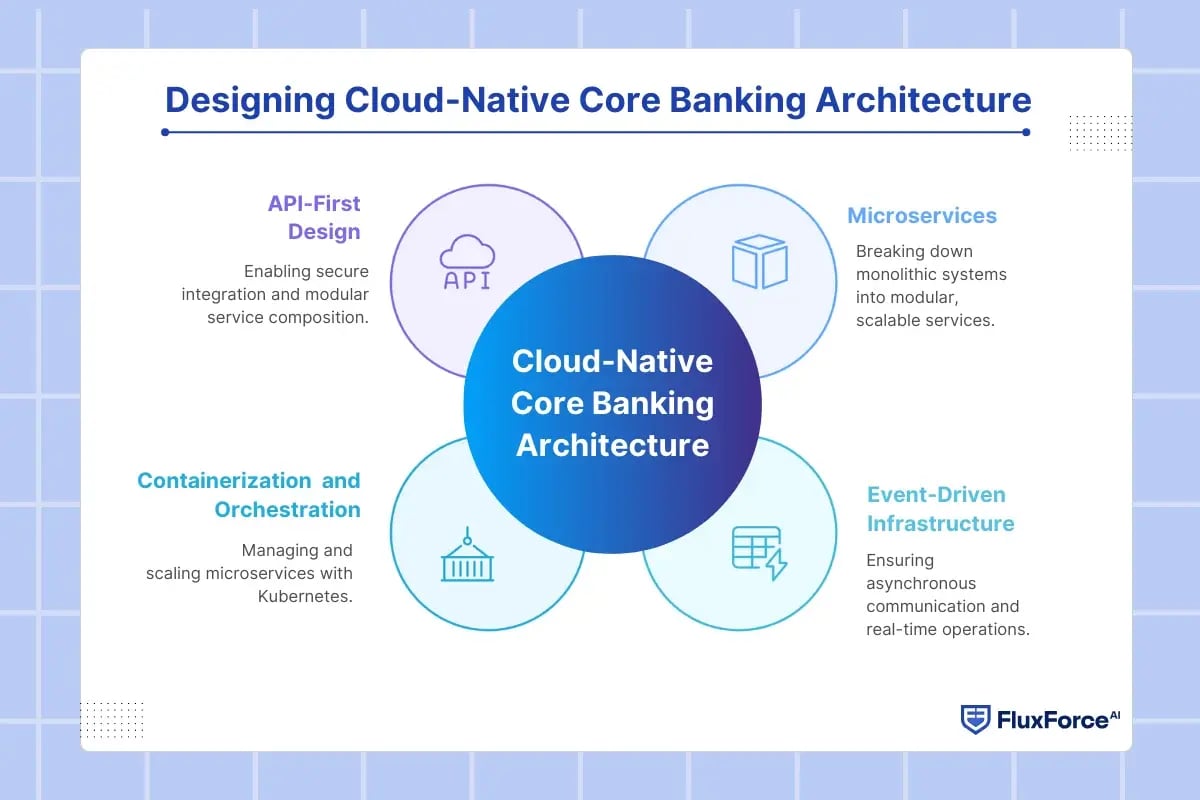
Common methods include:
Breaking Monolithic Systems into Microservices
Converting monolithic applications into microservices improves modularity. Each module handles specific functions such as payments, accounts, or ledger updates. Microservices banking architecture allows independent scaling, easier maintenance, and faster deployment cycles. Modules can be updated without disrupting overall system operations, reducing downtime risk and improving agility.
Event-Driven Infrastructure
An event-driven banking infrastructure ensures that changes propagate asynchronously between services. Payments, settlements, and notifications are triggered automatically, reducing latency. High transaction volumes are processed efficiently, supporting real-time operations across cloud core banking systems.
Containerization and Orchestration
Kubernetes for core banking manages containerized microservices and orchestrates workloads dynamically. Banking workload orchestration allocates resources based on demand. Containers can be updated or restarted independently, reducing downtime and improving reliability. This approach supports flexible scaling during transaction peaks without manual intervention.
API-First Design
An API-first banking platform allows secure integration with fintechs, partners, and internal systems. APIs enable modular service composition, fast feature deployment, and third-party integrations without affecting core processes. This approach enhances service delivery while supporting cloud-based core banking modernization.
Learn which AI solution best drives innovation and efficiency.
and find the best fit for your bank.

Strategic Cloud Adoption Approach for CTOs
Cloud adoption strategies must align with enterprise priorities, compliance requirements, and digital transformation objectives. A strategic approach ensures scalability, operational efficiency, and regulatory adherence.
Hybrid and Multi-Cloud Deployment
Hybrid cloud models keep sensitive workloads on private infrastructure while offloading scalable services to public clouds. Multi-cloud strategies reduce vendor dependency and improve resilience. Core banking on cloud ensures critical services remain available while allowing flexible scaling for high-demand operations.
Regulatory Compliance and Data Management
Cloud-native systems must meet regulatory requirements. Cloud regulatory compliance (Banking) ensures proper data handling, audit readiness, and secure reporting. Integrated compliance features reduce operational risk and align modernization efforts with legal obligations, supporting overall core banking system reliability.
Integration with Existing Core Solutions
During modernization, legacy banking core solutions often remain active. Cloud-native systems integrate with these via APIs, messaging platforms, or event buses. This ensures transactional consistency while allowing gradual migration to cloud core banking systems without disrupting ongoing operations.
Implementation Roadmap for Transaction Processing Modernization
A structured roadmap guides C-level executives through transaction processing modernization, minimizing risk and ensuring measurable improvements in efficiency and scalability. Below is a four-step effective guide:
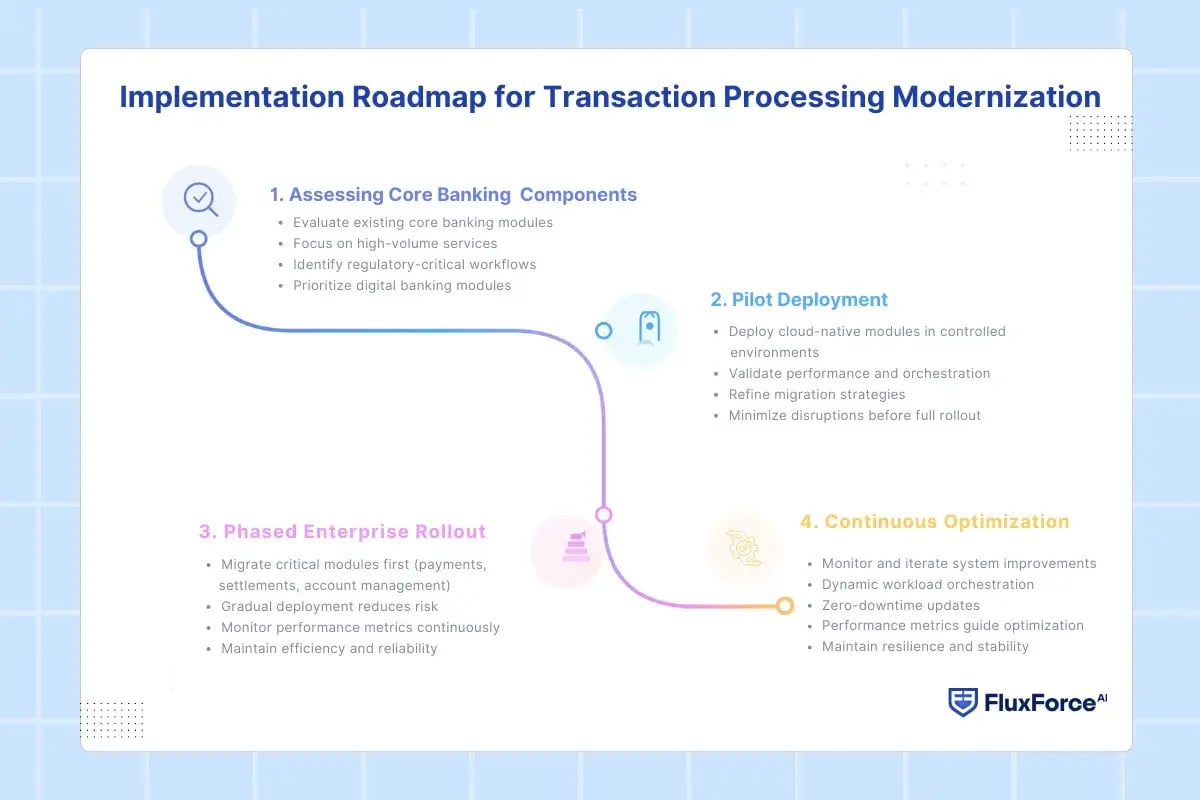
1. Assessing Core Banking Components
Evaluate existing core banking system modules to identify areas with high impact. Focus on high-volume services, regulatory-critical workflows, and modules supporting digital banking. Clear prioritization ensures modernization delivers tangible improvements in efficiency, performance, and scalability.
2. Pilot Deployment
Deploy cloud-native modules in controlled environments to validate performance, resource allocation, and orchestration. Pilots allow banks to refine digital core banking migration strategies before full enterprise rollout, minimizing disruptions while ensuring operational reliability.
3. Phased Enterprise Rollout
Critical modules such as payments, settlements, and account management migrate first. Gradual deployment reduces operational risk and allows monitoring of performance metrics. Continuous assessment ensures that cloud core banking system operations maintain expected efficiency and reliability.
4. Continuous Optimization
Cloud-native systems improve continuously through monitoring and iterative adjustments. Banking workload orchestration dynamically allocates resources based on demand. Updates occur without downtime, while performance, latency, and throughput metrics guide further optimization. This approach maintains system resilience and operational stability.
Measuring Success in Core Banking Modernization
Measuring success ensures cloud-native banking systems deliver expected outcomes.
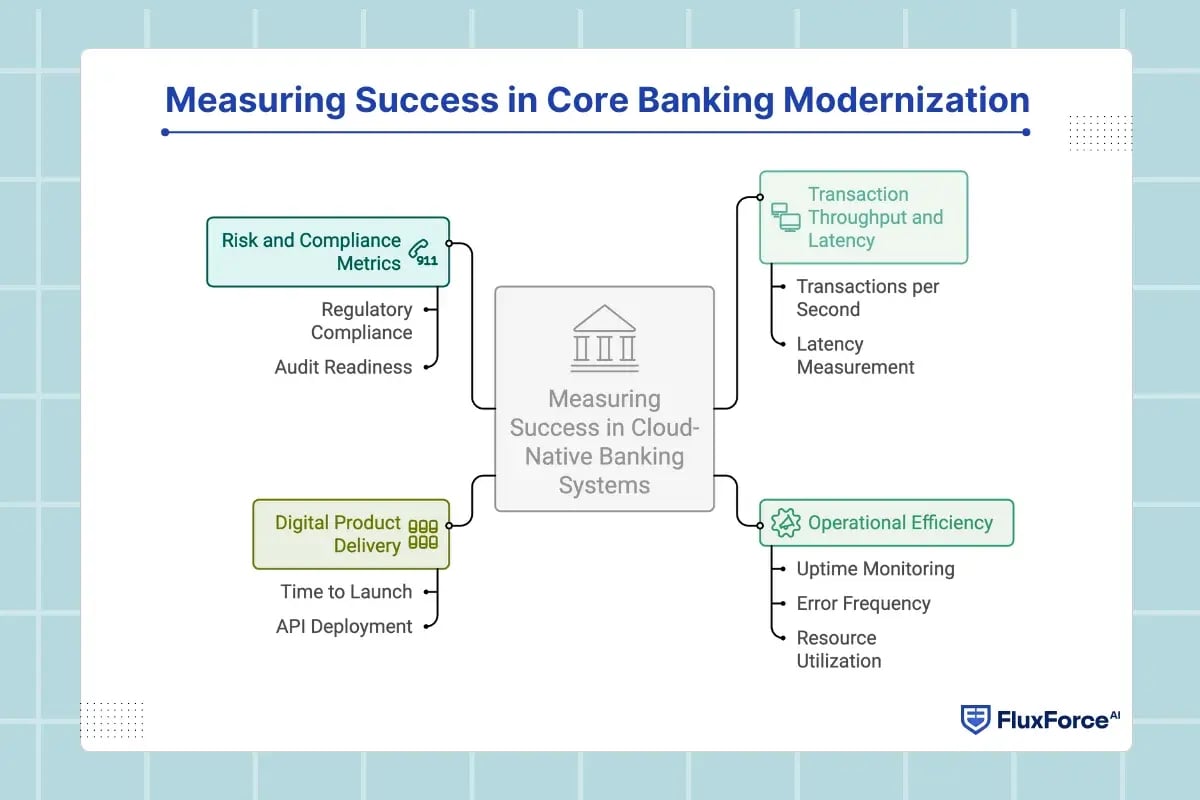
Key metrics to measure:
Transaction Throughput and Latency
Track the number of transactions processed per second and measure latency. Cloud-native systems should handle high volumes efficiently. Reduced processing delays improve service quality, operational performance, and customer satisfaction.
Operational Efficiency
Monitor uptime, error frequency, and resource utilization. Cloud core banking systems reduce manual interventions, simplify maintenance, and lower operational costs while supporting banking technology modernization initiatives.
Digital Product Delivery
Measure the time taken to launch new services. Cloud-based core banking enables rapid deployment of digital features and APIs. Faster delivery allows banks to respond effectively to evolving customer and market needs.
Risk and Compliance Metrics
Monitor adherence to regulatory standards and audit readiness. Cloud-native monitoring provides visibility into workflows. Operational risks decrease, ensuring cloud regulatory compliance (Banking) and reliable processing of all transactions.
Learn which AI solution best drives innovation and efficiency.
and find the best fit for your bank.
Conclusion
The future of banking will not be defined by more automation but by smarter intelligence that can think and act responsibly. Generative AI has already changed how banks handle information. It helps create reports, summarize insights, and improve productivity. However, its job mostly stops at creation. It cannot take the next step or ensure that actions meet compliance rules. Agentic AI builds on this foundation. It takes what Generative AI produces and turns it into real, measurable action. It analyzes, decides, and executes within the right governance framework, helping banks manage operations, detect fraud, and ensure compliance more effectively. This combination of Generative AI for creativity and Agentic AI for decision-making creates a balanced system that improves both speed and reliability. Together, they help banks overcome their biggest challenges—complex workflows, strict regulations, and the constant need for trust and accuracy. As financial institutions adopt Agentic AI, they move from simple automation to intelligent execution, achieving not just faster results but more transparent and accountable outcomes. This shift marks the real transformation of banking: from creating insights to confidently acting on them.


Share this article