


















Listen To Our Podcast🎧
What makes an AML risk assessment acceptable to regulators?
An AML risk assessment that regulators accept scores your money laundering and terrorist financing risk across customers, geographies, products and services, transactions and delivery channels. It writes down how you reached each score, stays current as the business changes, and can be handed to a supervisor on request. The enterprise-wide risk assessment, or EWRA, is the institution-level version of that exercise, and every other control should trace back to it.
The global standard sets the floor. Under the FATF Recommendations, financial institutions take appropriate steps to identify and assess their money laundering and terrorist financing risks for customers, countries or geographic areas, and products, services, transactions or delivery channels. They document those assessments so they can demonstrate their basis, keep them up to date and provide the information to competent authorities, and the depth of the work should be appropriate to the nature and size of the business.
Assessments usually fall short of that standard in familiar ways: scores come from opinion rather than data, every control is rated effective without a test, and the document sits unchanged while the business launches new products. This guide is for MLROs and chief risk officers who own the assessment and sign it. It replaces our earlier step-by-step guide and works from the FATF Recommendations, India's PML Rules, the RBI's Commercial Banks KYC Directions, 2025, the current US bank program rule and FinCEN's April 2026 proposed rule, as they stood on October 16, 2026. It is a practical reading of those texts, not legal advice.
- What an AML risk assessment is, and how the EWRA differs from customer risk rating.
- What FATF, India and the United States require of the assessment today.
- A seven-step method to run an EWRA, from scope to update triggers.
- How to score inherent risk, rate control effectiveness and derive residual risk you can defend.
- How the EWRA should drive customer risk rating, monitoring and due diligence.
- Where FluxForce Customer Risk Assessment fits, and where it does not.
Request the EWRA template

An AML risk assessment that regulators accept scores money laundering and terrorist financing risk across customers, geographies, products and services, transactions and delivery channels, records how each score was reached, stays current and can be handed to a supervisor. Run the enterprise-wide version as a seven-step cycle: scope, data, inherent risk, control effectiveness, residual risk against appetite, approval with an action plan, and trigger-driven updates.
What is an AML risk assessment?
An AML risk assessment is the documented process an institution uses to identify where it is exposed to money laundering and terrorist financing, how severe that exposure is before controls, and how much of it remains after controls. Most programmes run it at three levels.
| Level | What it assesses | Who owns it | What it drives |
|---|---|---|---|
| Enterprise-wide (EWRA) | The whole institution: business lines, customer segments, products, channels, geographies | MLRO, approved by the board or senior management | Policies, risk appetite, resource allocation, control priorities |
| Customer risk rating | Each customer relationship | Compliance, under a methodology the MLRO approves | Due diligence depth, review cycle, monitoring sensitivity |
| New product or technology assessment | A product, practice, channel or technology before launch | Product owner with compliance sign-off | Launch conditions and controls |
The levels depend on each other. The EWRA decides which factors count and how much. The customer risk rating applies those factors to each customer. The new product assessment happens before launch, so its findings reach the EWRA before the risk profile changes. For a short definition of the institution-level exercise, see our glossary entry on the enterprise-wide risk assessment (EWRA).
What do regulators require from an AML risk assessment?
The requirements are similar across markets. They differ mainly in who approves the assessment and how often it must be reviewed. The table compares the FATF standard with India and the United States.
| Requirement | FATF standard | India | United States (banks) |
|---|---|---|---|
| Identify and assess ML/TF risk | Required, by customer, geography, product, service, transaction and channel | Required by PML Rule 9(13); RBI para 10 for commercial banks | No explicit stand-alone requirement in the current bank rule; proposed in April 2026 |
| Document the assessment | Required | Required | Proposed |
| Keep it current | Keep up to date | Keep up to date; commercial banks review at least annually | Proposed: update promptly on significant change |
| Approval | Policies, controls and procedures approved by senior management | Outcome presented to the board or a delegated board committee; policies approved by the board or committee | Board approval of the AML programme under each bank's federal regulator's rules; no separate approval rule for the assessment |
| Available to authorities | Required | Required | Proposal: examined on the totality of the institution's processes |
The FATF standard
The interpretive note to FATF Recommendation 1 sets the standard that national rules build on. It asks institutions to identify and assess their risks, document the assessment, keep it up to date and be able to provide it to competent authorities. Before deciding the overall level of risk and the mitigation to apply, they consider all the relevant risk factors. Where higher risks are identified, they take enhanced measures to manage and mitigate them. Senior management approves the policies, controls and procedures that respond to the assessment, and the institution monitors those controls and enhances them if necessary.
FATF Recommendation 15 adds a timing rule for change: for financial institutions, the risk assessment of new products, business practices or technologies should take place before launch.
India: PML Rules and the RBI Directions
India's Prevention of Money-laundering (Maintenance of Records) Rules, 2005 turn the FATF standard into law for every reporting entity. Rule 9(13) requires a risk assessment that identifies, assesses and takes effective measures to mitigate money laundering and terrorist financing risk for clients, countries or geographic areas, and products, services, transactions or delivery channels, consistent with any national risk assessment. The assessment must be documented, consider all the relevant risk factors, be kept up to date and be available to competent authorities and self-regulating bodies.
For commercial banks, the RBI's Commercial Banks KYC Directions, 2025, updated as on October 1, 2026, add governance. Paragraph 10 asks the bank to carry out the risk assessment exercise periodically, take account of sector-specific vulnerabilities the regulator shares, document the assessment, and keep it proportionate to the bank's nature, size, geographical presence and complexity. The board, or a board committee with delegated power, sets how often the exercise runs, and the bank must review it at least annually. The outcome goes to the board or that committee and is made available to competent authorities. Paragraph 11 adds that the policies, controls and procedures are approved by the board or committee, and that the bank monitors the controls and enhances them if necessary. Paragraph 72 requires the assessment for new products, practices, services and technologies to happen before launch.
These Directions replaced the earlier KYC instructions for commercial banks. Small finance banks, payments banks, co-operative banks and NBFCs have their own KYC Directions, 2025 on the RBI's master directions list, so check the version that applies to your entity.
United States: current rule and the April 2026 proposal
The US bank program rule, 31 CFR 1020.210 in the eCFR text current as of October 14, 2026, lists five components: internal controls, independent testing, a designated compliance individual, training, and risk-based procedures for ongoing customer due diligence. Those procedures include understanding the nature and purpose of customer relationships to develop a customer risk profile. The rule does not contain an explicit stand-alone risk assessment requirement for banks, and FinCEN says so: the explicit requirement would be new for banks and several other institution types.
FinCEN's proposed rule of April 10, 2026 would change that. Institutions would maintain risk assessment processes that evaluate the money laundering and terrorist financing risks of their products, services, distribution channels, customers and geographic locations, review FinCEN's AML/CFT Priorities, and update promptly on any change that significantly changes their risk. FinCEN would examine the totality of those processes rather than one standalone document, and it does not prescribe a fixed update timeframe. Comments closed on June 9, 2026, and FinCEN proposed an effective date 12 months after a final rule. When we searched the Federal Register on October 16, 2026, no final rule had been published.
For a US MLRO, a documented assessment is already expected in practice. FinCEN describes many institutions keeping a standalone risk assessment, generally once a year, either voluntarily or as required or expected by Federal regulators. The proposal adds a duty to update promptly when risk changes significantly, which a yearly calendar on its own does not meet.
How do you run an enterprise-wide risk assessment?
Run the EWRA as a cycle with seven steps. Each step produces an output the next step uses, and each output is something an examiner can ask to see.
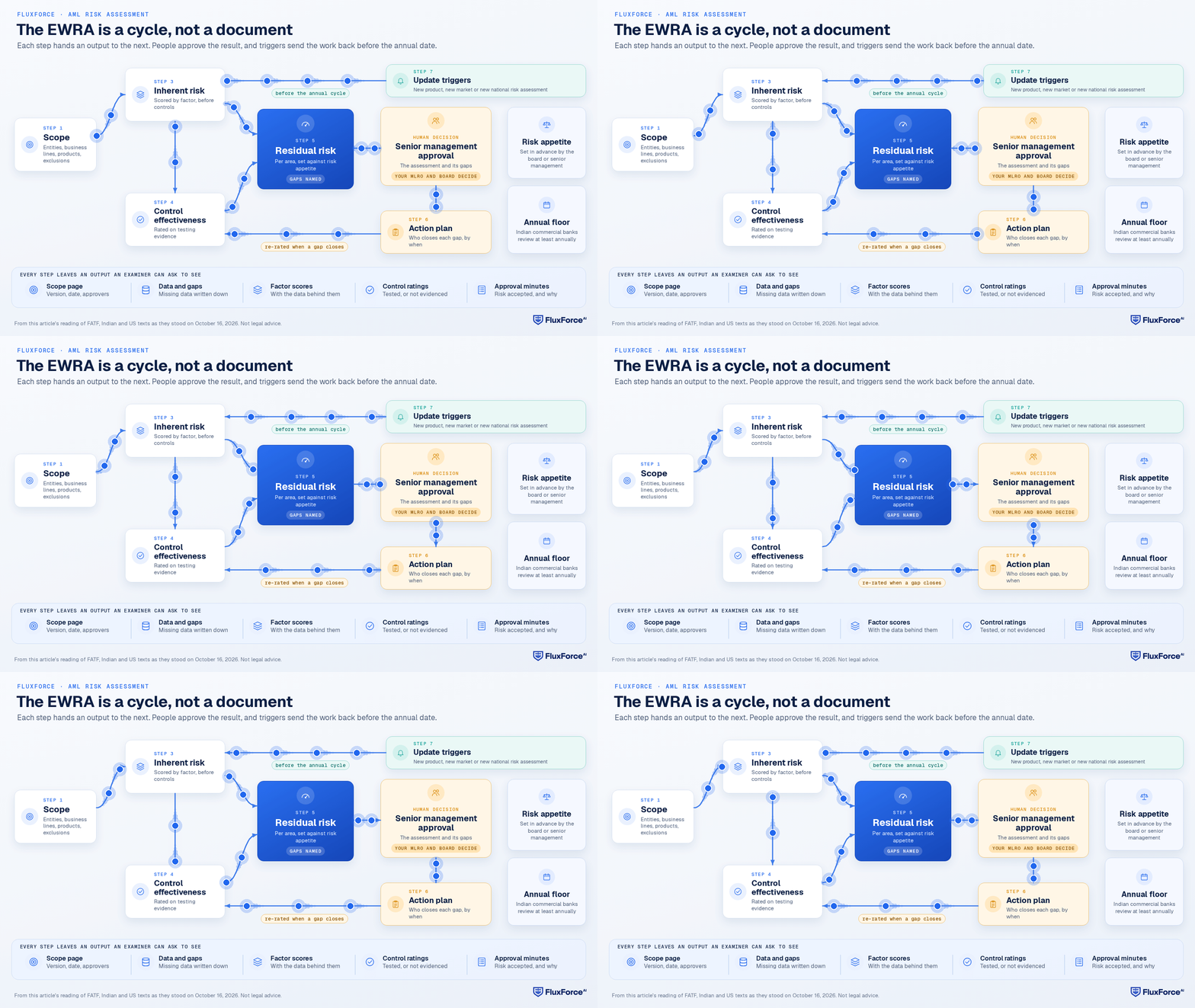
- The scope tells the inherent risk step which business lines, legal entities and products to score. Each inherent risk score is then matched to the controls meant to reduce it, and control effectiveness is rated against that specific risk. Inherent risk and control effectiveness together give residual risk for each area. Residual risk, set against the stated risk appetite, goes to senior management approval with the gaps named. Senior management approval covers the action plan as well: who closes each gap, and by when. When the action plan closes a gap, control effectiveness is re-rated on evidence that the fix works. Update triggers, such as a new product, a new market or a new national risk assessment, send the work back to inherent risk before the next annual cycle.
- Set the scope.
- Gather the data.
- Score inherent risk by factor.
- Rate control effectiveness on evidence.
- Derive residual risk and compare it with risk appetite.
- Approve the assessment and the action plan.
- Update when a trigger fires, and at least on the set cycle.
The first figure shows how the outputs connect. The scope tells the inherent risk step which business lines, legal entities and products to score. Each inherent risk score is then matched to the controls meant to reduce it, and control effectiveness is rated against that specific risk. Inherent risk and control effectiveness together give residual risk for each area. Residual risk, set against the stated risk appetite, goes to senior management approval with the gaps named. Senior management approval covers the action plan as well: who closes each gap, and by when. When the action plan closes a gap, control effectiveness is re-rated on evidence that the fix works. Update triggers, such as a new product, a new market or a new national risk assessment, send the work back to inherent risk before the next annual cycle.
Step 1: Set the scope
Name every legal entity, business line, branch and product the assessment covers, and anything it excludes with the reason. An examiner reads the scope first. A product left out because its volume "looked small" will draw questions, because the FATF standard asks for the business to be assessed by customer, geography, product, transaction and channel.
Record the version, the reporting date, the contributors and the approvers on the same page. If you run separate assessments for subsidiaries, say how they roll up.
Step 2: Gather the data
Score from data wherever you can. A score built on opinion is hard to defend, because nobody can show why a segment was rated medium rather than high.
Pull at least:
- customer counts and balances by segment, risk rating, PEP status and residence;
- product volumes and values, including cross-border and cash activity;
- transaction flows by corridor and by counterparty country;
- onboarding channel mix, including non-face-to-face and introduced business;
- alert, investigation and suspicious activity report volumes by product and segment;
- screening hit rates and confirmed matches;
- audit, testing and regulatory findings since the last assessment;
- national risk assessment findings and any sector-specific vulnerabilities your regulator has shared.
Where data is missing, write that down as a gap. A missing data source is itself a control weakness.
How do you score inherent risk and rate controls?
Steps 3 and 4 produce the two inputs to residual risk. Score the exposure first, then rate the controls against each scored risk.
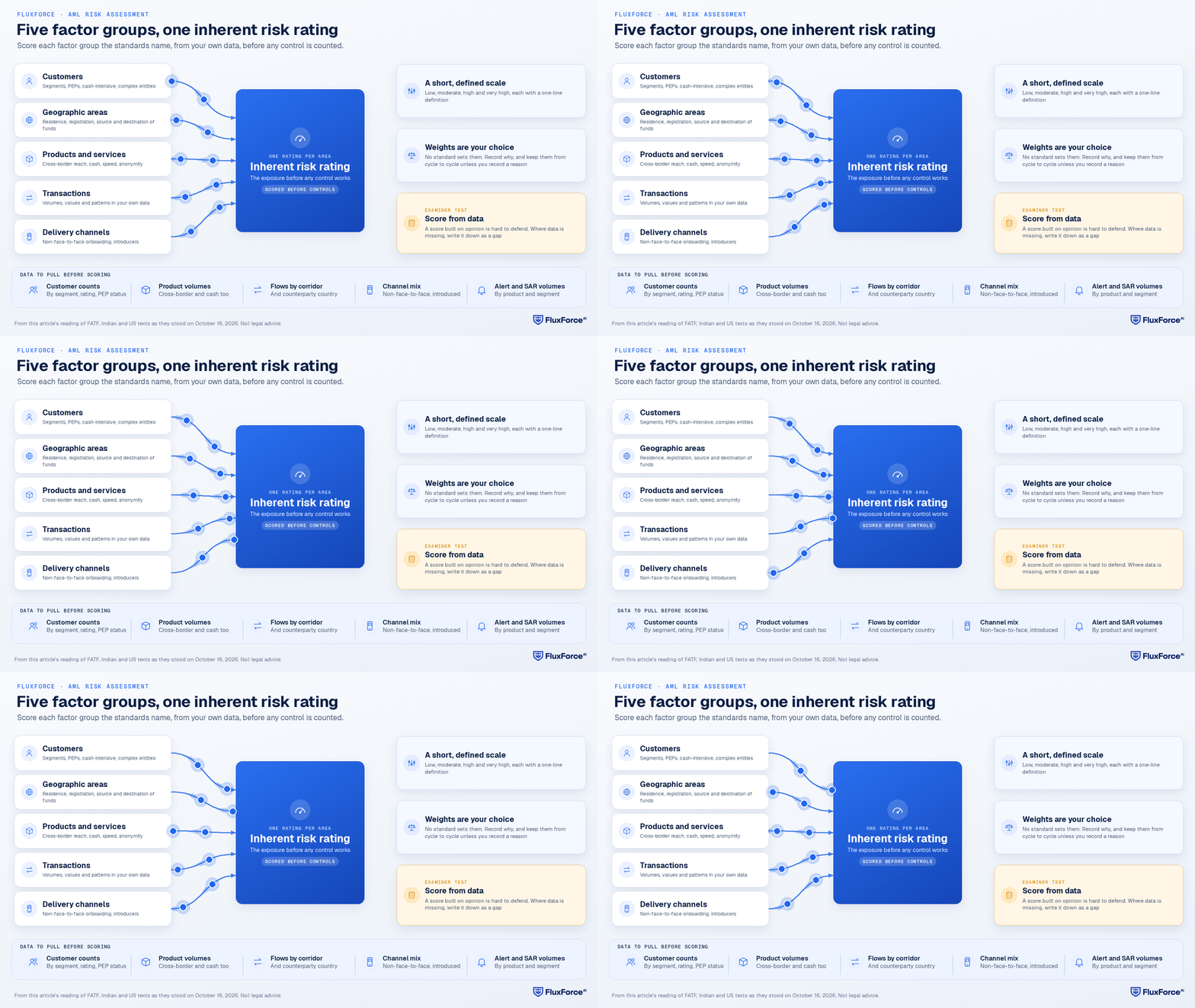
- Customers feed the inherent risk rating through the mix of segments you serve, such as PEPs, cash-intensive businesses or complex legal entities. Geographic areas feed the inherent risk rating through where customers live, where entities are registered and where funds come from or go. Products and services feed the inherent risk rating through features such as cross-border reach, cash, speed and anonymity. Transactions feed the inherent risk rating through volumes, values and patterns observed in your own data. Delivery channels feed the inherent risk rating through how customers reach you, including non-face-to-face onboarding and third-party introducers.
Step 3: Score inherent risk by factor
Inherent risk is the exposure before any control works. Score it separately for each of the five factor groups the standards name: customers, geographic areas, products and services, transactions, and delivery channels.
| Factor group | What to look at | Higher-risk examples |
|---|---|---|
| Customers | Segment mix, entity types, ownership complexity, PEP exposure | Cash-intensive businesses, complex legal structures, foreign PEPs |
| Geographic areas | Residence, registration, source and destination of funds | Jurisdictions under increased monitoring, sanctioned countries |
| Products and services | Speed, cross-border reach, cash, anonymity, third-party payments | Correspondent services, instant cross-border payments, prepaid instruments |
| Transactions | Volumes, values, patterns, counterparties | High-value cross-border flows, rapid movement through new accounts |
| Delivery channels | How customers reach you and how they are identified | Non-face-to-face onboarding, introducers, agents |
The second figure shows the five inputs. Customers feed the inherent risk rating through the mix of segments you serve, such as PEPs, cash-intensive businesses or complex legal entities. Geographic areas feed the inherent risk rating through where customers live, where entities are registered and where funds come from or go. Products and services feed the inherent risk rating through features such as cross-border reach, cash, speed and anonymity. Transactions feed the inherent risk rating through volumes, values and patterns observed in your own data. Delivery channels feed the inherent risk rating through how customers reach you, including non-face-to-face onboarding and third-party introducers.
Use a short, defined scale, such as low, moderate, high and very high, and write a one-line definition for each level. Weighting is your choice: FinCEN's proposal, for example, does not prescribe any particular risk assessment process or methodology. No standard sets the weights, so record why you chose yours and keep the same weights from one cycle to the next unless you record a reason to change them.
Step 4: Rate control effectiveness on evidence
For each inherent risk, list the controls meant to reduce it and rate how well they work. The rating must come from evidence: independent testing, quality assurance results, audit findings, alert backlogs, model validation and regulatory feedback. A control that exists on paper but has never been tested should be rated "not evidenced" rather than "effective".
The FATF standard asks institutions to monitor the implementation of their controls and enhance them if necessary, and the RBI Directions say the same for commercial banks. This step is where you record that monitoring.
| Control rating | Meaning | Evidence you need |
|---|---|---|
| Effective | Designed for the risk and working as designed | Recent testing with no material findings |
| Partly effective | Working, with known gaps | Testing with open findings and a remediation plan |
| Ineffective | Not working for this risk | Failed testing, material backlog or regulatory finding |
| Not evidenced | No recent test | Treat as ineffective until tested |
How do you derive residual risk and compare it with risk appetite?
Step 5: Derive residual risk and compare it with risk appetite
Residual risk is what remains after controls. Use a simple, published matrix so anyone can reproduce the result from the two inputs.
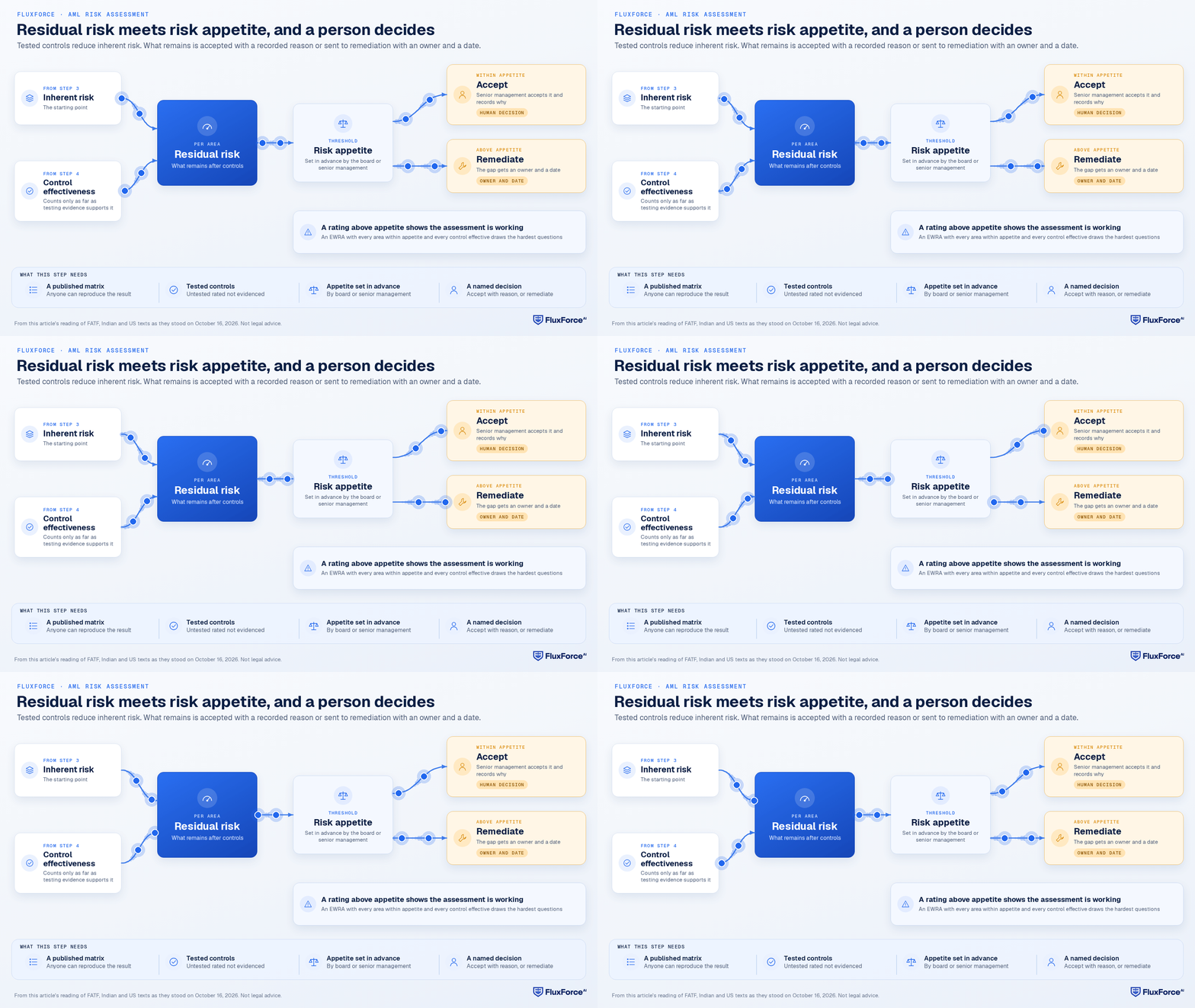
- Inherent risk sets the starting point for residual risk. Control effectiveness reduces residual risk only to the extent that testing evidence supports the rating. Residual risk is compared with risk appetite, which the board or senior management sets in advance. Where residual risk sits within risk appetite, senior management can accept it and record why. Where residual risk exceeds risk appetite, the gap goes to remediate, with an owner and a date.
| Inherent risk | Effective controls | Partly effective | Ineffective or not evidenced |
|---|---|---|---|
| Very high | High | Very high | Very high |
| High | Moderate | High | High |
| Moderate | Low | Moderate | Moderate |
| Low | Low | Low | Low |
The matrix above is an example method, not a regulatory table. Calibrate it to your scale and get it approved.
The third figure shows the decision. Inherent risk sets the starting point for residual risk. Control effectiveness reduces residual risk only to the extent that testing evidence supports the rating. Residual risk is compared with risk appetite, which the board or senior management sets in advance. Where residual risk sits within risk appetite, senior management can accept it and record why. Where residual risk exceeds risk appetite, the gap goes to remediate, with an owner and a date.
Key insight: a residual rating above appetite shows the assessment is working. An EWRA that puts every area within appetite, with every control effective, is the one an examiner will question hardest.
How do you approve and update the assessment?
The last two steps turn the scores into decisions and keep them current.
Step 6: Approve the assessment and the action plan
The assessment is finished when the accountable people approve it. Under the FATF standard, senior management approves the policies, controls and procedures that respond to it. At an Indian commercial bank, the outcome goes to the board or a delegated board committee, which also approves the policies.
The approval pack should hold the residual risk summary, the areas above appetite, the action plan with owners and dates, the methodology and any change to it, and the data gaps. Minute the decisions, including any risk accepted above appetite and the reason. Keep the pack ready for competent authorities, which the PML Rules and the RBI Directions both expect.
Step 7: Update on triggers as well as on the calendar
Set two kinds of update. The first is the cycle: the board decides how often, and an Indian commercial bank reviews the assessment at least annually. The second is the trigger. A new product, practice or technology needs its own assessment before launch under both FATF Recommendation 15 and the RBI Directions. FinCEN's proposal would also require an update promptly on any change that significantly changes risk.
Common triggers to write into your procedure:
- a new product, channel or technology, or a material change to one;
- entry into a new market or a new customer segment;
- an acquisition or a new legal entity;
- a new national risk assessment or regulator vulnerability notice;
- a material audit, testing or regulatory finding;
- a sustained shift in alert, investigation or filing patterns.
How does the EWRA connect to customer risk rating and other controls?
An EWRA that does not change any control is a report. The fourth figure shows the links that make it a control.
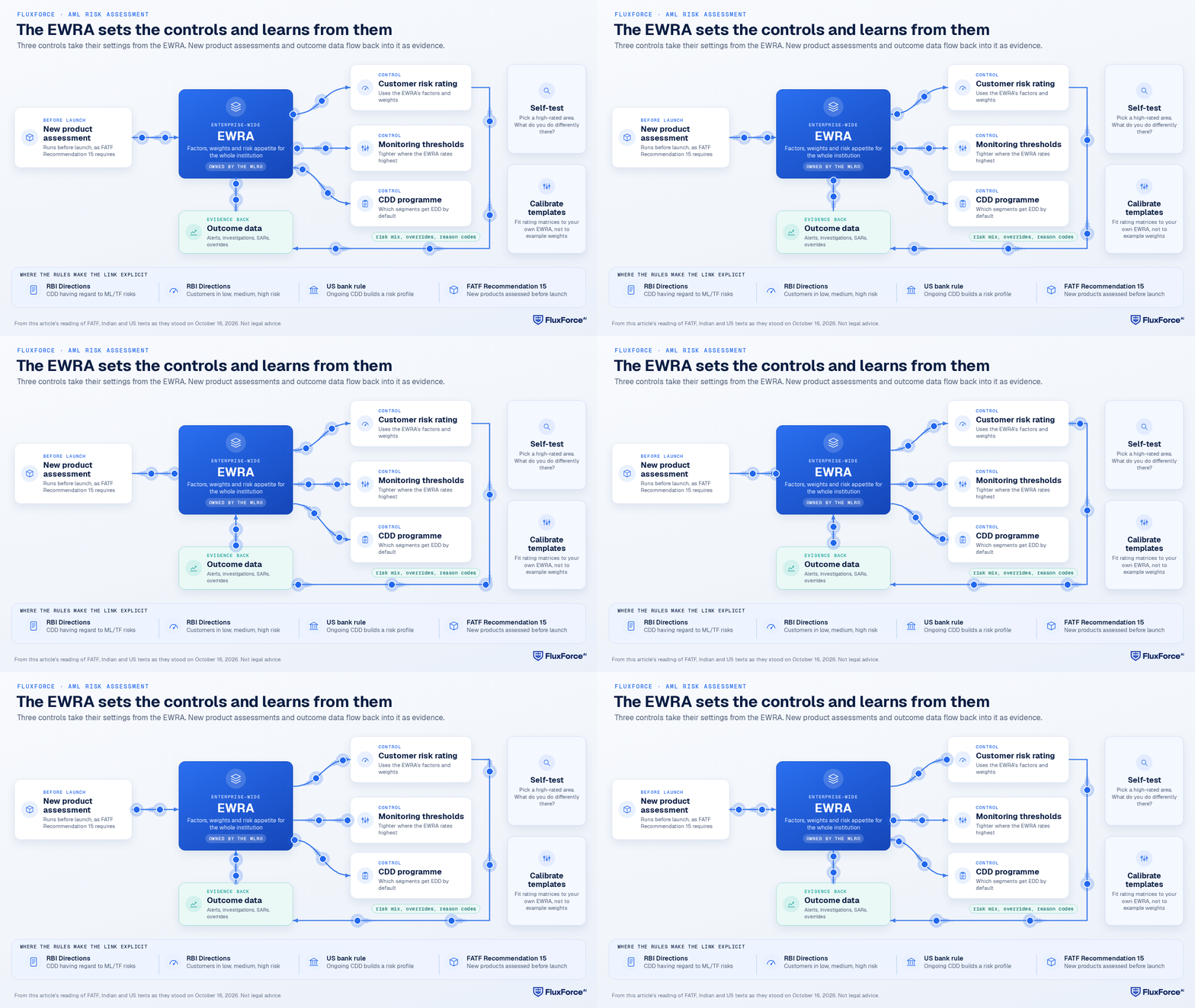
- The EWRA sets the factors and weights that the customer risk rating uses, so the two cannot disagree about what is high risk. The EWRA tells monitoring thresholds where to be tighter, for example on the products and corridors it rated highest. The EWRA shapes the CDD programme, including which segments get enhanced due diligence by default. A new product assessment runs before launch and feeds its findings back into the EWRA. The customer risk rating produces outcome data of its own: the risk mix across the book, overrides and their reason codes. Outcome data from alerts, investigations, suspicious activity reports and rating overrides flows back into the EWRA as evidence of whether the scores were right.
The EWRA sets the factors and weights that the customer risk rating uses, so the two cannot disagree about what is high risk. The EWRA tells monitoring thresholds where to be tighter, for example on the products and corridors it rated highest. The EWRA shapes the CDD programme, including which segments get enhanced due diligence by default. A new product assessment runs before launch and feeds its findings back into the EWRA. The customer risk rating produces outcome data of its own: the risk mix across the book, overrides and their reason codes. Outcome data from alerts, investigations, suspicious activity reports and rating overrides flows back into the EWRA as evidence of whether the scores were right.
The rules make the CDD link explicit. The RBI Directions require a commercial bank to implement a CDD programme having regard to the ML/TF risks identified and the size of the business, and to categorise customers into low, medium and high risk based on its own assessment and risk perception. In the United States, the current bank rule ties ongoing due diligence to developing a customer risk profile.
If you need to rebuild the customer-level method, our guide to customer risk rating, what regulators expect and what gets you cited covers factor sets, overrides and testing. A starting structure for scoring each customer is in our customer risk rating matrix template. Calibrate both to your own EWRA rather than using their example weights as they are.
What makes regulators reject an AML risk assessment?
The same weaknesses come up again and again, and each one breaks a specific requirement.
Scores with no data behind them
If a segment is rated high because "everyone knows it is", the assessment cannot demonstrate its basis, which the FATF standard asks for. Put the data, or the reason it is missing, next to every score.
Every control rated effective
Both FATF and the RBI expect institutions to monitor the implementation of their controls. Control ratings without testing evidence make residual risk meaningless, so rate untested controls as not evidenced.
A template copied without calibration
A template gives you a structure. The scores, weights and factor definitions still have to describe your own business, because the standards ask that the assessment fit the nature and size of the institution. Our library of free compliance templates includes an EWRA workbook, a customer risk rating matrix and an EDD checklist; treat each one as a starting point to adapt.
A document that never changes
An assessment last updated before the newest product launched is out of date by definition. The FATF standard and the PML Rules both require it to be kept up to date.
No line from the EWRA to the controls
If the highest-rated corridor has the same monitoring thresholds as the lowest, the EWRA has not changed anything. A simple self-test is to pick a high-rated area and ask what you do differently there.
No accountable approval
An assessment nobody senior has approved, or one approved without the gaps being shown, fails the governance test in both the FATF standard and the RBI Directions. Before you sign, ask whether an examiner who was not in the room could replay each score from its data, method, control evidence and named decision.
Who does what in an AML risk assessment workflow?
The fifth figure shows the responsibilities. Data sources, such as customer records, transaction history, screening results and prior filings, supply the agent layer with evidence and decide nothing. The agent layer applies the approved methodology and hands each proposed score, with the data behind it, to a compliance analyst. The compliance analyst checks the evidence, corrects or overrides scores with a reason and passes the draft to the MLRO. The MLRO decides the final ratings and the action plan and presents the assessment to the board. Once the board approves a methodology change, the agent layer applies the new version from that date, and the old version stays on record.
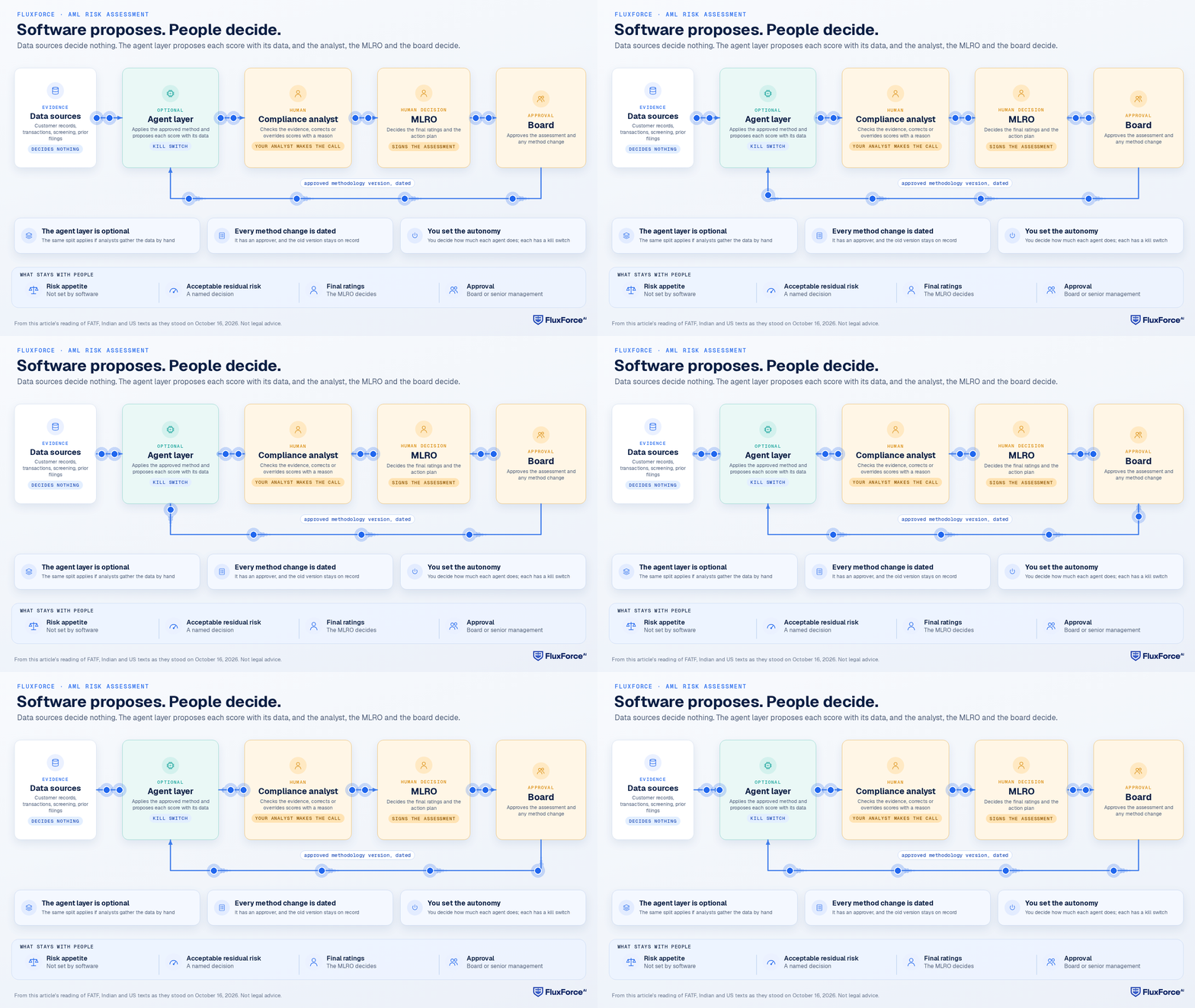
- Data sources, such as customer records, transaction history, screening results and prior filings, supply the agent layer with evidence and decide nothing. The agent layer applies the approved methodology and hands each proposed score, with the data behind it, to a compliance analyst. The compliance analyst checks the evidence, corrects or overrides scores with a reason and passes the draft to the MLRO. The MLRO decides the final ratings and the action plan and presents the assessment to the board. Once the board approves a methodology change, the agent layer applies the new version from that date, and the old version stays on record.
The agent layer is optional. The same split of work applies if an analyst team does the data gathering by hand. What matters to an examiner is that the people who approve the assessment can see the evidence behind each score, and that every change to the method has a date and an approver.
- FATF and India's PML Rules require the assessment to be documented, kept up to date and available to authorities; the RBI's Commercial Banks KYC Directions, 2025 add board oversight and at least annual review.
- The current US bank rule has no explicit stand-alone risk assessment requirement; FinCEN's April 2026 proposal would add one, with prompt updates on significant change. No final rule had been published by October 16, 2026.
- Score inherent risk separately for customers, geographic areas, products and services, transactions and delivery channels, from data wherever possible.
- Rate controls on testing evidence; an untested control is not evidenced, and residual risk above appetite needs an owner, a date or a recorded acceptance.
- The EWRA should set the customer risk rating factors, monitoring thresholds and CDD depth, and learn from outcome data. The MLRO and the board own the decisions.
Conclusion
An AML risk assessment holds up when every score can be traced to data, every control rating to a test, and every residual rating above appetite to a named decision. Run the EWRA as a cycle: scope, data, inherent risk by factor, control effectiveness, residual risk against appetite, approval with an action plan, and updates when a trigger fires as well as on the set cycle.
Then make it change something. The customer risk rating should use the EWRA's factors and weights, monitoring should be tighter where the EWRA rates risk highest, and outcome data should flow back as evidence for the next version. The MLRO and the board own the result, and the record should show who decided what and why.
Request the EWRA template
Frequently Asked Questions
About the author

Sahil Kataria
Founder and CEO of FluxForce

Share this article