.webp)








Listen To Our Podcast🎧
Introduction
Supply chain risk scoring has become standard practice across manufacturing, retail, and logistics operations. Organizations assign numerical ratings to suppliers, route reliability, geopolitical exposure, and operational dependencies. These scores influence procurement decisions, contract renewals, and contingency planning.
However, many risk scoring systems fail during actual disruptions. Teams cannot explain why a supplier received a particular rating. Auditors question the assumptions behind vendor classifications. Executives demand clarity on what drives elevated risk indicators but receive vague algorithmic explanations.
The issue is not scoring itself. The problem is opacity in how scores are calculated, validated, and updated. Without transparency in supply chain risk scoring, organizations struggle with audit readiness, vendor accountability, and timely decision-making under pressure.
This detailed analysis explains why transparency has become operationally critical in supply chain risk management, particularly as regulatory scrutiny intensifies and disruptions become more frequent.
Simplify Compliance Complexity

The Operational Cost of Opaque Risk Scoring
When supply chain risk scoring lacks transparency, the consequences extend beyond unclear reports: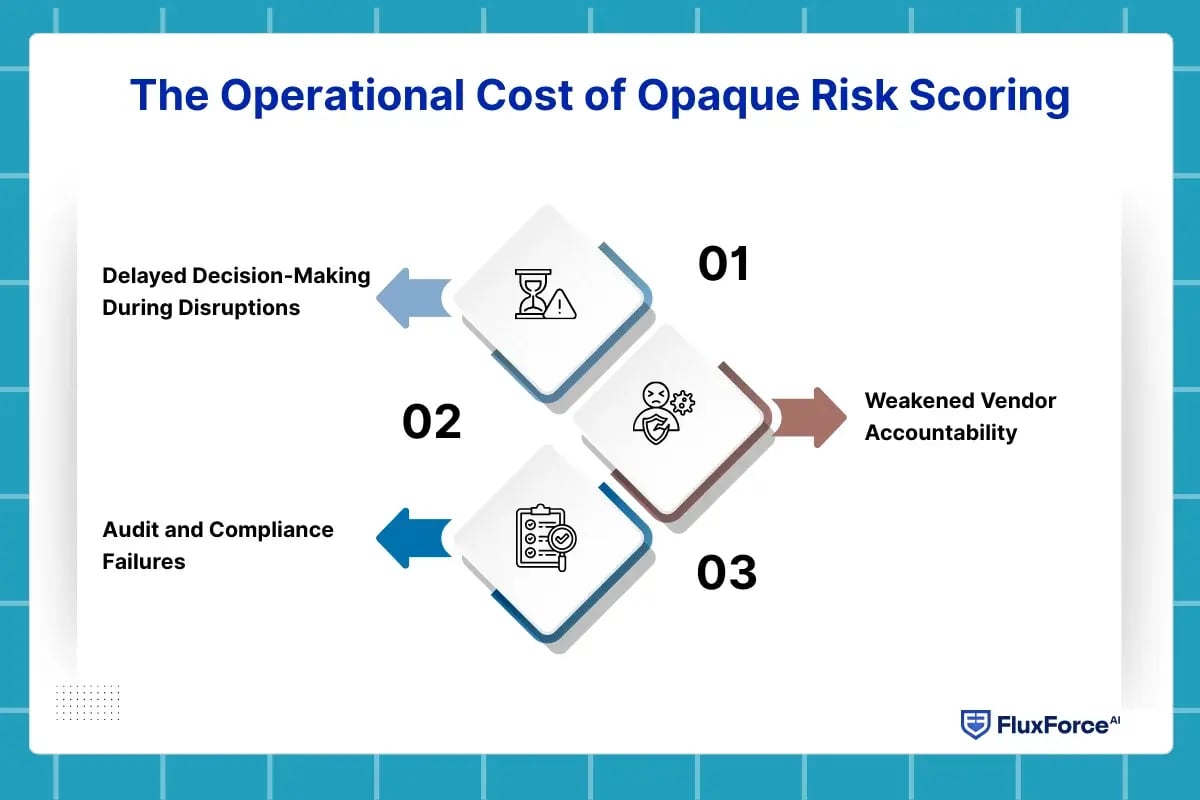
1. Delayed Decision-Making During Disruptions
Supply chain disruptions require fast decisions about alternative suppliers, inventory allocation, and customer communication. If teams cannot understand why certain vendors carry high-risk scores, they hesitate to act. Questions emerge about whether the score reflects outdated data, incorrect assumptions, or genuine operational threats.
During the 2021 semiconductor shortage, companies with transparent risk frameworks identified alternative suppliers within days. Organizations relying on black-box scoring models spent weeks validating whether their vendor rankings were still accurate. Transparency directly affected response speed.
2. Weakened Vendor Accountability
Suppliers cannot improve performance if they do not understand their risk rating. Hidden assessment processes result in low scores without actionable feedback. Transparency enables vendors to see which factors drive their ratings (delivery performance, financial health, or compliance gaps) and take corrective action, fostering collaboration and resilience.
3. Audit and Compliance Failures
Regulators increasingly require organizations to demonstrate how they assess third-party risk, particularly in financial services, healthcare, and critical infrastructure sectors. Opaque scoring systems create audit exposure. If a high-risk supplier remains active without clear documentation, organizations risk penalties and reputational damage. Transparent scoring ensures that risk decisions can be justified with logic and evidence.
Key Components of a Transparent Risk Scoring System
To make risk scoring operationally effective, organizations should implement multiple elements. Here are five critical components:
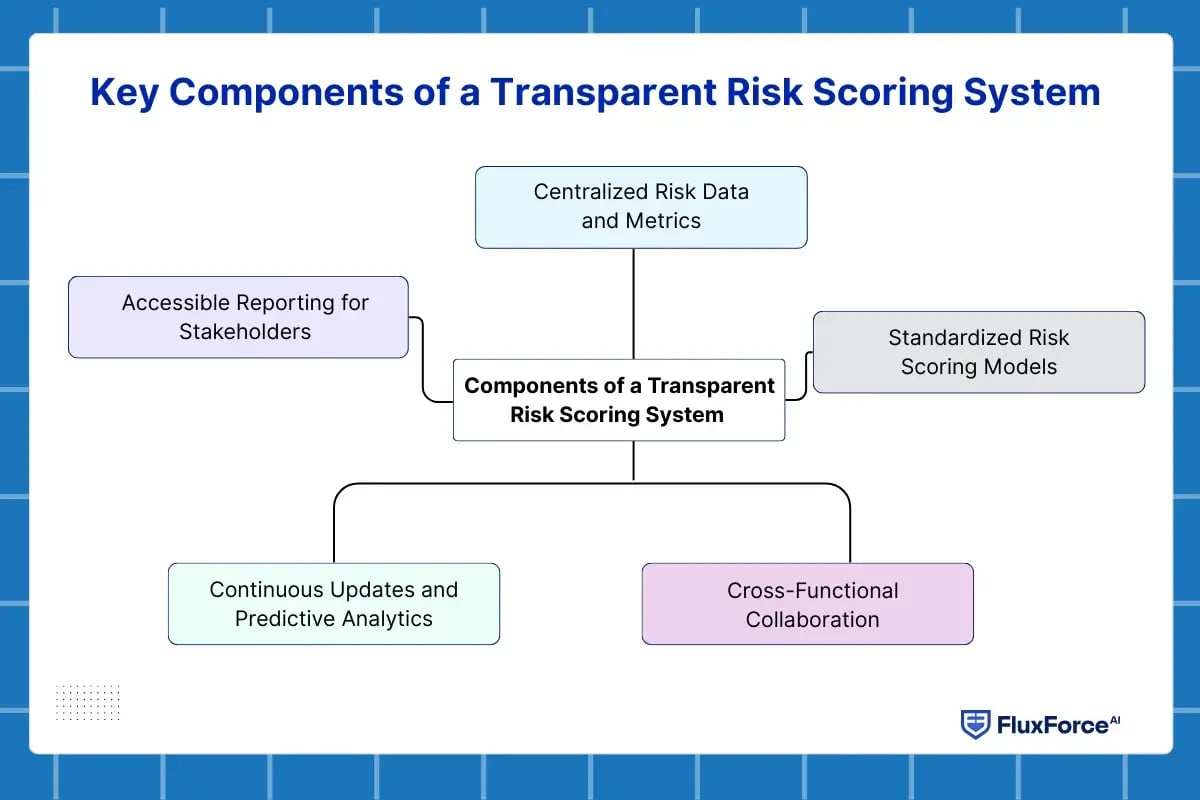
1. Centralized Risk Data and Metrics- A single repository for supplier performance and risk metrics ensures consistent information across departments. Dashboards displaying scores, KPIs, and compliance statuses enhance visibility and enable data-driven decisions.
2. Standardized Risk Scoring Models- Consistency ensures all suppliers are evaluated using the same criteria. Weighted scoring models or tiered risk matrices provide documented explanations for each score, reducing disputes and aligning with internal policies and regulatory expectations.
3. Cross-Functional Collaboration- Transparency requires input from procurement, legal, finance, operations, and compliance teams. Each brings a unique perspective on acceptable risk levels. Collaborative scoring improves accuracy and alignment.
4. Continuous Updates and Predictive Analytics- Risk is dynamic. Transparent systems incorporate continuous monitoring and predictive analytics. Real-time supplier data and market intelligence allow proactive adjustments, enhancing responsiveness and operational readiness.
5. Accessible Reporting for Stakeholders- Risk scores are only useful if stakeholders understand them. Reporting should include both scores and underlying factors. Procurement, executives, and auditors require different detail levels, but all need clarity to act effectively.
Transparency and Emerging Risk Technologies
AI and predictive analytics enhance operational efficiency, but introduce transparency challenges.
1. Algorithmic Opacity
Automated risk scoring evaluates thousands of variables at once, producing accurate predictions. However, black-box AI outputs can leave teams unable to explain why a supplier is flagged as high-risk. Without context, organizations may ignore or overreact to warnings.
2. Explainable AI (XAI)
Explainable AI makes algorithmic decisions interpretable. It shows which variables contributed most to a rating and how changes affect outcomes. Teams can validate AI-driven insights against operational reality—for instance, adjusting responses when a flagged supplier secures new funding.
3. Balancing Automation and Human Oversight
Automated scoring works best when combined with human judgment. Transparent systems surface data, flag anomalies, and allow manual adjustments with documented reasoning. This builds trust and ensures that decisions are accurate, accountable, and defensible.
Strategic Benefits of Transparent Risk Scoring
-
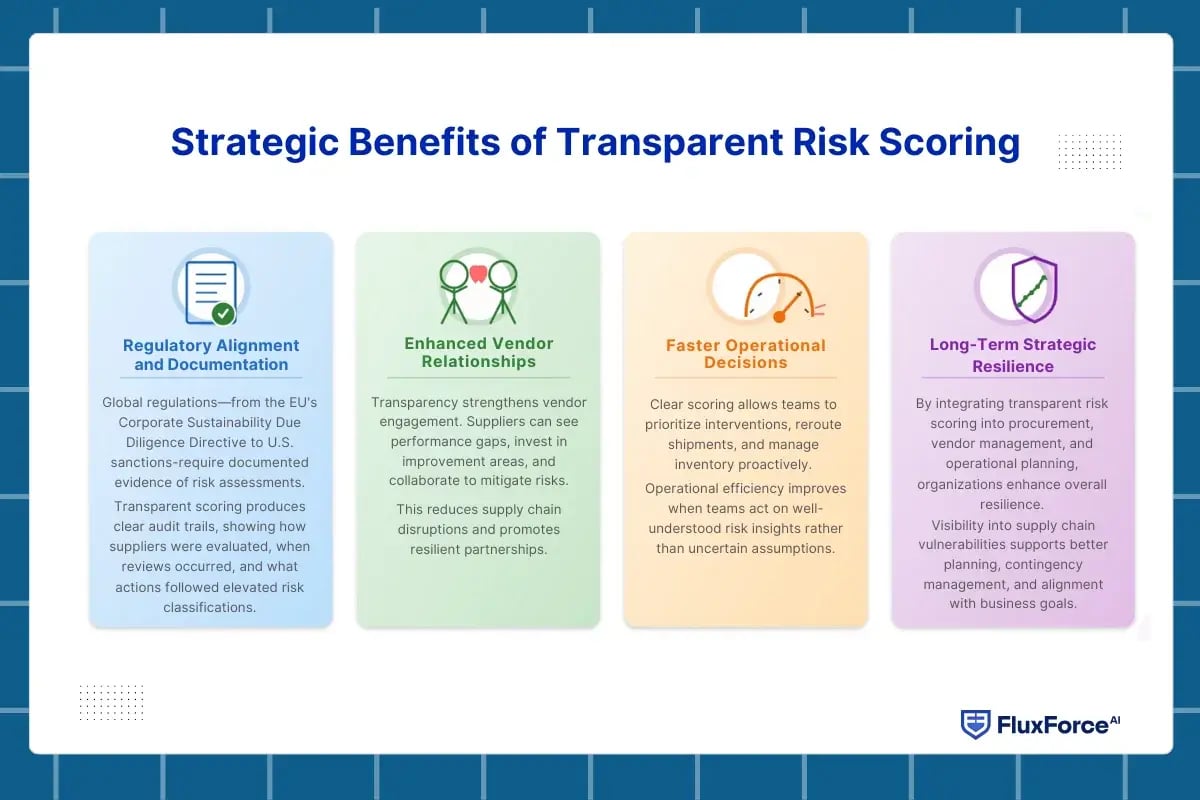
Regulatory Alignment and Documentation- Global regulations—from the EU's Corporate Sustainability Due Diligence Directive to U.S. sanctions—require documented evidence of risk assessments. Transparent scoring produces clear audit trails, showing how suppliers were evaluated, when reviews occurred, and what actions followed elevated risk classifications.
-
Enhanced Vendor Relationships- Transparency strengthens vendor engagement. Suppliers can see performance gaps, invest in improvement areas, and collaborate to mitigate risks. This reduces supply chain disruptions and promotes resilient partnerships.
-
Faster Operational Decisions- Clear scoring allows teams to prioritize interventions, reroute shipments, and manage inventory proactively. Operational efficiency improves when teams act on well-understood risk insights rather than uncertain assumptions.
-
Long-Term Strategic Resilience- By integrating transparent risk scoring into procurement, vendor management, and operational planning, organizations enhance overall resilience. Visibility into supply chain vulnerabilities supports better planning, contingency management, and alignment with business goals.
Implementing Transparent Risk Scoring Systems
The practical steps listed below help organizations improve transparency without overhauling existing systems:
1. Define Risk Factors with Business Context
Start by documenting which variables matter most to your organization's supply chain risk analysis. Financial stability, geopolitical exposure, delivery reliability, and compliance history should have clear definitions and measurable thresholds. Avoid generic templates. Risk factors should reflect your industry, geographic footprint, and operational priorities.
2. Establish Data Governance Standards
Transparent scoring depends on reliable data. Define which sources are authoritative for each risk factor, how often data updates, and who validates information accuracy. Supply chain analytics platforms should integrate with trusted data providers while allowing manual corrections when real-world conditions differ from automated feeds.
3. Document Scoring Logic and Weightings
Write down how individual risk factors combine into overall scores. If financial health carries more weight than geographic risk, that decision should be documented and defensible. Risk scoring models should be reviewed periodically and adjusted based on actual disruption patterns.
4. Create Accessible Reporting for Stakeholders
Risk scores mean nothing if stakeholders cannot interpret them. Develop reporting formats that show not just the score but the underlying factors driving it. Procurement teams, executives, and auditors need different levels of detail, but all should access transparent explanations.
5. Build Feedback Loops with Suppliers
Share relevant portions of risk assessments with vendors. Allow them to dispute inaccurate data, provide context around temporary issues, and demonstrate remediation efforts. This two-way communication improves data quality and strengthens vendor accountability.
6. Enable Continuous Improvement Through Transparency
Track how well risk scores predict actual disruptions. If high-risk suppliers consistently perform well, or low-risk vendors frequently cause problems, your model needs adjustment. Transparent systems make it easier to identify and fix these gaps because the underlying logic is visible and testable.
Conclusion
In modern supply chains, transparency in risk scoring is essential for operational efficiency, regulatory compliance, and strategic resilience. Clear, traceable, and explainable risk assessments enable faster decisions, foster stronger vendor relationships, and support audit readiness.
As supply chains grow in complexity, transparent risk scoring will become a practical necessity that drives confidence and resilience across the organization.

Share this article