



















Listen to our podcast 🎧

Introduction
Banking today is going through one of the biggest changes in its history. Customers want faster services, simple transactions, and digital experiences that feel safe and smooth. At the same time, banks face new rules, rising numbers of transactions, and constant risks in payments. In this situation, digital transformation in banking has become a must. Banks need it to stay useful, strong, and trusted by their customers.
Why Digital Banking Transformation Crucial
Across the globe, banks are implementing digital banking transformation strategies to streamline operations, reduce risks, and deliver tangible benefits to customers. A clear digital strategy for banks helps connect business goals with the right technology, giving them a base to grow, serve better, and react quickly to changes.
Building a solid bank digital transformation strategy is now a key focus for leaders. Payments risk officers, compliance teams, and technology heads are joining forces to design systems that keep up with modern needs. Their role is not limited to supervision. They help create systems that process payments at high speed, stop fraud, and follow strict rules set by regulators.
This demand for reliable systems has placed banking industry digital transformation at the front of boardroom plans. Old systems cannot keep up with today’s digital economy, where speed and safety are both critical. Banks are increasingly adopting modern solutions such as microservices in banking to achieve agility, resilience, and scalable growth.
Building Trust Through Technology
The true value of digital transformation in banking industry is that it allows banks to rebuild their systems step by step, without disturbing daily services for customers. This approach makes it possible to launch new products faster, improve payment security, and give managers real-time information to make better decisions. For payments risk officers, this means having stronger tools to catch unusual activity, stop fraud, and make sure every transaction follows legal and safety standards.
At the core, digital transformation for banks is about trust. Customers trust banks with their finance, and banks must earn that trust every single day. To do that, they need systems that are safe, open, and efficient. Technology plays a big part, but people and processes must also move in the same direction to get real results. When banking leaders, risk officers, and IT teams work together, modernization creates both progress and safety.
Further, we explore how banking digital strategy and microservices architecture for banks work together, the benefits they offer, and how they empower payments risk officers to build safer, more efficient systems for the future.
Understanding Microservices in Banking
What Are Microservices in Banking?
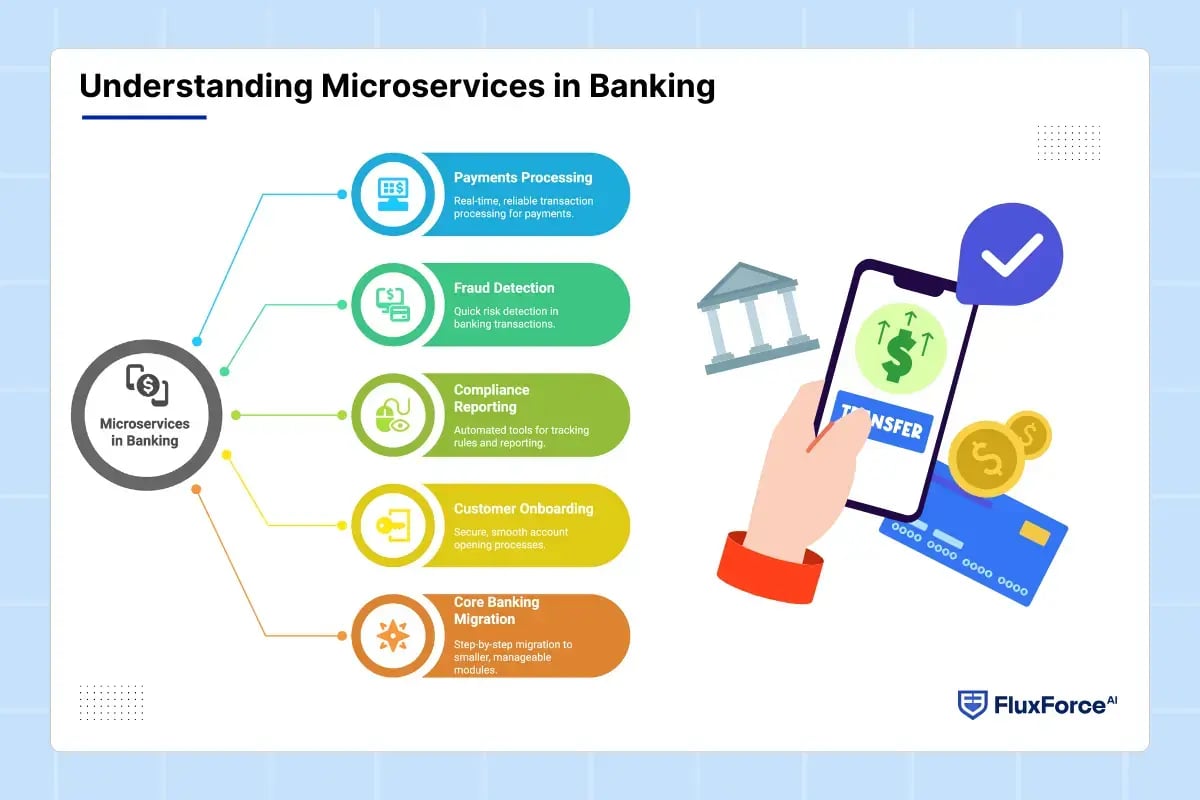
Microservices in banking are a modern software design approach where large systems are broken into smaller, independent services .These services talk to each other through secure APIs and can run or update on their own without stopping the whole system. By using microservices in banking, financial institutions get more flexibility and better control over how their digital systems work.
Common Use Cases for Microservices in Banking
Banks are already using microservices in many areas. Some useful microservices banking use cases include:
- Payments processing: Fast and reliable transactions in real time.
- Fraud detection: Services that check each transaction and catch risks quickly.
- Compliance reporting: Tools that track rules and prepare reports automatically.
- Customer onboarding: Smooth account opening with secure steps.
- Core banking migration using microservices: Moving old systems into smaller modules step by step to reduce risks.
These use cases show how banks can improve their systems while keeping services running smoothly.
Business Benefits of Microservices
Banks see clear results when they adopt microservices. The business benefits of microservices include faster systems, safer processes, and the ability to handle more work without delays. This helps banks give dependable services to customers and keep up with changing needs.
Advantage of Microservice Architecture for Banks
The primary advantage of microservice architecture lies in simplifying management of complex banking systems, increasing flexibility, and improving oversight for payments risk officers banking strategy. Instead of one large platform that is hard to upgrade, banks can manage smaller services one at a time. Payments risk officers benefit because they get better tools to monitor transactions in real time, stop fraud, and keep compliance in check. This gives banks the ability to stay flexible while also making payments and risk systems stronger.
They are part of a bigger goal of digital banking transformation strategy. With this approach, banks can meet customer needs, handle risks better, and modernize core systems without major disruptions. By including microservices in their bank digital transformation strategy, banks create systems that are ready for the future and trusted by both customers and regulators.
Core Banking Modernization Using Microservices
The Strain on Core Banking Systems
The Core Banking System is the central platform managing deposits, loans, payments, and customer accounts, forming the foundation of any bank digital transformation strategy. For years, banks have depended on big, tightly linked systems to handle these jobs. While effective historically, these systems now hinder innovation, slow processing, and limit digital transformation in core banking systems. Payments risk officers and bank leaders know that if these systems fail or delay, it can lead to missed fraud checks or compliance problems. That is why digital transformation in core banking systems is crucial.
Microservices as a Smarter Way Forward
Banks are now using core banking modernization using microservices as a safer path to change. Instead of shutting down the old system and building a new one from scratch, banks break down the old setup into smaller, easier services. For instance, services for payments, account management, fraud monitoring, and compliance reporting operate independently, supporting modern banking technology for payments risk management. These microservices communicate through secure APIs, allowing updates, scaling, or enhancements without disrupting customer transactions, supporting scalable banking architecture with microservices.
This step-by-step change lowers risks and makes upgrades smoother. For payments risk officers, this means tools like fraud detection or compliance checks can be improved right away, instead of waiting for a full rebuild that may take years.
-1.png?width=1200&height=628&name=hubspot%20blog%20(6)-1.png)
How Microservices Help Payments and Risk Control
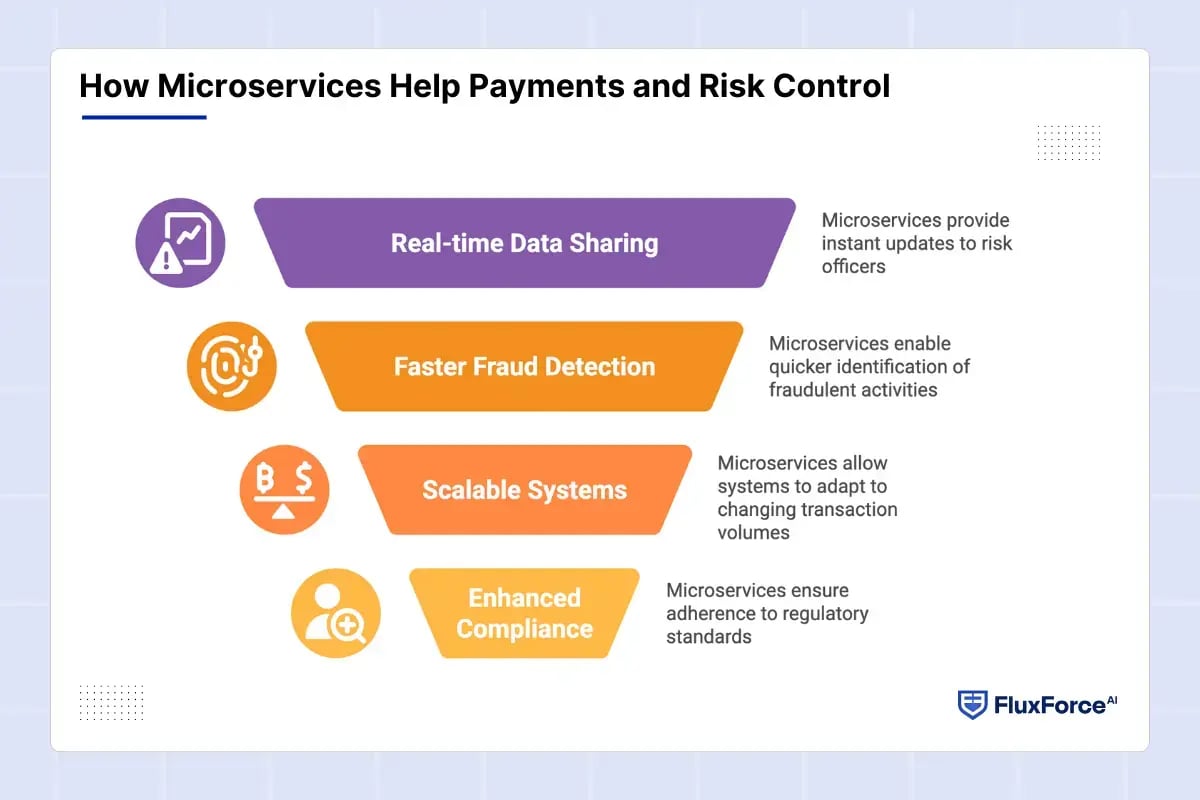
Today, modern banking technology for payments risk management depends on microservices. Each service has one clear job. One microservice may scan payments for unusual activity, while another ensures all rules are followed. Because each service works on its own, banks can quickly adjust capacity when transaction volumes rise — such as on salary days or during festivals.
It provides real-time insights, faster detection, and scalable systems aligned with fraud prevention in payments through microservices . This is how banks use microservices for payments security to keep customers safe and meet strict rules.
A Clearer Role for Payments Risk Officers
Payments risk officers deal with thousands of payments every second. Old systems often struggle to give instant updates. Microservices in banking fix this by sharing live data, so risk officers can see problems as they happen and act fast. With a clear microservices strategy for payments risk officers, banks can combine compliance, fraud prevention, and automation into one strong system.
This not only reduces fraud but also shows regulators that the bank is serious about safety and transparency. In the long run, it helps build customer trust and strengthens the bank’s reputation.
Linking Modernization With Banking Goals
Modernization is not just about technology. It must connect with the bank’s larger plans for growth and customer service. A strong bank digital transformation strategy uses microservices as a base for reliable systems. With this approach, banks become more flexible, handle payments with greater safety, and give risk officers stronger tools to manage threats.
With microservices, banks move away from rigid systems and shift to flexible, future-ready platforms. This gives payments risk officers what they need to protect financial stability while helping banks grow in a fast-changing digital world.
Compliance, Fraud Prevention, and Security with Microservices
Compliance as a Daily Banking Priority
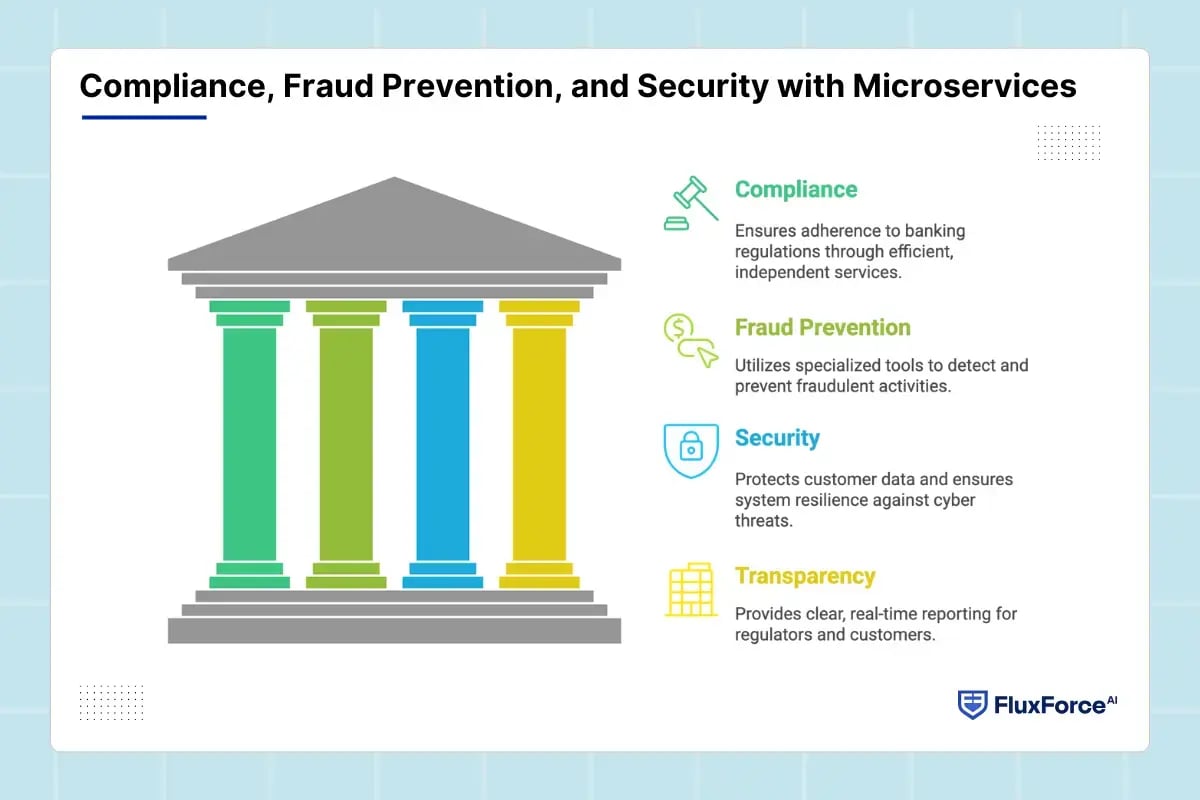
For banks, following rules is a daily duty. Every payment, loan, or account update must be checked against strict regulations. Payments risk officers make sure that these rules are followed, records are kept, and reports are sent on time. Older banking systems often make this difficult, but banking compliance with microservices offers a better way. With microservices, compliance checks can run as separate services that update quickly whenever new rules are introduced.
Fraud Prevention Through Independent Services
Stopping fraud is one of the hardest parts of banking. With so many payments happening each day, even a short delay in finding a problem can cause major losses. Microservices let banks build small tools for fraud checks. One tool looks for strange payments, while another checks for unsafe logins. Helping banks act quickly without slowing down payments.
For payments risk officers, this setup means faster alerts, constant monitoring, and stronger protection. This is why fraud prevention in payments through microservices is becoming a standard approach in digital banking.
Security Built for Modern Banking
Bank security is not just about blocking hackers. It also includes making sure customer details are safe, identities are verified, and data is protected at all times. With microservices, banks can build a scalable banking architecture with microservices where each service takes care of a security task. For example, one service manages encryption, another supports Identity Verification & KYC/AML Automation, while others monitor threats.
This makes banking systems safer and gives payments risk officers confidence that critical services will not stop, even during cyber attacks.
Building Transparency for Regulators and Customers
Regulators want clear proof that banks are following rules and protecting customers. At the same time, customers want smooth and safe digital services. Microservices help with both. Each service can create reports that show when risks were found, how they were handled, and how safety rules were applied.
This gives payments risk officers simpler, real-time information instead of long and messy reports. Regulators get more trust in the bank, and customers feel safer using its services.
Moving Compliance and Security Into the Future
No digital transformation in banking industry is complete without strong systems for compliance, fraud control, and security. Microservices give banks the power to meet these needs while also offering fast and reliable services to customers. For payments risk officers, the shift means smarter tools with stronger defenses.
The Future of Banking with Microservices
Scalable Systems for Growing Needs
In a bank, millions of payments, deposits, and transfers happen at the same time. Old systems often slowed down when pressure was high. With microservices, each task runs in its own space. Payments, loans, or fraud checks don’t clash with each other. If payment volumes rise during salary days or holidays, only the payment service needs extra power. This makes systems faster and smoother for customers.
Risk Officers with Real-Time Control
Payments risk officers no longer wait for end-of-day reports. With microservices, they see what’s happening as it happens. One service detects anomalies, another evaluates login risks, while others ensure banking compliance with microservices. This setup gives risk officers live tools to stop fraud and errors before they spread.
Easier Compliance and Audits
Banks spend a lot of time proving that every payment followed the rules. Old systems made this slow and manual. Microservices keep track of every action with clear logs. Compliance teams can pull reports instantly and show regulators that all standards were met.
Conclusion
Core banking modernization using microservices is the foundation for building secure, scalable, and future-ready banking systems. As transaction volumes grow and risks become more complex, banks need flexible architectures that can adapt quickly without compromising stability. Microservices in banking enable this shift by transforming rigid legacy systems into agile, independent services that enhance both operational efficiency and security.
For payments risk officers, this transformation delivers real-time visibility, faster fraud detection, and stronger compliance capabilities—allowing them to proactively manage risks and maintain trust.
To fully realize these benefits, banks must align their bank digital transformation strategy with modern technologies like microservices, ensuring long-term growth, regulatory readiness, and customer confidence.
Further Reading: Explore how compliance automation is reshaping financial services in our blog: “GDPR Compliance in Insurance: Regulatory Compliance Automation Strategy for Claims Directors in Insurance”

Share this article