
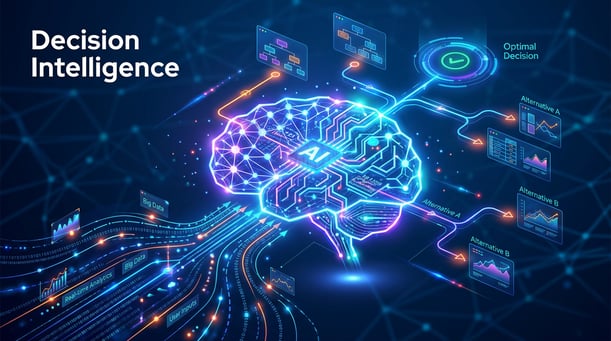
Modern organizations depend on data to guide their decisions. Every department generates information that can influence strategy, operations, and customer engagement. Yet many businesses still struggle to turn data insights into consistent actions.
Over the last decade, artificial intelligence has transformed how organizations analyze information. Companies now rely on advanced machine learning techniques to detect patterns in large datasets. These technologies help businesses understand trends, identify risks, and predict outcomes with greater accuracy.
Many organizations also invest in powerful artificial intelligence platforms to support their analytics capabilities. These platforms process large amounts of data and generate insights that would be difficult for humans to identify manually.
However, insight alone does not guarantee effective decisions.
In many organizations, analytics systems and decision processes remain disconnected. Analysts build reports using machine learning models. Business teams review those insights and decide what action to take. This separation slows down decision cycles and often creates inconsistent outcomes.
This challenge has led to the rise of decision intelligence.
This guide explores how decision intelligence works and why it is becoming essential for modern enterprises. It also explains how businesses can combine artificial intelligence machine learning capabilities with structured decision systems.
Decision intelligence is a technology framework that improves how organizations evaluate data and make operational decisions. It combines analytics systems, decision logic, and automation so businesses can convert insights into actions.
Most organizations already rely on systems such as business intelligence platforms and business analytics tools. These technologies help teams analyze operational data and identify patterns. They support reporting, forecasting, and performance tracking.
However, analytics systems typically stop at insights.
Human teams still review dashboards, interpret reports, and determine the next action. This process slows operations and can create inconsistent decision outcomes.
Decision intelligence addresses this gap.
A decision intelligence platform connects analytics systems with operational decision processes. Instead of separating analysis from action, organizations can evaluate data and trigger responses within the same environment.
This approach allows enterprises to automate operational decisions while maintaining structured decision logic.
The main objective of decision intelligence is to make business decisions faster and more consistent.
Organizations generate massive amounts of operational data through digital systems. Without structured decision systems, teams must interpret this data manually.
Decision intelligence systems evaluate incoming information and determine what action should be taken.
These systems often rely on decision automation to execute routine operational decisions. Automated workflows ensure that responses occur immediately when predefined conditions are met.
This allows organizations to automate business processes that previously depended on manual review.
Decision intelligence environments rely on several technologies that support decision processes.
A decision engine evaluates operational data and determines the appropriate action. The engine processes inputs from multiple systems and applies logic that guides decision outcomes.
Industries such as finance often rely on specialized systems like a credit decision engine to evaluate risk and approve transactions.
A business rules engine defines the policies that guide decisions. Organizations use rules to determine how systems should respond when specific conditions occur.
These rules ensure that operational decisions remain consistent across departments and digital systems.
A decision management platform coordinates the technologies used in decision processes. It connects data sources, analytics systems, and operational workflows.
This allows organizations to manage large volumes of decisions in a structured environment.
Data quality plays a critical role in decision intelligence systems.
Decision engines rely on accurate data to produce reliable outcomes. Organizations must maintain strong data management, data integration, and data quality management processes.
These practices ensure that decision systems evaluate consistent and trustworthy information.
Analytics technologies such as business intelligence and market intelligence platforms often supply the insights used in decision environments.
When these systems operate together, organizations can transform analytical insights into operational actions.
Enterprises are managing more digital systems than ever before. Each system generates data that can influence operational decisions.
Manual decision processes cannot scale efficiently in these environments.
As a result, organizations are investing in advanced automation platforms, AI platforms, and machine learning platforms that support automated decision systems.
Many decision intelligence companies now provide platforms designed specifically to manage these environments.
Industry analysts such as Gartner have also highlighted the growing importance of this category through research such as Decision Intelligence Gartner reports and the Gartner Decision Intelligence Magic Quadrant.
These developments reflect a broader shift toward structured, automated decision systems in modern enterprises.
Decision intelligence works by connecting data systems, analytics models, and automation tools so organizations can make faster and more reliable decisions.
In most organizations, decisions are spread across many systems. Teams analyze reports, evaluate situations, and choose actions manually. This process often slows operations and creates inconsistent outcomes.
A decision intelligence platform changes this process. It connects analytics, rules, and automation within one structured environment.
The platform continuously evaluates data and determines what action should happen next.
Most modern organizations rely on a combination of decision engines, decision automation platforms, and analytics systems to manage these processes.
Every decision process starts with data.
Organizations collect information from operational systems, financial platforms, customer applications, and digital services. These systems generate large volumes of data every day.
To support automated decisions, this information must be brought into a unified environment through data integration pipelines.
Strong data management practices ensure that the information entering the system is structured and usable. Reliable data quality is essential because automated decisions depend on accurate inputs.
Many enterprises also implement dedicated data quality management processes to monitor and maintain the reliability of operational data.
When these systems work together, decision platforms can evaluate information in near real time.
After data enters the platform, the system evaluates it using analytical tools.
Organizations typically rely on several analytics technologies:
These systems help organizations understand trends and detect important changes in business conditions.
Many decision environments also use predictive models built on a machine learning platform. These models analyze patterns in historical data and estimate possible outcomes.
This stage is known as decision analytics because the system analyzes information specifically to guide decision outcomes.
Once analytics systems evaluate the data, the platform determines what action should happen next.
This step relies on structured decision logic.
Most organizations manage decision logic using a business rules engine. The rules engine defines how the system should respond when certain conditions occur.
For example, rules may define approval criteria, risk thresholds, or routing conditions.
These rules allow organizations to maintain control over automated decisions.
After the decision engine determines the correct outcome, the system executes the action.
This stage is managed through decision automation.
A decision automation platform triggers operational workflows automatically. The system may approve a request, route a case to another team, or update records across systems.
These automated workflows help organizations automate business operations that previously required manual review.
As a result, teams spend less time processing routine decisions and more time focusing on strategic work.
Decision intelligence systems improve over time.
Organizations continuously monitor decision outcomes and evaluate system performance. Analytics teams review results through dashboards and reporting tools.
Insights from decision analytics help teams identify patterns in decision outcomes.
Advanced environments also use AI platforms and machine learning platforms to refine predictive models. These models learn from historical data and improve decision accuracy.
Over time, this process helps organizations optimize decision strategies and improve operational performance.
A decision intelligence system is not a single tool. It is a combination of technologies that work together to evaluate data, apply decision logic, and automate actions.
Organizations implement these components within a decision intelligence platform so decisions can move from analysis to execution without manual intervention.
Each component plays a specific role in the decision process. Together they create a structured environment where data insights translate into operational decisions.
Every decision intelligence environment begins with a reliable data foundation.
Organizations generate data from operational systems, financial platforms, customer interactions, and digital applications. This information must be collected and organized before it can support automated decision making.
Strong data management practices help organizations structure and govern this information.
Data often exists in separate systems across the organization.
Data integration brings this information together so decision systems can evaluate it in a unified environment.
Integration pipelines connect operational platforms, analytics systems, and external data sources. This ensures that decision engines receive complete and timely information.
Automated decisions depend on reliable data.
Organizations implement data quality management processes to ensure that information remains accurate and consistent. These processes monitor data sources and correct issues before they affect decision outcomes.
High data quality improves the reliability of automated decision systems.
Once data is available, analytics technologies interpret that information.
Analytics tools help organizations understand patterns, trends, and potential risks that influence business decisions.
Many enterprises rely on a business intelligence platform to analyze operational data. These platforms produce dashboards and reports that help teams understand performance.
Advanced organizations also use business analytics and market intelligence platforms to identify patterns in customer behavior, operational performance, and market activity.
These insights form the analytical foundation of decision intelligence systems.
After analytics systems generate insights, decision engines determine the appropriate action.
A decision engine evaluates incoming information and applies the organization’s decision logic. It determines which action should be taken in response to specific conditions.
Decision engines allow organizations to process thousands of operational decisions quickly and consistently.
Most decision engines rely on a business rules engine.
This engine manages the policies that guide automated decisions. Rules define how the system should respond when certain conditions occur.
For example, rules may determine approval thresholds, risk limits, or routing conditions.
Using structured rules ensures that decisions remain consistent across the organization.
In financial environments, specialized decision systems evaluate financial risk and eligibility.
A credit decision engine analyzes financial data and applies predefined criteria to determine approval outcomes. These systems help financial institutions process high volumes of decisions efficiently.
Once the system determines the correct outcome, the next step is execution.
A decision automation platform converts decision outcomes into operational actions.
The platform can trigger workflows across business systems. It may approve requests, route cases to specific teams, or update records automatically.
This capability allows organizations to implement decision automation across operational environments.
As a result, businesses can automate business processes that previously depended on manual review.
Modern decision environments often include advanced intelligence technologies.
An AI platform allows organizations to develop models that analyze complex patterns in data. These models can evaluate risk, detect anomalies, and predict future outcomes.
Similarly, a machine learning platform enables organizations to train models using historical data.
These technologies improve the accuracy of automated decisions and help organizations adapt to changing business conditions.
Large organizations manage thousands of operational decisions every day.
A decision management platform provides centralized control over decision systems. It allows teams to monitor decision logic, manage rules, and evaluate system performance.
These platforms help organizations coordinate multiple decision engines and automation systems within a single operational framework.
Modern organizations process thousands of operational decisions every day. Customer requests, financial transactions, risk evaluations, and service operations all require quick and consistent responses. When these decisions rely on manual review, processes slow down and outcomes often vary across teams.
Decision intelligence addresses this challenge by connecting analytics systems with structured decision logic and automation. Instead of analyzing data in one system and acting in another, organizations can evaluate information and execute decisions within the same operational framework.
This approach allows businesses to scale decision processes while maintaining policy control and operational consistency.
Many operational events require immediate responses. Financial approvals, customer service routing, and risk evaluations often occur in real time.
Decision intelligence platforms evaluate incoming data through decision engines and apply predefined rules to determine the correct action. This enables organizations to respond quickly while maintaining consistent decision criteria.
In large enterprises, similar decisions may be handled differently across departments. Variations in approval thresholds or policy interpretation can create operational risk.
Decision intelligence platforms centralize decision logic through business rules and decision management systems. Once policies are defined, they are applied consistently across operational environments.
Digital systems generate a high volume of operational decisions every day. Processing these decisions manually becomes inefficient as organizations grow.
Decision intelligence platforms use decision automation systems to evaluate data, apply rules, and trigger actions automatically. This allows businesses to automate routine decision processes while maintaining oversight.
Customer experience often depends on how quickly organizations respond to requests.
Decision intelligence platforms analyze operational signals from customer interactions and determine appropriate responses in real time. This enables faster service delivery and supports modern customer experience management strategies.
Organizations in regulated industries must ensure that operational decisions follow defined policies.
Decision intelligence systems apply structured decision rules and maintain traceable records of automated actions. This improves transparency and strengthens governance over automated decision processes.
For a practical guide on creating auditable artifacts that regulators actually want, see [Decision Context Objects: The Artifact Regulators Actually Want].
Decision intelligence platforms support operational environments where organizations must evaluate data and act quickly. By combining analytics, decision engines, and automation, these systems help businesses manage large volumes of decisions with consistent logic.
Several industries rely on decision intelligence to improve operational efficiency, risk management, and customer experience.
Financial institutions process thousands of decisions every day. Loan approvals, fraud checks, and transaction monitoring require fast and accurate evaluation.
A credit decision engine analyzes financial data and predefined risk rules to determine approval outcomes. When integrated with finance automation systems, decision intelligence platforms help banks process high-volume financial decisions while maintaining policy control.
To understand how banks can build institutional memory and maintain risk knowledge without relying solely on large language models, see [Context OS for Banks: Building Risk Memory Without LLM Memory].
Organizations increasingly rely on customer experience platforms to manage digital interactions across websites, mobile applications, and service channels.
Decision intelligence systems analyze customer signals in real time and determine appropriate responses. These responses may include routing support requests, prioritizing cases, or triggering automated service workflows.
This capability enables customer experience automation and supports modern customer experience management strategies.
Marketing teams depend on data to understand customer behavior and market trends.
Decision intelligence platforms integrate insights from market intelligence platforms and business intelligence platforms. These insights help organizations determine how campaigns should respond to changing market signals.
By applying decision analytics, businesses can automate actions such as campaign targeting, segmentation, and promotional decisions.
Operational teams often manage repetitive decisions across supply chains, service operations, and internal workflows.
Decision intelligence platforms connect data sources with automation systems so businesses can evaluate operational signals and trigger actions automatically. This enables organizations to automate business processes that previously required manual evaluation.
As a result, companies can manage high-volume operational decisions while maintaining consistent policies and oversight.
Organizations often use several technologies to analyze data and support operational decisions. These include business intelligence platforms, artificial intelligence systems, and decision intelligence platforms. Although these technologies are related, they serve different purposes within the decision process.
Understanding these differences helps organizations design more effective decision systems.
A business intelligence platform focuses on analyzing historical and operational data. These platforms generate dashboards, reports, and visualizations that help teams understand performance and identify trends.
Business intelligence systems support analytical insights. However, they typically do not execute decisions automatically. Human teams review the insights and determine the appropriate action.
Artificial intelligence systems analyze data to identify patterns, make predictions, or detect anomalies. Machine learning models can estimate outcomes such as customer behavior, credit risk, or fraud probability.
AI systems provide predictive insights that improve the quality of analysis. However, they usually generate predictions rather than operational decisions.
A decision intelligence platform connects analytics systems, predictive models, and decision logic within one environment. These platforms evaluate operational data and determine what action should occur next.
Decision engines apply business rules and analytical insights to guide operational responses. Automation systems then execute the resulting actions across business applications.
By connecting insights with execution, decision intelligence platforms help organizations move from analysis to automated operational decisions.
Decision intelligence is advancing quickly and is set to redefine how organizations make operational choices. The next phase of this technology will focus on three key areas.
1. Real-Time, Contextual Decision-Making
Future decision intelligence platforms will be capable of evaluating information as it becomes available and responding immediately. For example, a logistics company could automatically adjust delivery routes if traffic or weather conditions change, and a bank could instantly flag potentially fraudulent transactions based on incoming customer activity.
Organizations will need robust systems to integrate live data streams with decision engines and automated workflows. This capability will allow them to act proactively, reduce errors, and make faster operational decisions than ever before.
2. Personalized and Adaptive Decisions
Decision intelligence will move beyond uniform solutions and tailor decisions based on specific contexts. Retailers may adjust promotions for individual customers according to purchasing behavior, while service teams could prioritize support requests based on urgency and potential impact.
To achieve this, enterprises must combine analytics insights, decision logic, and automation in a unified platform. Personalized decision-making will enhance customer satisfaction, improve operational efficiency, and generate stronger business outcomes.
3. Transparent and Accountable Automation
As organizations automate more decisions, maintaining transparency and accountability will become critical. Decision intelligence systems will provide clear documentation of decision logic, track all automated actions, and enable human review for complex or high-risk scenarios.
Implementing monitoring tools and governance practices will help enterprises maintain control, reduce operational risk, and comply with regulations. This approach ensures that automated decisions are reliable, auditable, and aligned with organizational policies.
Decision intelligence transforms raw data into actionable decisions that are consistent, timely, and scalable. By connecting analytics, decision logic, and automation, organizations can ensure that insights are not just observed but applied effectively in operations.
The main benefits of decision intelligence include:
Organizations that implement decision intelligence today position themselves to operate more efficiently, respond more effectively, and make better decisions in a rapidly changing business environment. This capability is no longer optional; it is a strategic necessity for companies that aim to remain competitive and resilient in a data-driven world.
.webp)
.webp)



Take the First Step Toward Efficiency
Modernize your financial workflows with explainable, secure AI — deployed in weeks, not years.
.webp)
