.webp)




.webp)



Listen To Our Podcast🎧
.jpeg)
Introduction
A loan application that once required 5-10 business days can now move from document verification to sanction approval in a matter of hours. With AI in digital lending accelerating weeks of work into days, discussions around these modules are intensifying, especially following the remarkable success of Agentic AI modules in digital lending institutions.
According to a recent study, financial institutions implementing comprehensive AI solutions achieve up to 85% faster operations, with significant cost reductions through automated processes.
The rise of AI modules signals a new era in digital lending, showcasing measurable benefits and real-world applications that this article examines in detail.
AI now supports every stage of the loan approval process, from borrower onboarding to final sanction decisions.

How Agentic AI Works in Digital Lending
For digital lending platforms, Agentic AI combines credit underwriting, fraud detection, compliance validation, borrower assessment, and sanction recommendations inside a single workflow that does all the critical work with speed and precision. To support lending decisions, it applies key algorithms, including:
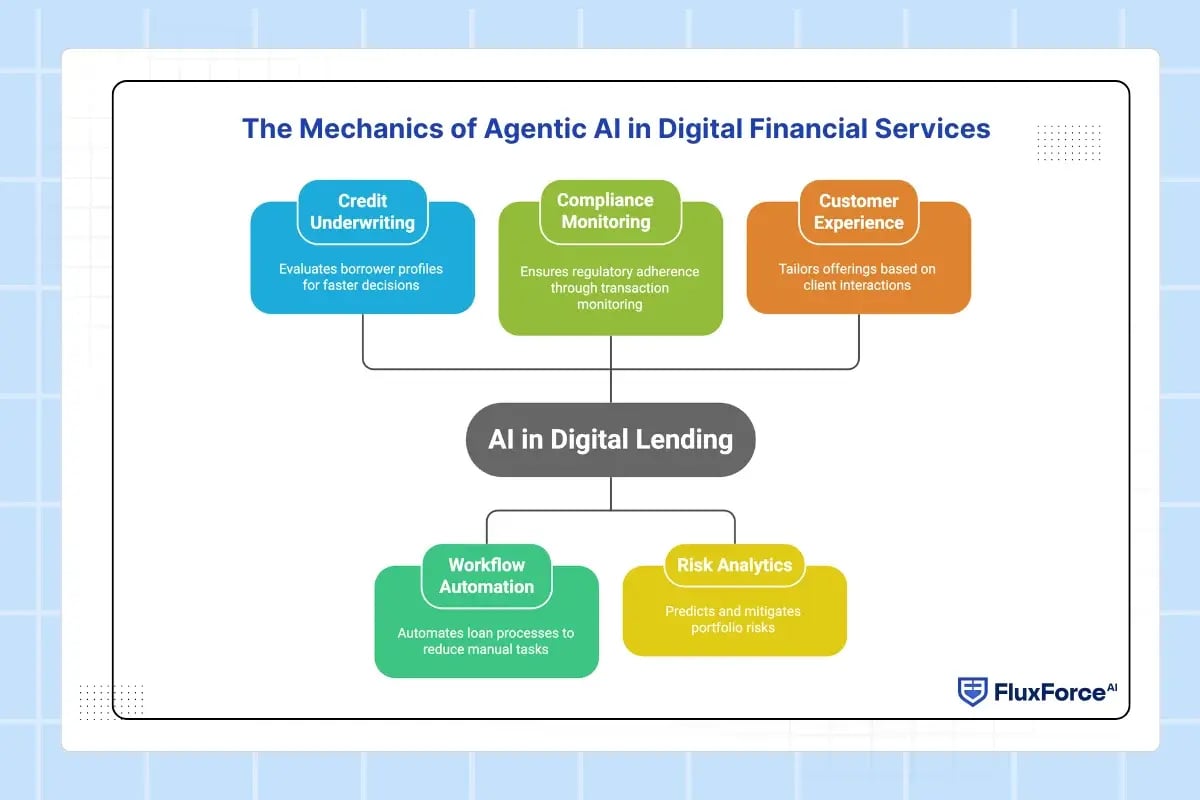
2. Lending Workflow Automation- From automated loan underwriting, sanction approval, and loan disbursement to disbursal, AI orchestrates sequential tasks to automatically approve or flag instead of teams burdening repetitive operational load.
3. AI Compliance in Digital Lending- Agentic digital banking solutions continuously monitor transactions and documentation against KYC, AML, FATF guidance, RBI regulations, DORA requirements, and GDPR obligations. They automatically flag anomalies and maintain audit logs for organizations.
4. Predictive Risk Analytics- Agentic models assess credit risk, delinquency risk, default probability, and portfolio exposure by detecting early signs of default or credit deterioration through data analysis. This allows dynamic adjustment of exposure, interest rates, and provisioning strategies before losses occur.
5. Customer Experience Intelligence- AI continuously analyses client interactions and transactional patterns to tailor offerings. It anticipates service touchpoints, suggesting optimized repayment structures while maintaining consistent engagement.
How AI Reduces Loan Processing Time From Days to Hours
AI modules in digital lending platforms are no longer limited to customer interactions or document collection. Its integration with core systems significantly covers operational gaps and delivers measurable results. Here’s how AI speeds up digital lending processes:
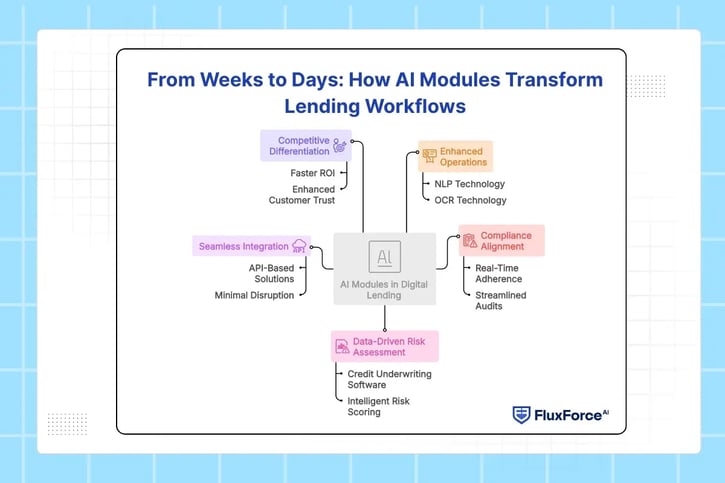
1. Enhanced Operations through Automated Sanctioning
AI-powered systems instantly validate documents and payment histories using NLP and OCR technologies. Sanction cycles that once took weeks are now completed in hours, reducing processing costs and ensuring consistent decisions across high-volume portfolios.
2. Compliance Alignment at Greater Speed
Embedded AI models ensure 100% adherence to complex data-sensitive regulatory requirements in real time. This minimizes compliance risk exposure and streamlines audits while keeping sanction timelines significantly faster.
3. Data-Driven Risk Assessment
AI modules for digital lending platforms are integrated with credit underwriting software that enables intelligent risk scoring methodologies for sharper borrower insights. This reduces default exposure and allows lenders to expand credit access without raising portfolio risk.
4. Seamless Integration with Legacy Systems
Modern API-based AI solutions embed into existing infrastructures without major overhauls. With quick adoption of modernized solutions, institutions ensure minimal disruption and immediate performance gains across established lending workflows.
5. Competitive Differentiation Through Speed
Institutions leveraging AI modules achieve faster ROI by minimizing missed lending opportunities and limiting losses. A reliable, efficient lending process not only enhances customer trust but also strengthens market positioning.
Benefits of Automated Loan Sanctioning
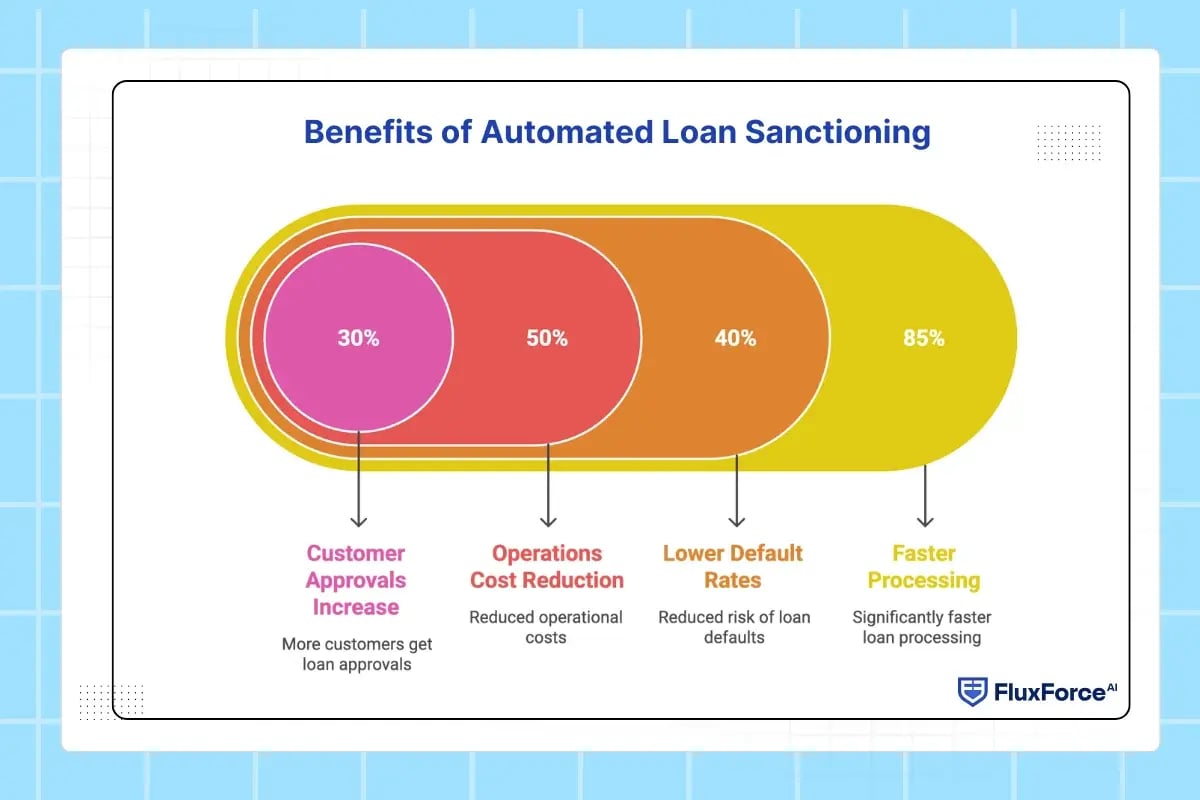
Up to 85% Faster Loan Processing
- Automated approvals reduce turnaround time from days to hours, enabling institutions to sanction loans 75% faster than traditional methods.
40% Lower Default Rates
- Predictive AI models accurately assess borrower risk, helping institutions reduce loan defaults by nearly 40% on average.
50% Cost Reduction in Operations
- Automation of documentation and approval workflows cuts operational expenses by up to 50%, freeing resources for strategic initiatives.
30% Increase in Customer Approvals
- AI evaluates more applicants objectively, resulting in a 30% increase in approved loans without compromising risk standards.
24/7 Instant Decisioning
- AI enables round-the-clock loan processing, improving customer experience and increasing conversion rates significantly.
Real-World Application and Case Examples
In lending environments, the impact of quick and easy lending is so huge that it can boost ROI by nearly 10x. Considering its impact, an AI-driven automation is now a core strategy for major digital financial institutions. Here are some real cases from established banks:
1. U.S. Bank: Leveraging AI for Inclusive Lending
U.S. Bank aimed to expand its customer base by offering unsecured personal loans to individuals who didn't meet traditional credit criteria.
Implementation Areas:
- Alternative Data Analysis: Utilized AI to assess non-traditional data sources, including transaction history and behavioural patterns.
- Automated Underwriting: Deployed AI models to streamline the loan approval process, reducing manual intervention.
- Risk Assessment: Implemented machine learning algorithms to predict loan repayment likelihood and adjust credit limits accordingly.
Results Achieved:
- 2,000 Loans Approved: Successfully issued loans to 2,000 customers previously deemed high-risk.
- Enhanced Customer Relationships: Strengthened ties with existing clients by offering additional financial products.
- Operational Efficiency: Reduced loan processing times, allowing for quicker decision-making and disbursement.
2. OakNorth Bank (UK): AI-Augmented Underwriting for SMEs
OakNorth wanted to enhance its underwriting process for small and medium-sized enterprises (SMEs) by incorporating AI to assess creditworthiness more effectively.
Implementation Areas:
- Data-Driven Credit Scoring: Employed AI to analyse detailed borrower data and sector trends.
- Predictive Analytics: Used machine learning models to forecast loan performance and potential defaults.
- Portfolio Management: Applied AI insights to manage and diversify the loan portfolio, minimizing risks.
Results Achieved:
- 0.07% Default Rate: Maintained a near-zero default rate, significantly lower than the industry average of 0.32%.
- Improved Lending Accuracy: Enhanced the precision of credit assessments, leading to more informed lending decisions.
- Scalable Growth: Successfully scaled operations while maintaining low risk exposure.
Onboard Customers in Seconds

What AI Lending Will Look Like Over the Next 3 Years ?
By the year 2026, fully automated AI modules are set to significantly replace manual interventions in digital lending, enabling near-instant loan approvals and proactive risk management.
With the rise of FinTech platforms in financial markets, it is evident that digital lending is the future of efficient and customer-centric credit delivery. Customers increasingly prioritize solutions that provide approvals quickly, securely, and with minimal friction.
These AI modules leverage real-time data processing to assess borrower credibility, detect anomalies, and ensure compliance with regulatory requirements before they escalate. Predictive AI models enhance decision-making, allowing banks to approve high-quality loans faster while reducing default risks.
For safer lending without compromising customer experience, adopting agentic digital banking solutions is a futuristic move to achieve operational efficiency, compliance adherence, and superior risk management.
Conclusion
AI is moving beyond workflow automation and becoming part of underwriting, compliance, fraud prevention, and loan approval operations. Agentic AI modules are no longer experimental tools, they are essential for accelerating loan sanctions, reducing operational gaps, and maintaining compliance across complex regulatory frameworks.
By integrating predictive analytics, real-time data processing, and intelligent automation, financial institutions can achieve up to 85% faster loan approvals without compromising risk management or customer trust.
The adoption of these solutions allows banks and FinTechs to scale efficiently, deliver superior customer experiences, and stay ahead in a competitive digital lending landscape.

Share this article